Tree care in Plano, Texas
Plano trees deal with a particular mix of things: heavy clay, long hot summers, spring storms that roll in fast and a disease that can move from oak to oak. Our office is here in Plano, in Collin County (opens in a new tab), so these are the conditions we work in every week. Here’s what that means for the trees in your yard.
Clay soil and summer heat
Most of Plano sits on dark Blackland Prairie clay. It holds water after a heavy rain, then shrinks and cracks when the summer gets going. Roots grow shallow and wide in it, and trees get stressed fast in a dry spell. Deep, slow watering under the canopy, every week or two in a hard drought, does far more good than a quick daily spray. The Texas A&M Forest Service (opens in a new tab) has a simple guide to how much is enough. A tree that went into fall stressed is one we like to look at before spring.
Spring storms and hail
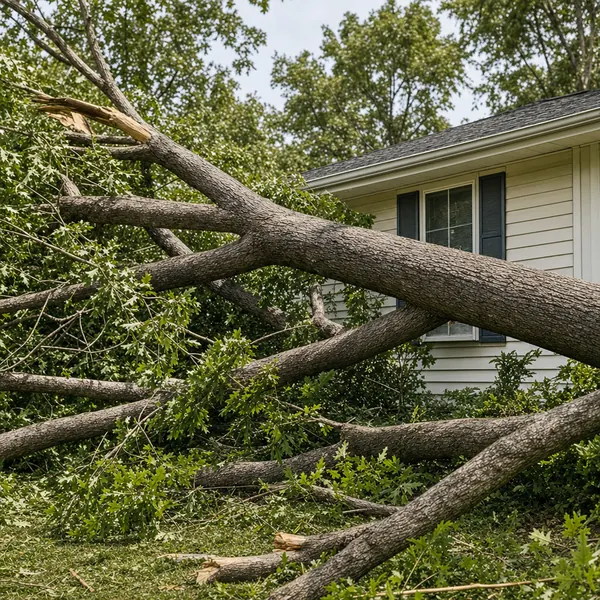
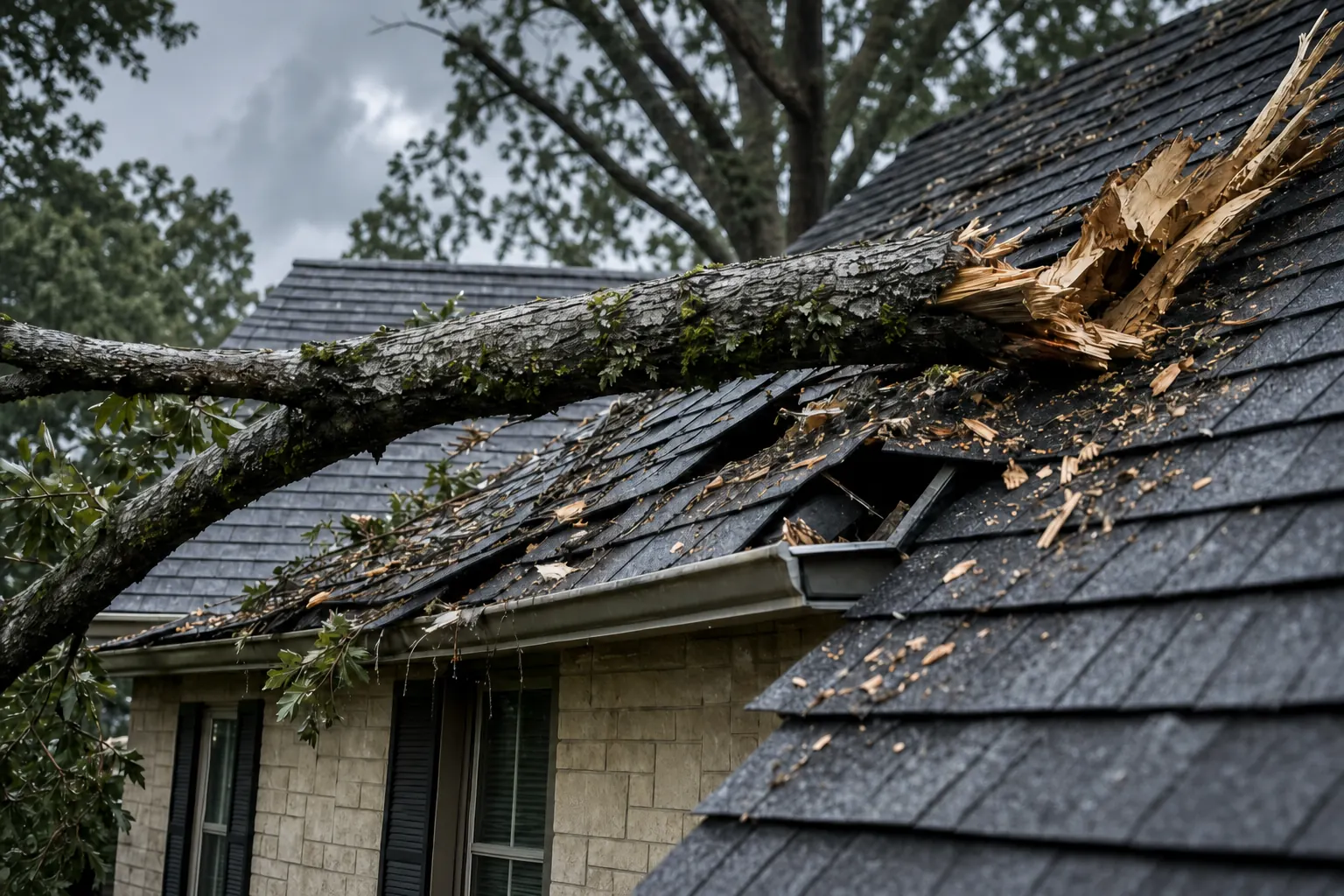
Spring in North Texas brings fast storms with strong straight-line winds and hail. The trees that fail are rarely the healthy ones. It’s usually a long limb that’s grown out over the roof with nothing to balance it, a weak fork with bark pinched in the middle, or deadwood that’s been hanging on for a year. Good pruning in the off season takes weight off those limbs before the wind finds them. After a big storm, we give priority scheduling to trees that are on a house or blocking a drive, then work through the cleanup.
Oak wilt and when to prune oaks
Live oaks and red oaks are some of the best shade trees in Plano, and they’re the ones oak wilt (opens in a new tab) goes after. The beetles that carry it are drawn to fresh cuts, so the usual advice is to avoid pruning or wounding oaks from February through June. If an oak must be cut in that window, like a broken limb over the house, we seal the cuts right away. We plan routine oak pruning for summer, fall and winter so you don’t have to think about it.
The trees you see in Plano yards
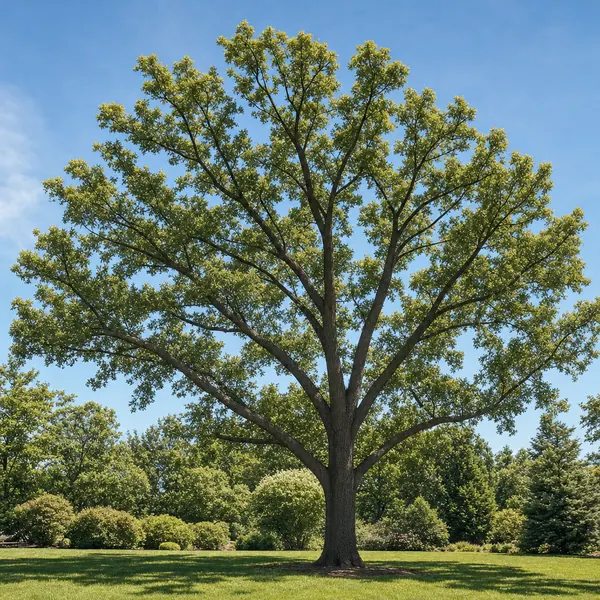
Live oaks, cedar elms, red oaks and pecans do most of the shading around here, along with plenty of crape myrtles and some ash and hackberry. Each one needs something different. Live oaks get heavy and low and want their limbs lifted and thinned. Cedar elms are tough but grow dense. Red oaks can decline after a hard drought. Pecans are known for dropping big limbs, so deadwood in an old pecan is worth watching. Knowing the species changes how we cut and what we tell you to expect.
Bradford pears
A lot of Plano neighborhoods were planted with Bradford pears (opens in a new tab). They grow fast and bloom white every spring, then tend to split apart as they mature because so many limbs come out of one spot on the trunk. If yours has already lost a big limb, the rest usually isn’t far behind. Sometimes careful pruning buys a few more years. Often it’s safer to take it down before it lands on the driveway or the fence, and we’ll tell you honestly which one we’d do.
HOAs, city trees and power lines
Many Plano homes are in an HOA, and some HOAs have rules about removing or replacing trees, so it’s worth checking first. Trees in the strip by the street or along an alley can have their own rules too, and the City of Plano’s urban forestry team (opens in a new tab) is the place to ask about those. Limbs touching power lines belong to the utility company, not a private crew. We’re happy to talk through any of it and give you a written quote you can hand to your HOA.