

Storm Damage Tree Cleanup in Plano, TX
After the wind and hail move through, we clear the broken limbs, take down the hangers and tidy up the trees that are still standing.
- ISA CertifiedArborist #TX-4334A (opens in a new tab)
- Fully InsuredProof on Request
- Written QuoteBefore Work Starts
- Cleaner ThanWe Found It
Storm damage we clean up
Most storm calls aren’t a tree through the roof. They’re a yard full of limbs and a few broken branches still up in the tree. That’s this job:
- Limbs and branches scattered across the yard
- Broken limbs still hanging in the canopy
- Torn branch stubs with ripped bark
- Small trees snapped or bent over
- Debris piled against the fence or house

“They get the job done quickly, clean up any mess and their pricing is fair.”
Christine B., Google review
Most storm-damaged trees are checked by Taylor Guynes, an independent ISA Certified Arborist #TX-4334A (opens in a new tab), to see what can be saved. Meet Taylor.
The Eagle Tree Way
1
Look up, then around
We find hanging limbs first, then the mess on the ground.
2
Written price
Cleanup and any repair cuts priced on paper.
3
Hangers down, stubs fixed
Broken limbs lowered and torn ends cut clean.
4
Yard cleared
Limbs and debris hauled, lawn raked and blown.
Included in every storm cleanup
- Priority scheduling after storms
- Hanging and broken limbs safely removed
- Torn stubs recut so the tree can heal
- Debris gathered and hauled away
- Honest advice on which trees will recover
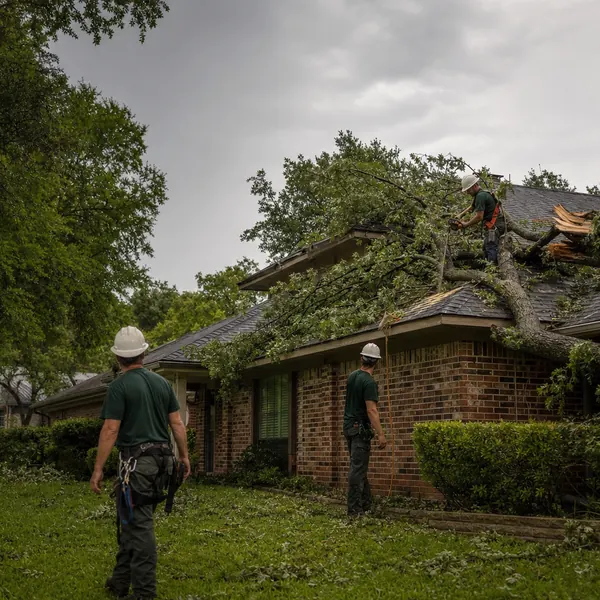


Cleaning up after a North Texas storm
Spring and early summer bring the big storms here: straight-line winds, hail and the occasional ice storm in winter. Trees take the hit. Bradford pears (opens in a new tab) split down the middle, older pecans and elms drop limbs, and even sturdy oaks lose branches. The morning after, most yards in a neighborhood look about the same.
The part people miss is overhead. Broken limbs that are still caught up in the canopy, often called hangers, can drop days later with no warning. We take those down first, then deal with the mess on the ground. Torn branch ends get recut to a clean point so the tree can seal the wound instead of rotting from it.
Many storm-damaged trees can be saved. A tree that lost a few limbs usually grows back fine with some repair pruning. A tree with a split trunk or a major union cracked open may need cabling, or it may be time to take it down. We’ll tell you which, and why.
After a storm, priority goes to trees on houses and blocking drives, then cleanups. Call during office hours, Monday through Friday, 9 to 5, and we’ll get you on the schedule. Be careful with door-knockers who show up after storms. Every Eagle Tree crew is insured, local since 2009, and works from a written price.
Storm season in Plano and Collin County
North Texas storms tend to come in spring and early summer, with strong straight-line winds and hail that can strip a tree in a few minutes. Winter brings the occasional ice storm, which loads limbs with weight they were never built to carry. Each type of storm breaks trees differently. Wind snaps long limbs and splits weak forks. Ice bends and breaks smaller branches all through the crown. Hail tears up leaves and young bark.
The clay soil plays a part too. After days of heavy rain the ground gets soft, and a tree with a shallow or damaged root system can tip over in wind that it would have handled in a dry week. If a tree leans after a storm and the soil on one side is lifted or cracked, keep people away from it and call us.
The trees we clean up after most often here are Bradford pears, which split at their tight forks, along with older pecans, silver maples and hackberries. Live oaks and cedar elms usually hold up better but still drop limbs. If an oak was wounded during February through June, Texas A&M Forest Service (opens in a new tab) suggests painting fresh wounds to lower oak wilt risk, and we can do that as part of the repair cuts.
Clean it up or take it down?
The hard question after a storm is whether a damaged tree is still worth keeping. Some trees bounce back better than you’d think. Others are a hazard waiting for the next front.
Likely to recover
- Lost some smaller limbs but kept most of the crown
- Broken branches that can be cut back to clean wood
- Leaves shredded by hail but twigs still flexible and green
- Trunk and main fork intact with no cracks
- A young tree bent over but not snapped
Probably needs to come down
- Trunk split down through the main fork
- Half or more of the crown broken out
- Root plate lifted with the tree leaning
- Old decay exposed where the limbs broke
- A Bradford pear that split in half
What affects the price of storm cleanup
Storm jobs range from an hour of picking up limbs to a full day of careful work in a broken tree. These are the things that make the difference.
- Hangers in the canopy. Broken limbs still caught in the tree have to be climbed to and lowered carefully, which takes more time than ground cleanup.
- Amount of debris. A few limbs on the lawn is a quick job. A yard covered in branches means more chipping and hauling.
- Repair pruning. Recutting torn stubs and balancing the crown is skilled climbing work and is priced in.
- Trees on structures. A limb resting on the roof or fence has to be removed in a way that doesn’t cause more damage.
- Access after the storm. Downed limbs blocking gates or drives can slow getting equipment into the yard.
Even after a storm, you get a written price before work starts. We don’t raise prices because the phone is ringing, and if we find more damage once we’re up in the tree, we talk to you first.
What to expect when we come out
- Safety check first. We look for hanging limbs, damaged trees near the house and any lines that are down.
- Hangers come down. A climber removes broken limbs still caught in the canopy before the ground crew works below.
- Repair cuts. Torn stubs are cut back to clean wood so the tree can seal over.
- Debris cleared. Limbs are chipped or loaded out, and the yard is raked and blown.
- Straight talk about the tree. Before we leave, we tell you which trees should recover and which need another look.
How to get ready
- Stay away from downed lines and report them to the utility
- Take photos of the damage for your insurance company
- Keep kids and pets away from trees with hanging limbs
- Don’t climb a ladder to cut broken limbs yourself
- Clear a path to the gate if it’s safe to do so
Storm cleanup questions
A tree is on my roof. Is that storm cleanup?
That’s an emergency removal, and it gets higher priority. See our emergency tree removal page for what to do first.
Can a storm-damaged tree be saved?
Often, yes. Trees that lost some limbs usually recover with proper repair cuts. Split trunks and cracked main unions are more serious, and we’ll give you a straight answer on those.
How soon can you come after a storm?
We give priority scheduling after storms, with trees on structures first. We don’t promise a time window, but we call back quote requests the same business day.
Can I just leave broken limbs up in the tree?
It’s not a good idea. Hanging limbs can fall later without warning, and torn stubs invite rot and insects. Getting them down and cleanly cut helps both you and the tree.
Will my homeowner’s insurance cover storm cleanup?
That depends on your policy and what the tree hit, so check with your insurance company (opens in a new tab). We can give you a written quote and photos of the damage to help with a claim.
Should I wait for the leaves to come back before deciding on a tree?
For a tree that lost limbs but has a sound trunk, waiting a season to see how it leafs out is often reasonable. For a split trunk or a tree leaning on the house, don’t wait. Have it looked at.
What about the hail damage on my tree?
Hail shreds leaves and can bruise thin bark, especially on young trees. Most established trees push out new leaves within weeks. Water during dry spells afterward and hold off on fertilizer until the tree recovers.