

Tree Cabling & Bracing in Plano, TX
Some trees have a weak spot but plenty of good years left. Cables and braces add support so you can keep the tree and lower the risk.
- ISA CertifiedArborist #TX-4334A (opens in a new tab)
- Fully InsuredProof on Request
- Written QuoteBefore Work Starts
- Cleaner ThanWe Found It
Trees that may need support
Cabling isn’t for every tree. It’s for a sound tree with one structural weakness. The ones we’re usually asked about:
- Two trunks splitting off in a tight V
- A crack forming where big limbs meet
- A long, heavy limb over the house
- A valuable tree that lost a leader in a storm
- Limbs that sway hard in every wind

“Professional, provide quick reasonable quotes; leave the job site clean and give sound advice.”
Robin P., Google review
Most cabling and bracing jobs are designed by Taylor Guynes, an independent ISA Certified Arborist #TX-4334A (opens in a new tab) and ISA TRAQ qualified. Meet Taylor.
The Eagle Tree Way
1
Assess the weak point
We check the union, the wood and whether support will help.
2
Support plan and price
Hardware, placement and cost, all in writing.
3
Install the hardware
Cables set high in the crown, rods through weak unions.
4
Set a check-up plan
We tell you when the system should be inspected.
Included in every cabling job
- Arborist assessment of the weak union
- Written quote first
- Hardware sized for the limbs it supports
- Any pruning needed to lighten the load
- Guidance on regular inspections

How cabling and bracing protect a tree
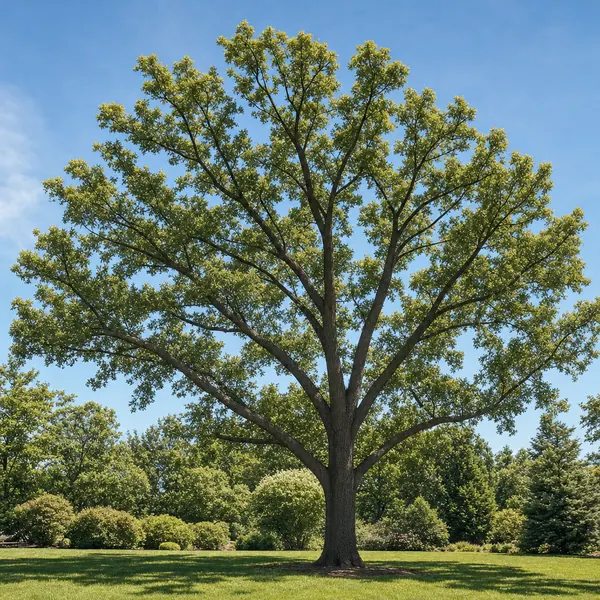
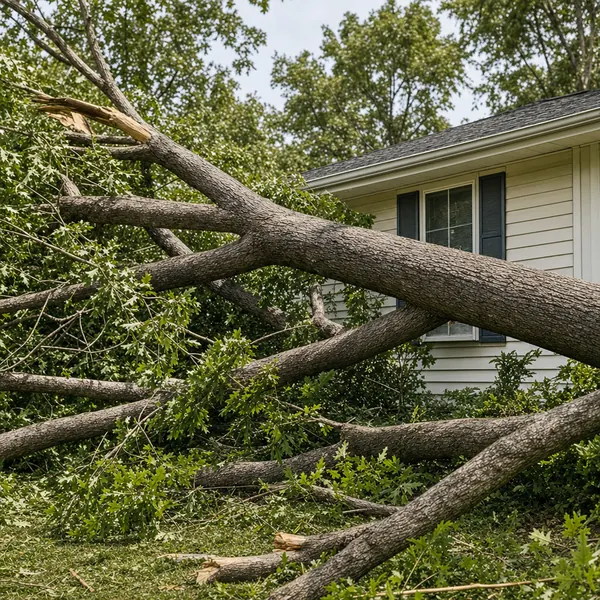
Many big trees in Plano grew two or three main trunks that split off close together in a tight V. Bark gets pinched inside that joint, called included bark, and the union is weaker than it looks. One heavy storm can split the tree in half. Cabling and bracing are how we support a joint like that before it fails.
A cable is a steel line installed high in the crown, connecting two leaders so they can’t pull too far apart in wind. A brace is a threaded steel rod set through the trunk or union, used where a crack has already started or two stems rub. Often we use both, and usually we pair them with pruning to take weight off the limbs being supported.
Support hardware is not a repair, and it doesn’t make a tree storm-proof. It lowers the risk on a tree that’s otherwise healthy. If the wood is decayed or the crack runs too deep, cabling won’t help, and we’ll tell you so rather than sell you hardware. Taylor holds the ISA Tree Risk Assessment Qualification, and that’s the kind of call he makes.
Once installed, cables should be checked periodically, since trees grow and hardware can loosen or wear. We’ll let you know what to watch for. Every crew is insured, and the plan and price are in writing before work starts.
Supporting trees through Plano storms
North Texas spring storms are hard on trees with weak forks. Straight-line winds push two trunks in different directions, and every gust works the joint a little more. In winter, an ice storm can load a long limb with far more weight than usual. Cabling doesn’t stop the wind, but it keeps two stems moving together so the joint isn’t pried open.
The trees we’re asked to cable most around Collin County are big pecans with heavy, spreading limbs, older live oaks that grew several leaders, and red oaks with tight V forks. Cedar elms sometimes need it too. We usually don’t recommend cabling Bradford pears (opens in a new tab). Their weak branch structure runs through the whole tree, and support at one fork rarely solves the problem.
Installing hardware means drilling into live wood, so timing matters on oaks. Texas A&M Forest Service (opens in a new tab) advises avoiding oak wounds from February through June because of oak wilt, so we try to schedule oak cabling outside that window unless the risk can’t wait. If the tree sits near a property line or you’re in an HOA, check with your HOA about any rules on work over shared space.
Cabling can help, or time to remove?
Hardware only makes sense on a tree that has plenty of good wood left. On the walk-through, we look at the whole tree, not just the fork you’re worried about.
Cabling can help
- A healthy tree with one tight V fork
- Included bark at a union but no open crack yet
- A long, heavy limb that pruning alone can’t lighten enough
- A small crack in sound wood that a brace can close
- A valued shade tree you want to keep for years
Time to remove
- Decay or a cavity at the union being supported
- A crack that runs deep into the main trunk
- Several weak forks all through the crown
- A tree that is declining or mostly dead
- Lean or root damage that hardware can’t address
What affects the price of cabling and bracing
A support system is designed for one tree, so the cost follows the tree and the problem it’s solving.
- Number of cables and rods. One cable across one fork is a smaller job than a system tying several leaders together.
- Height of the install. Cables go about two thirds of the way up the limbs they support, so taller trees mean more climbing.
- Size of the limbs. Heavier limbs need stronger hardware and more careful installation.
- Pruning to lighten the load. Most systems are paired with some pruning so the hardware isn’t doing all the work.
- Condition of the union. A fork that already has a crack may need bracing rods as well as a cable.
You get the hardware plan and one written price before we climb. If we find something in the canopy that changes the plan, we come down and talk with you first.
What to expect on install day
- Close look from the canopy. The climber inspects the union and anchor points up close before any drilling.
- Pruning first. Any planned pruning comes off so the supported limbs carry less weight.
- Hardware installed. Anchors are set through the limbs, the cable is run and tensioned, and rods go in where needed.
- Final check. We look over the system from the ground and in the tree to make sure it’s set right.
- Clean up and notes. Brush is hauled, the yard is tidied, and we tell you when to have the system inspected.
How to get ready
- Point out the fork or limb that worries you
- Share any history, like past storm damage or old hardware
- Move vehicles and furniture out from under the tree
- Keep pets inside while we work overhead
- Unlock the gate so the crew can get in
Cabling and bracing questions
Will cabling save my tree?
It can help a structurally weak but healthy tree stay standing longer. It won’t fix decay or a severe split. We assess the tree first and give you an honest answer.
Does cabling hurt the tree?
Hardware installed the right way causes little harm. We place it to suit the tree’s growth and avoid wrapping anything around limbs, which can girdle them.
How long do tree cables last?
It depends on the tree’s growth and the hardware, which is why regular inspections matter. We’ll tell you how often to have yours checked.
Can you see the cables from the ground?
They’re placed high in the crown, so most people don’t notice them once the tree leafs out.
Can you cable a tree that already split?
Sometimes. If the split is small and the wood is sound, bracing rods and a cable can pull it together and support it. If the crack runs deep or the halves have separated, removal is usually safer.
Is it better to cable a tree or just remove it?
It depends on how much you value the tree and how sound it is. A healthy shade tree with one weak fork is often worth supporting. A tree with decay, a bad lean or several weak points usually isn’t.
Do you use cables on young trees?
Rarely. On young trees, good structural pruning can fix a weak fork early, before it ever needs hardware. That’s cheaper and better for the tree.