

Tree Service in The Colony, TX
Storm cleanup, trimming and removals for homes around Lewisville Lake, from an insured, arborist-led crew out of Plano.
- ISA CertifiedArborist #TX-4334A (opens in a new tab)
- Fully InsuredProof on Request
- Written QuoteBefore Work Starts
- Cleaner ThanWe Found It
Tree work we do in The Colony
The Colony sits right along Lewisville Lake, and like the rest of North Texas it gets its share of spring storms. Most calls we get here are some version of these:
- Storm damage cleanup and broken limb removal
- Hanging or cracked branches taken down safely
- Trimming to thin canopies before storm season
- Removing trees that lean or fail after storms
- Stump grinding once the tree is gone

“Professional, provide quick reasonable quotes; leave the job site clean and give sound advice.”
Robin P., Google review
Most jobs in The Colony are assessed by Taylor Guynes, an independent ISA Certified Arborist #TX-4334A (opens in a new tab). Meet Taylor.
The Eagle Tree Way
1
Make it safe
We check what’s broken, hanging or leaning first.
2
Written quote
You get the price and the plan on paper.
3
Clear and prune
Damaged wood off, good cuts on what stays.
4
Haul it away
Limbs, leaves and debris gone. Yard raked.
Every job in The Colony includes
- Safety check on damaged or leaning trees
- Written quote before work starts
- Insured crew, certificate on request
- Proper pruning cuts, no topping
- Debris hauled off and yard cleaned up
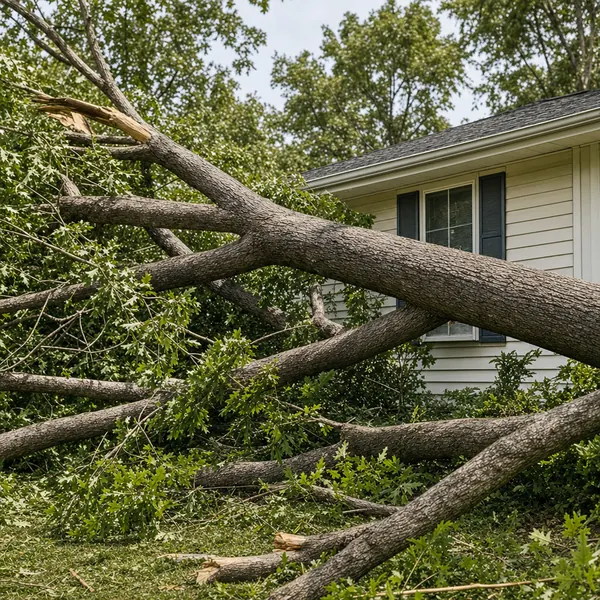
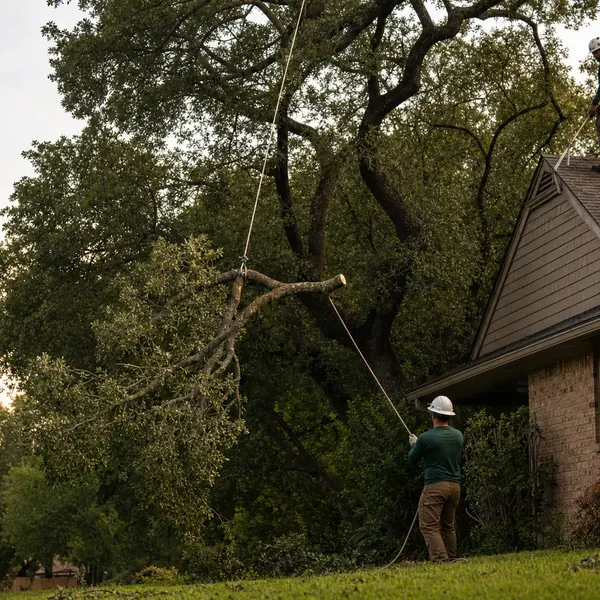
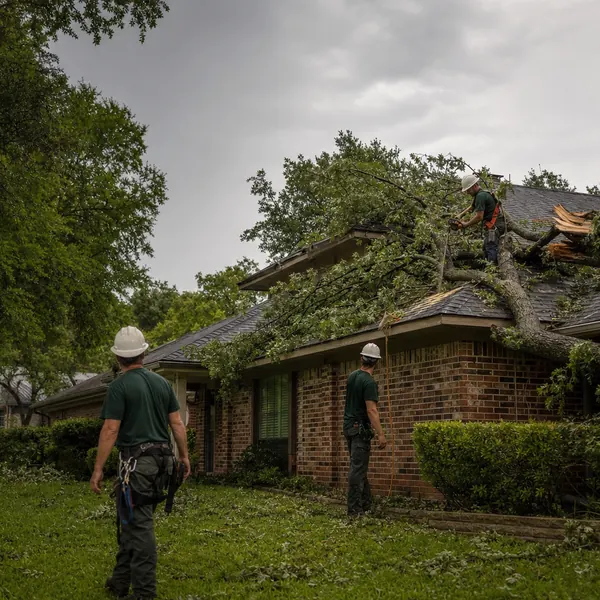
Tree services in The Colony
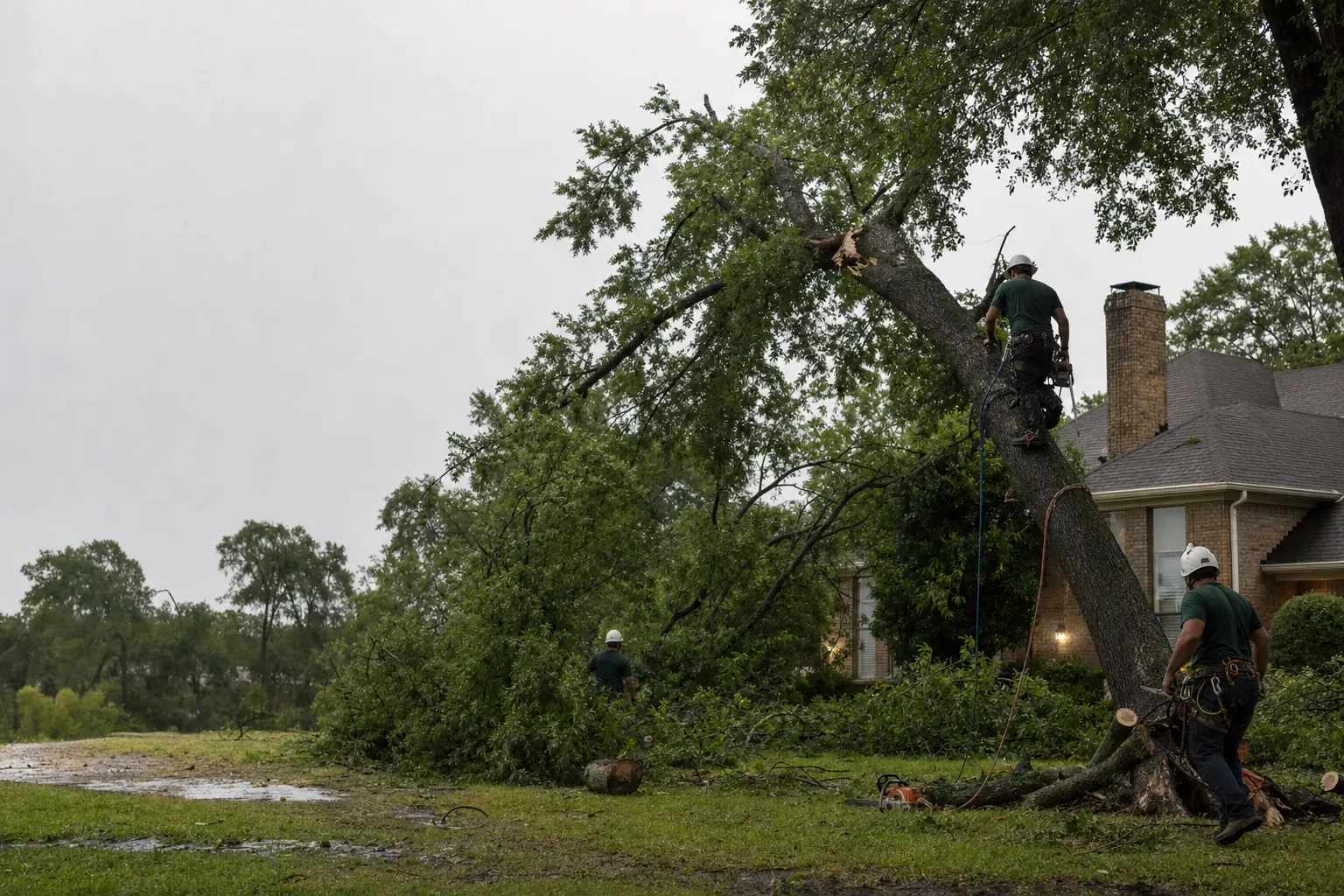
Tree Removal in The Colony, TX
Tree removal in The Colony, TX for storm-damaged, leaning and dead trees. Priority scheduling after storms, insured crew, written quote. Call (214)…
Read more
Tree Trimming in The Colony, TX
Tree trimming in The Colony, TX to get trees ready for storm season: deadwood out, canopies thinned, broken limbs cleaned up. Insured…
Read moreTree service for The Colony, before and after the storm
When a storm comes through, the first call is usually about a limb. One is hanging in the canopy, one is on the fence, or one is across the driveway. We get those calls on our priority list after storms and work through them as fast as we safely can. Hanging limbs especially are worth leaving to a crew. They can shift or drop without warning, and they’re heavier than they look.
The better fix is the work you do before storm season. Dead wood, crowded canopies and long, heavy limbs are what tend to break. Thinning a tree and taking out the dead wood lets wind move through and puts less weight where it can hurt. It doesn’t make a tree stormproof, but it lowers the odds of a bad night.
Our crew is based in Plano, close enough to The Colony that we’re in the area often. Every job starts with a written quote, every crew is insured, and we leave the yard cleaner than we found it. If you’re filing an insurance claim (opens in a new tab), your written quote spells out the work so you can share it with your insurer.
Trees and weather in The Colony
The Colony is in Denton County, on the eastern shore of Lewisville Lake (opens in a new tab). It has a lake-town feel, with parks and open water close by and plenty of homes set back from it. That open stretch of water matters for trees. Wind has a long run across the lake, and when a spring storm rolls through, trees along open edges catch more of it than trees tucked into the middle of a neighborhood.
The trees we see most are North Texas regulars: live oaks, cedar elms, red oaks, some pecans and the Bradford pears (opens in a new tab) that tend to break apart once they reach a certain size. Heavy clay soil holds water after a big rain, and a soaked root zone plus strong wind is when trees lean or tip. Hail strips leaves and bark, and the damage sometimes shows up weeks later as dieback.
From our Plano office, The Colony is a short drive west. That makes it easy for us to get out after a storm, look at what came down and what’s still hanging, and put a plan on paper for you and your insurer.
After the storm: save it or remove it?
A storm-damaged tree isn’t always a lost tree. Some just need the broken wood cleaned up. Others are hurt worse than they look. Here’s roughly how we tell the difference:
It can likely be saved
- A few broken branches, with the main trunk intact
- Torn limbs that can be cut back to a clean branch point
- Leaves stripped by hail, but buds and bark still healthy
- Most of the crown still standing
- No new lean and no lifting at the base
It probably needs to come down
- The trunk is split or cracked through
- More than half the crown is broken off
- The tree has a new lean with soil heaved up at the base
- A main fork has torn apart
- It was already dead or declining before the storm
What affects the cost of storm cleanup and tree work
Storm jobs vary a lot, and two broken trees on the same street can be very different work. These are the things that change the price:
- Where it landed. A limb on the lawn is simpler than one resting on a roof, fence or car.
- Hanging or tensioned wood. Hung-up limbs and trees under tension need extra rigging and slower, careful cuts.
- Size of the damage. One broken limb is a short job. A whole tree down is a removal.
- Access. Backyard trees behind a fence or near a pool take more handwork to get out.
- Pruning what’s left. Cleaning up torn stubs on the standing tree is extra work, but it helps the tree recover.
- Stump and haul-off. Grinding the stump and hauling away a large volume of wood both add to the scope.
Every storm job gets a written quote before work starts, even when we’re busy after a big storm. It describes the work clearly, which helps if you’re talking with your insurance company. No surprise charges on the final bill.
What to expect on a storm cleanup
- Safety first. We look at what’s hanging, leaning or touching anything before anyone goes near it.
- Make it stable. Hanging limbs and tensioned wood come down first, with ropes when needed.
- Clean up the tree. Torn stubs are cut back to proper points so the tree can seal over.
- Clear the yard. Limbs are chipped and wood hauled off, and leaves raked from beds and lawn.
- Talk next steps. If the tree needs follow-up pruning or a closer look later, we’ll tell you.
How to get ready
- Keep everyone away from hanging limbs
- Take photos of the damage for your records
- Move cars out of the drive if they can be moved safely
- Unlock gates for backyard access
- Don’t go near any line touching a tree, and call the utility about it
Questions from The Colony homeowners
A limb is hanging in my tree after a storm. What should I do?
Keep people, pets and cars out from under it and don’t try to pull it down. Call us with what you’re seeing. We give priority scheduling to storm work and will take it down safely.
Do you offer 24-hour emergency service?
No. Our office is open Monday through Friday, 9 AM to 5 PM. After storms we move storm damage to the front of the schedule, and we call back the same business day on quote requests.
Can trimming help my trees handle storms?
It can lower the risk. Removing dead wood and thinning a crowded canopy reduces the weight and wind load on the tree. We prune to proper cut points so the tree stays strong after.
Will my insurance cover storm damage cleanup?
That’s a question for your insurance company, since every policy is different. We can give you a clear written quote that describes the work, which you can share with them.
Does being near the lake make my trees more likely to break?
Trees along open edges, near water or fields, tend to catch more wind than sheltered ones. That doesn’t mean they’ll fail, but keeping deadwood out and the canopy thinned helps. We’ll point out any trees we think are more exposed.
How long after a storm can you come out?
We give storm work priority scheduling, and we call back the same business day on quote requests. After a big storm the schedule fills up, so it helps to call early and tell us what you’re seeing.
Do I need city or HOA approval to remove a storm-damaged tree?
It depends on your HOA and the City of The Colony (opens in a new tab), and rules can differ for damaged trees. Check with them before a removal. We can help you think it through and give you a written description of the damage.
Is hail damage to trees serious?
Often it looks worse than it is. Trees can push out new leaves after hail strips them. Bark wounds and broken twigs are worth watching, and we can check a tree if it’s still struggling weeks later.