
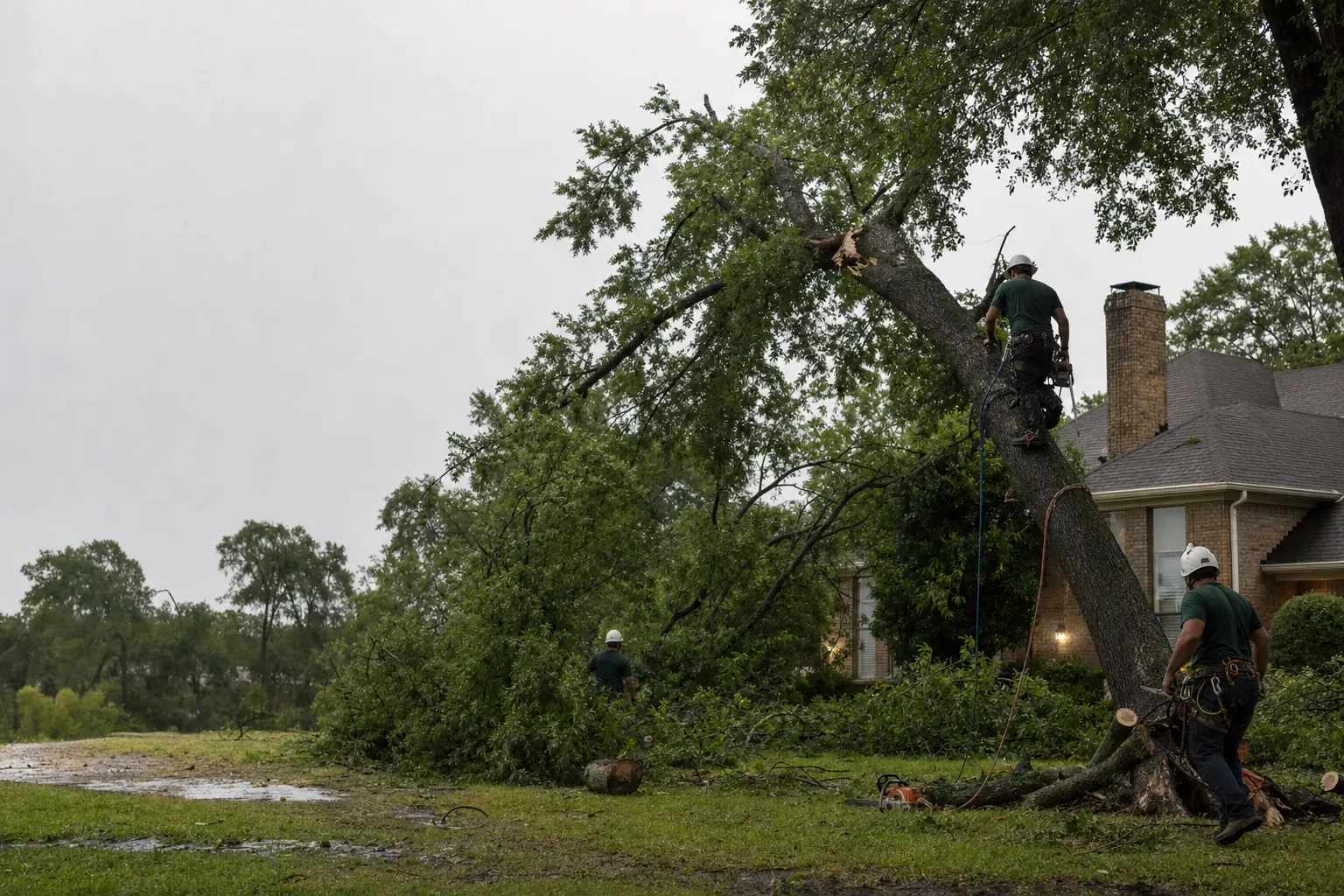
Tree Removal in The Colony, TX
Storm-broken, leaning or dead trees in The Colony, taken down safely by an insured crew with a written price first.
- ISA CertifiedArborist #TX-4334A (opens in a new tab)
- Fully InsuredProof on Request
- Written QuoteBefore Work Starts
- Cleaner ThanWe Found It
When a tree in The Colony needs to come out
After a storm or a long wet spell, these are the warning signs that a tree may not be safe to keep:
- A new lean after storms or heavy rain
- Soil cracked or lifted on one side of the trunk
- A trunk split or major limb torn away
- A tree that’s mostly dead or bare
- Broken tops hanging in the canopy

“From the time I originally contacted them for a quote to the job completion was super fast. Their work fabulous and I’m very happy with the outcome.”
Clifton G., Google review
Most removals in The Colony are assessed by Taylor Guynes, an independent ISA Certified Arborist #TX-4334A (opens in a new tab). Meet Taylor.
The Eagle Tree Way
1
Size up the danger
What’s hanging, leaning or loaded, and what’s under it.
2
Written quote
The price on paper, even after a storm.
3
Controlled removal
Damaged trees taken apart carefully, not rushed.
4
Clear the yard
Wood, limbs and debris hauled off.
Included in every removal in The Colony
- Safety check on damaged or leaning trees
- Written quote before work starts
- Priority scheduling after storms
- Insured crew, certificate on request
- Haul-off and cleanup

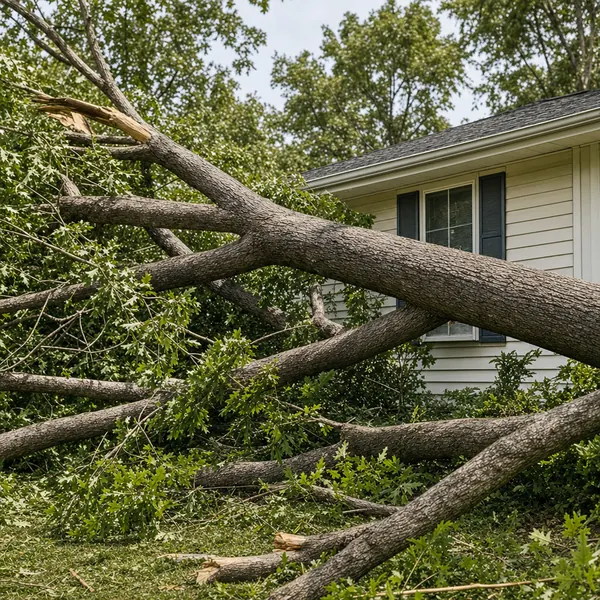
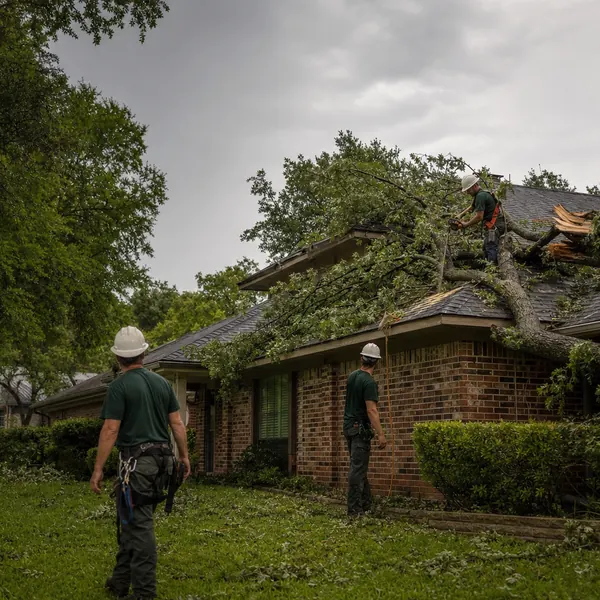
Removing storm-damaged trees in The Colony
Storm-damaged trees are some of the trickiest removals there are. A split trunk or a half-broken top stores tension in ways you can’t always see, and wood under tension can move suddenly when cut. That’s why we take our time on these, even when everyone wants the tree gone fast. We read how the tree is loaded, cut in the right order and lower the damaged parts first.
A tree that suddenly leans after a storm or a long run of rain deserves a quick look. North Texas clay can hold a lot of water, and saturated soil gives roots less grip. If you see the soil heaving or cracking on one side of the trunk, the roots may have shifted. That’s a tree to keep people away from until it’s checked.
After storms, we move storm work to the front of our schedule. Our crew comes from nearby Plano and works in The Colony regularly. You still get a written quote before we start, because a storm is exactly when fly-by-night crews show up with no insurance and no paperwork. Ask for our certificate. We’ll send it.
Tree removal along the Lewisville Lake shore
The Colony sits in Denton County on the edge of Lewisville Lake (opens in a new tab), and that open water matters for trees. Wind picks up speed across the lake with nothing to slow it down, so trees on the exposed side of a yard or street catch gusts that inland trees never feel. Over years, that steady push can leave a tree leaning, one-sided or loose at the roots.
The ground here is the same heavy North Texas clay found across the area. It swells when spring rains soak it and shrinks and cracks in a dry August. Roots that sit in that cycle year after year can rot, tear or lose their hold, and a tree with weak roots may look fine right up until a storm finds it.
Homes in The Colony range from older lots with mature pecans, red oaks and cedar elms to newer yards with younger trees planted close to the house. Both kinds of yards end up needing removals, just for different reasons. We’re a short drive from our Plano office, so getting out for a look is easy.
Save it or take it down?
Not every storm-hit tree has to go. Here’s how we sort the ones worth keeping from the ones that aren’t safe to leave standing.
Worth trying to save
- A broken limb or two, with a solid trunk underneath
- A lean the tree has had for years, with firm soil at the base
- Hail-torn leaves and bark nicks but no structural breaks
- Deadwood that can be pruned out, with healthy growth elsewhere
- A tree that can be cabled to support a weak fork
Time to remove it
- A new lean with soil heaving or roots exposed on one side
- A trunk split down through a main fork
- Mushrooms or soft, crumbly wood at the root flare
- More than half the canopy dead or broken off
- A failing tree leaning over the house, driveway or a play area
What affects the price of tree removal in The Colony
Every removal is priced on its own, after we’ve seen the tree. These are the things that move the number most.
- Size of the tree. Taller, wider trees mean more cuts, more climbing and more wood to haul away.
- What’s underneath it. A tree over a roof, pool or fence has to be lowered piece by piece, which takes more time and rigging.
- Storm damage. Split or hung-up wood is under tension and has to be cut in a careful order, so damaged trees take longer than healthy ones.
- Access to the yard. Narrow side gates and fenced backyards can mean carrying wood out by hand instead of driving equipment in.
- Lean and root condition. A tree leaning hard or loose in the ground needs extra rigging to control where it goes.
- Stump and extras. Stump grinding and keeping firewood rounds are quoted as separate line items, so you choose what you want.
You get a written quote before any work starts, with the scope spelled out. If something changes once we’re up in the tree, we talk to you first. No surprise charges added to the bill afterward.
What to expect on removal day
- Walk the site. The crew lead checks the tree, the drop zone and anything nearby that needs protecting.
- Set up and protect. Cones go out, vehicles get moved and soft spots in the lawn are covered where equipment rolls.
- Take it down in sections. Limbs come off first, then the trunk is lowered in pieces with ropes where space is tight.
- Clean up. Brush is chipped, wood is hauled off and the yard is raked and blown.
- Final look. We walk the yard with you before we leave so you can see it’s done right.
How to get ready
- Move cars out of the driveway and off the street near the tree
- Bring in patio furniture, grills and planters from the work area
- Unlock side gates and keep pets indoors
- Let close neighbors know if the tree hangs over their yard
- Point out sprinkler heads or buried lines you know about
The Colony tree removal questions
My tree started leaning after a storm. Is that an emergency?
A fresh lean, especially with soil lifting at the base, can mean the roots have failed. Keep people and cars away from where it would fall and call us. Storm work gets priority scheduling.
How do I avoid storm chasers after a big storm?
Ask for proof of insurance and a written quote before any work starts. A local crew with a real office and a certificate to show you is the safer choice. We’ll give you both.
Can a storm-damaged tree be saved instead?
Sometimes. If the trunk and roots are sound, removing the broken limbs and pruning the rest can be enough. We’ll check and tell you honestly before quoting a removal.
Do you remove the stump after a storm removal?
We can. Stump grinding is quoted separately so you can decide, and it can often be done on the same visit or soon after.
Why do trees near the lake seem to blow over more?
Open water gives wind a long, clear run before it reaches the first rows of homes, so exposed trees take harder gusts. A tree that grew up sheltered and then lost its neighbors can be caught off guard. We look at exposure as part of every removal assessment.
Can you take a tree down if it’s close to my house?
Yes. Most trees near homes are taken down in sections and lowered with ropes instead of felled in one piece. That keeps heavy wood off the roof, gutters and fence.
Do I need a permit to remove a tree in The Colony?
Rules vary, so check with your city (opens in a new tab) or HOA before work starts. If you’re not sure where to look, ask us and we’ll tell you what questions to raise.
What happens to the wood?
We haul it off as part of the job. If you’d like some rounds kept for firewood, tell us before we start and we’ll cut and stack them where you want.