

Tree Trimming & Pruning in Plano, TX
Pruning that keeps your trees healthy, shapely and off the roof. Every cut has a reason, and the price is in writing first.
- ISA CertifiedArborist #TX-4334A (opens in a new tab)
- Fully InsuredProof on Request
- Written QuoteBefore Work Starts
- Cleaner ThanWe Found It
Signs your trees are due for a trim
Good pruning is planned, not rushed. Most mature trees in Plano do well with a trim every few years. These are the signs it’s time to call:
- Limbs touching the roof, gutters or siding
- Branches hanging low over the drive or sidewalk
- Crowded, crossing limbs in the canopy
- Lopsided growth after years of no care
- An HOA letter about clearance or sight lines

“Eagle Tree Experts did a great job on trimming our big red oak tree. They provided us with a quick, reasonable quote, did a great job on the tree and were very professional and helpful.”
Terri G., Google review
Most trimming plans are set by Taylor Guynes, an independent ISA Certified Arborist #TX-4334A (opens in a new tab). Meet Taylor.
The Eagle Tree Way
1
Walk the tree with you
We hear what bugs you and look at how the tree is built.
2
A pruning plan on paper
Which limbs come off, why, and one written price.
3
Clean, proper cuts
Cut at the branch collar so the tree seals over.
4
Brush gone, yard tidy
Limbs chipped and hauled, lawn raked and blown.
Included in every trimming job
- A plan built around the tree’s health
- Written quote before work starts
- Cuts made to mainstream pruning standards
- Roof and fence clearance where you need it
- All brush chipped and hauled away

Specialty trimming

Deadwood Removal in Plano, TX
Deadwood removal in Plano, TX: dead limbs cut out of living trees before they fall on your roof, car or family. Insured,…
Read more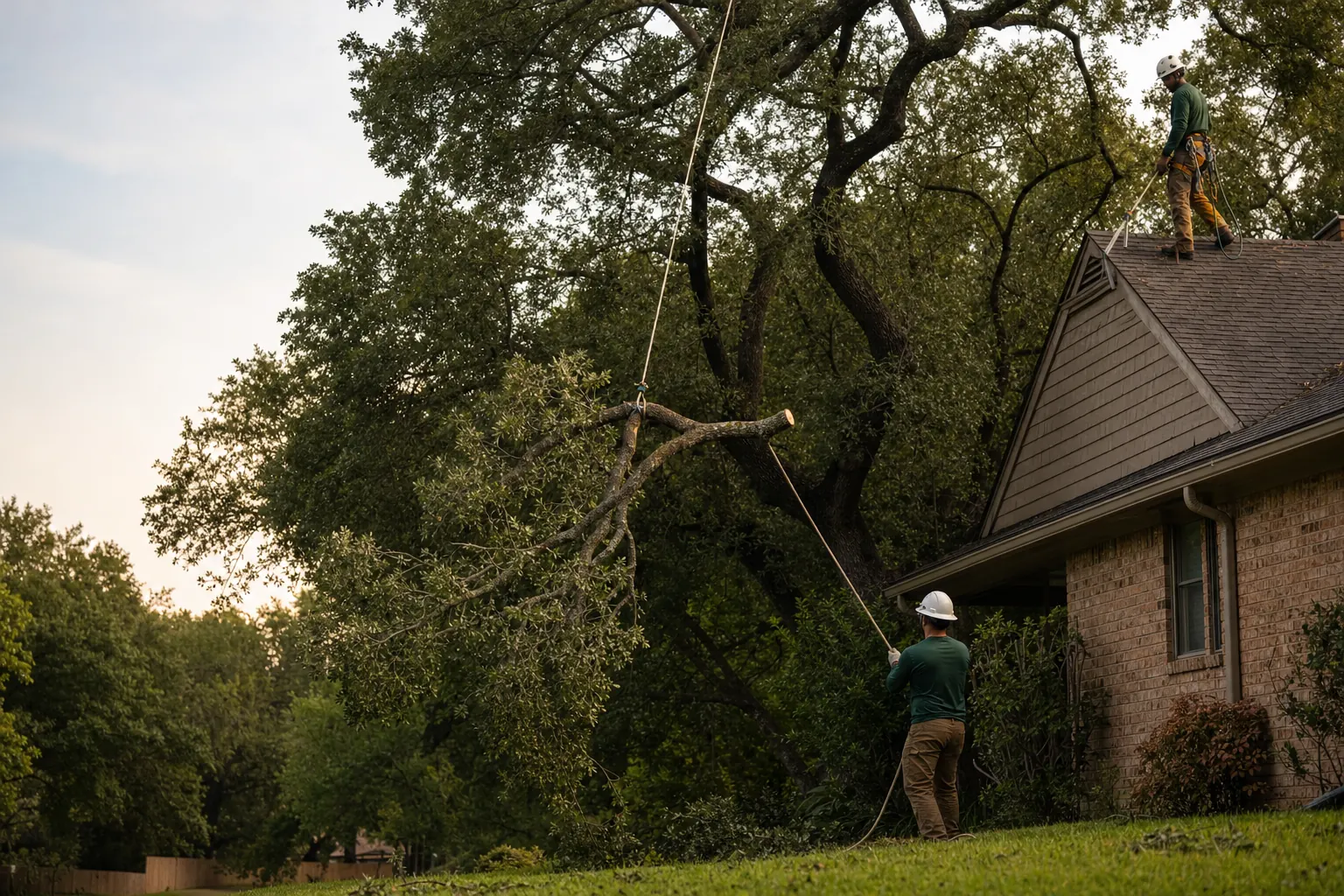
Tree Branch Removal in Plano, TX
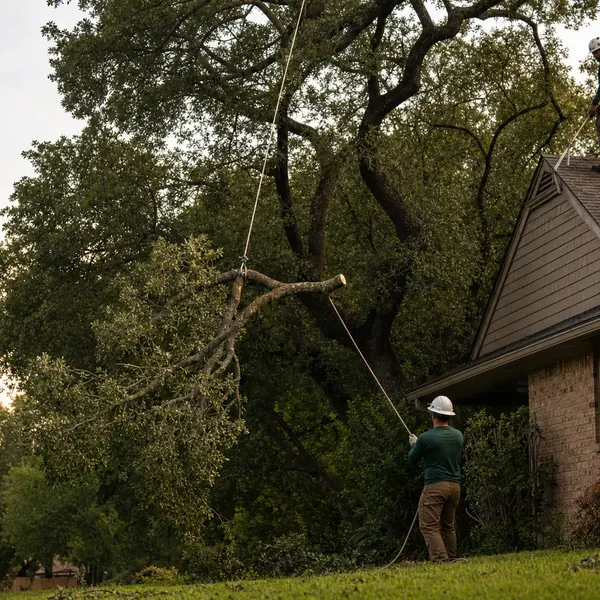
Tree branch removal in Plano, TX for specific limbs over your roof, driveway or lines. Roped down, cut clean, priced in writing.…
Read moreHow we trim trees in Plano
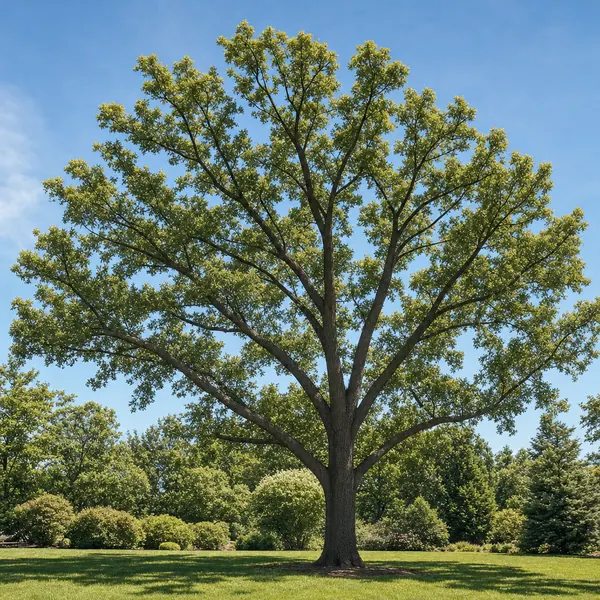
A good trim is mostly about what you leave on the tree. We thin out crossing and crowded limbs, lift low branches off the drive and pull growth back from the roof, then stop. Taking too much at once stresses a tree, and a stressed tree in a Plano summer has a hard time.
We don’t top trees. Topping leaves big stubs that rot and sprout weak, crowded shoots that break in the next storm. If a tree is simply too big for its spot, we’ll talk about crown reduction, which shrinks the tree by cutting back to healthy side branches instead of hacking off the top.
Timing matters too, especially with oaks. Texas A&M Forest Service (opens in a new tab) recommends avoiding oak pruning from February through June because fresh cuts can attract the beetles that spread oak wilt. For live oaks and red oaks, we plan around that window unless a broken or dangerous limb can’t wait, and we’ll explain the tradeoff if it comes up.
Every crew is insured, and we’ll send the certificate if you ask. You get the pruning plan and the price in writing before anyone climbs, and when we leave, the brush is gone and the yard is cleaner than when we pulled up.
Trimming trees in Plano’s climate
Plano trees live a hard life. Summers are long and hot, the clay soil goes from soggy to cracked in a few weeks, and spring storms bring wind and hail that test every weak limb. Good pruning here is partly about looks, but it’s mostly about getting a tree through that cycle. A canopy that’s been thinned of crossing and dead limbs lets wind through instead of catching it like a sail.
The trees we prune most around Collin County are live oaks, cedar elms, red oaks and pecans. Live oaks tend to grow low and wide and need lifting over drives and roofs. Cedar elms put out lots of fine twiggy growth and respond well to selective thinning. Pecans get heavy, long limbs that are worth shortening before a storm does it for you. Bradford pears (opens in a new tab) are a different story, and pruning only buys them a little time.
Oak timing matters a lot here. Texas A&M Forest Service advises avoiding oak pruning from February through June because of oak wilt, so we try to get oak work done in the cooler months or late summer. If your HOA has rules about clearance over sidewalks or streets, check with your HOA for their exact requirements and we’ll plan the cuts to meet them.
Trim it or take it out?
Most trees that look overgrown just need a good pruning. A few are past the point where trimming makes sense. This is how we tell them apart.
A trim will fix it
- Limbs rubbing the roof or gutters on a healthy tree
- A dense canopy with crossing and crowded branches
- Low limbs over the drive, sidewalk or street
- Scattered deadwood in an otherwise green tree
- A lopsided shape from years without care
Trimming won’t be enough
- Much of the canopy is dead or thinning year after year
- Large cracks or cavities in the main trunk
- The tree is simply too big for the spot even after reduction
- Mushrooms or soft wood at the base
- A Bradford pear that has already started splitting
What affects the price of tree trimming
Trimming prices vary more than people expect, because two trees of the same height can take very different amounts of work.
- How much pruning the tree needs. A quick roof clearance is a smaller job than a full structural prune on a tree that hasn’t been touched in years.
- Tree size and spread. A wide live oak with dozens of long limbs takes longer to work through than a narrow, upright tree.
- Climbing versus lift access. If a lift can’t reach the tree, a climber does the work by hand, which affects time and crew size.
- Targets below. Limbs over the roof, pool or a neighbor’s fence need to be roped down instead of dropped.
- Number of trees. Pruning several trees on one visit is usually more efficient than scheduling them one at a time.
- Brush volume. Heavy thinning creates more brush to chip and haul, and that’s part of the job.
You get a pruning plan and one written price before anyone climbs. That price covers the cuts we agreed on and full brush cleanup, with no add-ons sprung on you at the end.
What to expect on trimming day
- Quick review of the plan. The crew lead goes over the cuts with you so there are no surprises.
- Climbing and pruning. A climber works through the canopy, cutting at the branch collar and roping limbs over anything breakable.
- Stepping back to check. We look at the tree from the ground as we go so the shape stays balanced.
- Chipping as we work. Brush is fed through the chipper so the yard doesn’t pile up.
- Clean up and walk through. Lawn, beds and drive are raked and blown, and we look at the finished tree with you.
How to get ready
- Tell us about any limbs you especially want kept or removed
- Move vehicles away from the trees being pruned
- Clear patio furniture and planters from under the canopy
- Keep pets inside during the work
- Unlock the gate and point out sprinkler heads near the trees
Tree trimming questions
How often should trees in Plano be trimmed?
Most mature shade trees do well with a pruning every three to five years. Young trees benefit from lighter, more frequent shaping. We’ll tell you what your trees actually need, not sell you a schedule.
When is the best time to trim oak trees?
Outside of February through June, when oak wilt (opens in a new tab) risk is highest, per Texas A&M Forest Service guidance. Late summer through winter is usually the safer window for oaks.
Will trimming hurt my tree?
Proper pruning helps it. Damage comes from topping, flush cuts and taking off too much live wood at once. We cut at the branch collar and keep the removal to what the tree can handle.
What’s the difference between trimming and pruning?
People use the words interchangeably. We think of pruning as the careful, health-focused work and trimming as clearance work like lifting limbs off the roof. A good job usually includes both.
Can you trim a tree that hangs over from my neighbor’s yard?
Generally we only prune trees with the owner’s say. If limbs from next door are over your roof, talk with your neighbor first. We’re happy to look at it with both of you and suggest cuts that work for everyone.
How much will you take off?
As little as gets the job done. For a mature tree that usually means a modest share of the live canopy, not a heavy thinning. We’ll show you which limbs we plan to cut before we climb.
Do I need to be home while you trim?
It helps to walk the tree together first so we agree on the plan. After that, as long as we can get into the yard, you don’t need to stay.
Is summer a bad time to prune?
Light pruning and clearance work are fine in summer for most trees. We avoid heavy cuts during the hottest stretch because the tree is already under stress, and oaks have their own timing because of oak wilt.