

Tree Trimming in Richardson, TX
Mature Richardson trees need lighter, smarter pruning than young ones. We take what helps the tree and leave the rest.
- ISA CertifiedArborist #TX-4334A (opens in a new tab)
- Fully InsuredProof on Request
- Written QuoteBefore Work Starts
- Cleaner ThanWe Found It
Signs your mature tree needs attention
Older trees tell you when they need care. Here’s what we look for in Richardson canopies:
- Dead limbs high in the crown
- Long, heavy limbs reaching over the roof
- Old storm breaks that never healed right
- Branches tangled in service lines to the house
- Thin, sparse leaves in part of the canopy

“Eagle Tree Experts did a great job on trimming our big red oak tree. They provided us with a quick, reasonable quote, did a great job on the tree and were very professional and helpful.”
Terri G., Google review
Most Richardson trimming jobs are planned by Taylor Guynes, an independent ISA Certified Arborist #TX-4334A (opens in a new tab) and former municipal urban forester. Meet Taylor.
The Eagle Tree Way
1
Inspect the canopy
Deadwood, weak spots and heavy limbs noted.
2
Written scope
What we’ll prune and why, with the price.
3
Prune with restraint
Deadwood out, weight eased, no topping.
4
Clean the yard
Every limb and twig hauled off.
Included in every Richardson trimming
- Deadwood removal throughout the canopy
- Weight reduction on long, heavy limbs
- Roof and structure clearance
- Insured crew and written quote
- Complete cleanup


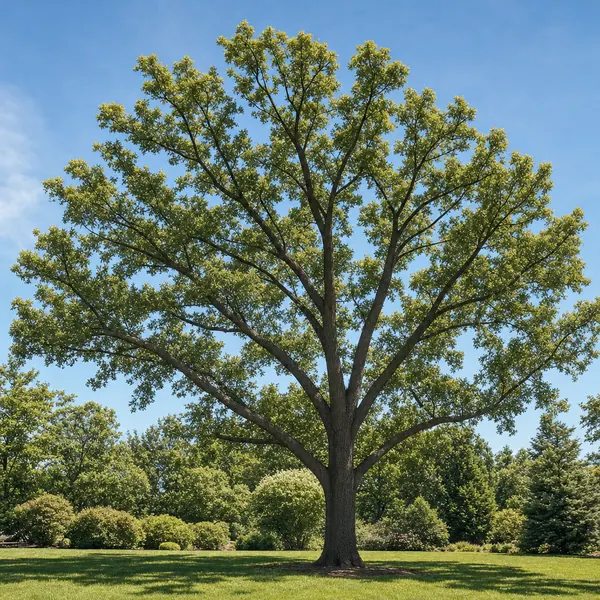
Pruning Richardson’s older trees the right way
Old trees don’t want heavy pruning. A mature oak or pecan has less energy to spare than a young tree, and big cuts close slowly. So when we trim in Richardson, most of the work is targeted. We take out dead wood, which is the most likely thing to fall, and we shorten a few long limbs that put too much weight out over the roof.
What we won’t do is top the tree. Topping cuts big limbs back to stubs. The tree answers with a burst of fast, weakly attached shoots, and the stubs often rot. Within a few years you have a tree that’s more dangerous than before. If a tree needs to be smaller, crown reduction cuts back to healthy side branches and keeps the natural shape.
Timing matters for the oaks that are common in established North Texas neighborhoods. Texas A&M Forest Service (opens in a new tab) advises avoiding oak pruning from February through June because of oak wilt, so we plan oak work outside that window when we can. Our crew works out of Plano, and every Richardson job ends with the yard cleaner than we found it.
Caring for Richardson’s mature canopy
Richardson spans Dallas and Collin counties and is one of the area’s more established suburbs. Many of its shade trees have had decades to grow, so a typical trimming call here involves a big pecan or oak rather than a young ornamental. Those trees give the town its shade, and they need a lighter touch than most people expect.
Old pecans can shed limbs without much warning, so we spend a lot of time clearing deadwood from their crowns. Elms and oaks tend to send long limbs out over roofs and across alley fences, where trash trucks and delivery vans pass underneath. Pruning those back restores clearance without thinning the tree into a pole.
Hot, dry summers and heavy clay soil already stress these trees, and spring storms find any weak wood. Good pruning lowers that risk while leaving plenty of leaves to feed the tree. We’re based in Plano, close enough to stop by and study the canopy before we write anything up.
Light pruning or bigger work?
Most mature trees only need a light touch. Sometimes, though, what we find up in the canopy calls for more. Here’s how the two usually compare:
Light pruning is enough
- A few dead twigs and small limbs in the crown
- Branches just starting to brush the roof or gutters
- One or two limbs hanging low over the alley
- Full, healthy leaf cover through the canopy
- A past trimming that has held up well
Needs bigger work
- Large dead limbs over the house, patio or play area
- Heavy limbs that reach far past the trunk
- Old storm damage with torn stubs or rot
- Signs of decay where big branches meet the trunk
- Limbs crossing and rubbing hard against each other
What affects the price of tree trimming in Richardson
We price trimming after looking at the tree, because two trees of the same size can need very different work. These are the main things that shape the quote:
- Height and spread. A tall pecan with a wide crown takes longer to climb and work through than a smaller tree.
- Amount of deadwood. A canopy full of dead limbs means more cuts and more careful lowering.
- What’s below the limbs. Pruning over a roof, skylight or fence means tying off more pieces instead of letting them fall.
- Clearance goals. Raising limbs over an alley or pulling them back from the roof adds specific cuts to the scope.
- Number of trees. Handling several trees in one visit is often more efficient than separate trips.
- Brush volume. Big canopies create a lot of brush to chip and haul, and that cleanup is part of the work.
Your quote is in writing and lists the trees, the cuts we plan and the cleanup. If we find something unexpected up in the canopy, we stop and talk with you before doing any extra work, so there are no surprise charges.
What to expect on trimming day
- Quick check-in. The crew lead reviews the written scope with you and confirms which limbs are coming out.
- Climbing and rigging. A climber ties in high in the tree, and limbs over the roof are roped down instead of dropped.
- Deadwood first. Dead and broken limbs come out before any live wood, since they pose the most risk.
- Clearance cuts. Limbs over the roof, driveway and alley are shortened back to healthy side branches.
- Chip and sweep. Brush goes through the chipper, and the yard, drive and alley are swept before we go.
How to get ready
- Park cars away from the trees being pruned
- Move outdoor furniture and potted plants from under the canopy
- Point out sprinkler heads or low lighting near the trunk
- Bring pets indoors while the crew works
- Show us any limb you especially want kept or removed
Richardson tree trimming questions
How often should a mature tree be trimmed?
Many mature shade trees do well with a check and light pruning every few years. Trees over a roof or with a lot of deadwood may need it sooner. We’ll tell you what we see.
What’s the difference between trimming and crown reduction?
Trimming removes specific branches: dead, crossing or in the way. Crown reduction shortens the whole canopy evenly, cutting back to healthy side branches, when the tree needs to be smaller overall.
Is deadwood really a big deal?
Yes. Dead limbs dry out and get brittle, then drop in wind or under their own weight. In a big old tree they can be heavy, so removing them is one of the most useful things you can do.
Branches are touching the wires to my house. Can you trim them?
Tell us what kind of line it is when you call. Some lines may need the utility (opens in a new tab) involved first. We’ll talk it through with you before any work near them.
When is the best time to trim oaks in Richardson?
Texas A&M Forest Service advises avoiding oak pruning from February through June because of oak wilt (opens in a new tab). Later summer through winter is usually a safer window, and fresh oak cuts should be painted right away.
Who trims limbs near the lines on the utility poles?
Lines on poles are usually handled by the utility or its contractors, so call your electric provider about those. For the line running from the pole to your house, tell us when you call and we’ll talk through the options.
Why do old pecans drop big limbs?
Older pecans often carry dead or weakly attached wood, and limbs can fail with little warning, sometimes even on calm days. Regular deadwood removal is the best way to lower that risk over your house.
Will trimming make my tree healthier?
Good pruning removes dead and damaged wood that can invite decay, and it eases weight on stressed limbs. Over-pruning does the opposite. We take only what helps and leave the leaves the tree needs to feed itself.