
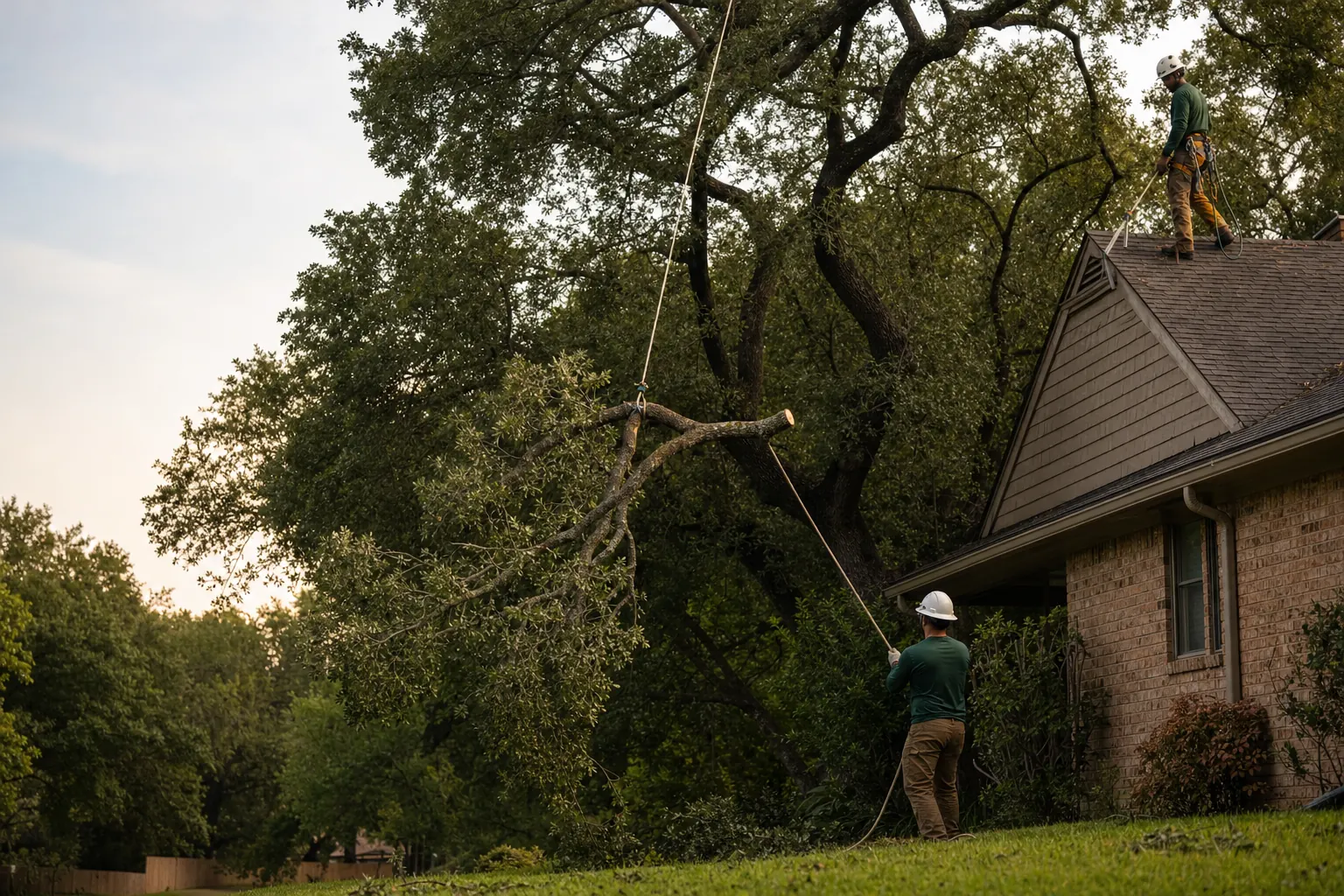
Tree Branch Removal in Plano, TX
One limb over the roof. Two over the drive. You don’t need the whole tree trimmed, just the branches that are causing trouble.
- ISA CertifiedArborist #TX-4334A (opens in a new tab)
- Fully InsuredProof on Request
- Written QuoteBefore Work Starts
- Cleaner ThanWe Found It
Branches people call us about
Branch removal is targeted work. You point at the problem, we figure out the right cut. The usual suspects:
- A limb rubbing the shingles or gutters
- Branches scraping trucks in the driveway
- Limbs tangled near service lines to the house
- A heavy branch reaching over the neighbor’s yard
- Low limbs blocking a window, walk or sign

“Eagle Tree Experts did a great job on trimming our big red oak tree. They provided us with a quick, reasonable quote, did a great job on the tree and were very professional and helpful.”
Terri G., Google review
Most branch removal jobs are looked over by Taylor Guynes, an independent ISA Certified Arborist #TX-4334A (opens in a new tab), so each cut fits the tree. Meet Taylor.
The Eagle Tree Way
1
Point out the problem
You show us the branches, we check how they attach.
2
Confirm the cuts in writing
Exactly which limbs come off, and one price.
3
Rope, cut and lower
Each branch lowered so it misses the roof and fence.
4
Clean finish
Brush hauled off, gutters and lawn cleared of debris.
Included in every branch removal
- Cuts placed to protect the tree
- Written quote listing each branch
- Rigging over roofs, fences and cars
- Brush chipped and hauled away
- Gutters and roof edge cleared of debris


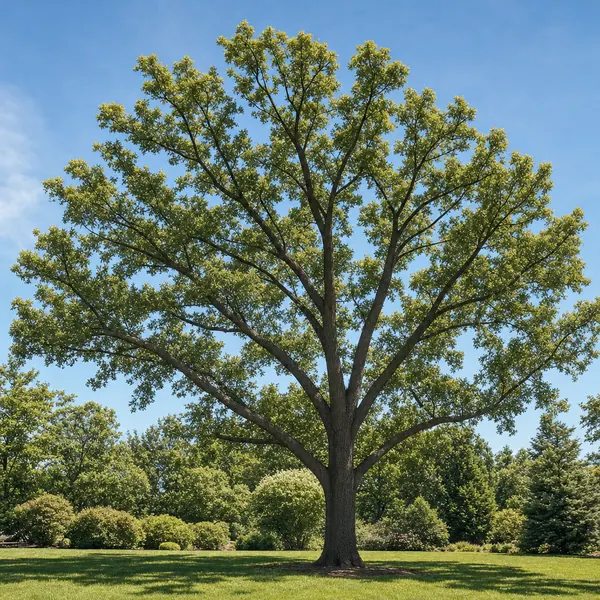
Removing branches the right way
Sometimes the tree is fine and one branch is the problem. A limb that grew out over the roof scuffs the shingles and drops leaves in the gutters. A low branch scrapes every car that pulls into the drive. Taking that limb off is a small job, but where the cut goes still matters.
We cut back to the branch collar or to a healthy side branch, never in the middle of a limb. A stub left halfway out can’t seal over, so it rots and sends up a bunch of weak sprouts. A proper cut heals cleanly and keeps the tree’s shape natural.
Big branches over a house get roped and lowered in pieces. It takes an extra person on the ground and a little more time, and it’s the difference between a clean job and a cracked roof tile.
Branches tangled in the main power lines on the street are the utility’s job, and only their crews should work near those lines. For the service line running to your house, call us and we’ll tell you what we can safely do. If your branches are on an oak, we’ll talk about timing, since Texas A&M Forest Service (opens in a new tab) advises avoiding oak pruning from February through June because of oak wilt.
Branch problems we see in Plano yards
In many Plano yards, trees were planted close to the house when the yard was new. Years later, a live oak or cedar elm is reaching across the roof and a red oak by the drive is brushing the tops of trucks. Live oaks spread wide and low, so their limbs tend to end up over roofs, fences and sidewalks rather than straight up.
Our weather makes it worse. Spring storms whip limbs against shingles and gutters, and a branch that only touched the roof on a calm day can grind through it in a hard wind. Bradford pears (opens in a new tab) are another common call. Their branches grow at tight angles and tend to split off, so one heavy limb over the drive is worth taking off before a storm does it for you.
Oaks bring up timing. Texas A&M Forest Service advises avoiding oak pruning from February through June because of oak wilt (opens in a new tab), and painting fresh cuts on oaks whenever they’re made. If a branch on an oak is a real hazard, we’ll talk about whether it should come off now or wait until summer. If your HOA has rules about sidewalk or street clearance, check with your HOA for the details.
Remove the branch or shorten it?
Not every problem branch has to come off at the trunk. Sometimes a shorter cut solves the problem and keeps more of the tree.
Shorten it back
- It only overhangs the roof by a few feet
- There’s a healthy side branch to cut back to
- Removing it would leave a big hole in the canopy
- The limb is sound, just in the wrong place
- You want to keep shade over the house
Take it off at the collar
- The branch is dead, cracked or partly broken
- It will keep rubbing the roof or another limb however it’s cut
- It grows from a weak, tight angle on the trunk
- Shortening would leave a stub with no side branch
- It hangs low over the drive and keeps getting hit
What affects the price of branch removal
Branch removal is usually one of our smaller jobs, but the price still depends on the branches themselves.
- Number of branches. One limb is a quick visit. Several around the house takes longer, though it’s more efficient than separate trips.
- Size and weight. A limb as thick as your wrist can often be cut and dropped. One as thick as your leg over the roof needs rigging.
- What it’s over. Branches over shingles, skylights, pools or fences get roped and lowered in pieces.
- How high it is. Low limbs over a walk can often be reached from the ground. Branches high over the roof need a climber.
- Lines nearby. Service lines to the house slow the work and limit what can be cut. Main lines on the street are the utility’s call.
- Roof and gutter cleanup. Branches over the roof leave leaves and twigs behind, and clearing them is part of the plan.
The written quote lists each branch we’ll remove, so you can add or drop one before we start and know exactly what that changes.
What to expect when we remove a branch
- Match the quote to the tree. We check each limb on the written quote against the tree, with you there if you’d like.
- Set the rigging. For branches over the house, the climber ties in above the limb and sets a lowering line before cutting.
- Cut in stages. Heavy limbs come off in pieces, starting from the tip, so no single piece is too heavy to control.
- Final cut in the right spot. The last cut goes at the branch collar or a healthy side branch, never partway along the limb.
- Clear the roof and gutters. We pull leaves and twigs off the roof edge and out of the gutters, then chip and haul the brush.
How to get ready
- Mark or photograph the branches you want gone
- Move cars out of the drive if branches hang over it
- Clear patio furniture and planters away from the house wall
- Tell your neighbor if a branch reaches over their yard
- Let us know about skylights, solar panels or satellite dishes near the limbs
Branch removal questions
Can you remove just one or two branches?
Yes. Small, targeted jobs are welcome. We’ll list each branch on the written quote so you know exactly what you’re paying for.
Can I cut branches that hang over from my neighbor’s tree?
That depends on local rules and your HOA. It’s worth talking to your neighbor and checking with your city (opens in a new tab) or HOA first. We can explain the cut that won’t harm the tree.
Will removing a big branch hurt the tree?
One well-placed cut is usually fine. Taking off too many large limbs at once is what stresses a tree. If a cut would be too big, we’ll suggest a better option.
Do you work near power lines?
Lines on the street belong to the utility (opens in a new tab), and their crews handle trees near them. For the service drop to your house, ask us and we’ll tell you what’s safe.
How much clearance should branches have from my roof?
Enough that they won’t touch the roof when the tree moves in wind. Branches swing and sag, especially when wet, so we cut back further than the spot where they touch today. We’ll show you where we plan to cut.
Can you cut a branch without making the tree lopsided?
Usually, yes. We choose cuts that keep the tree balanced. If one side needs a lot taken off, we may suggest a light trim on the other side or crown reduction.
Will the branch just grow back toward the roof?
Not if it’s taken off at the collar. If it’s shortened to a side branch, that side branch keeps growing, just more slowly and in a better direction. Trees close to a house often need a clearance trim every few years.
What’s wrong with cutting a branch flush with the trunk?
A flush cut removes the branch collar, the tissue that helps the tree close the wound. The wound ends up bigger and slower to seal, and decay can get into the trunk. We cut just outside the collar.