
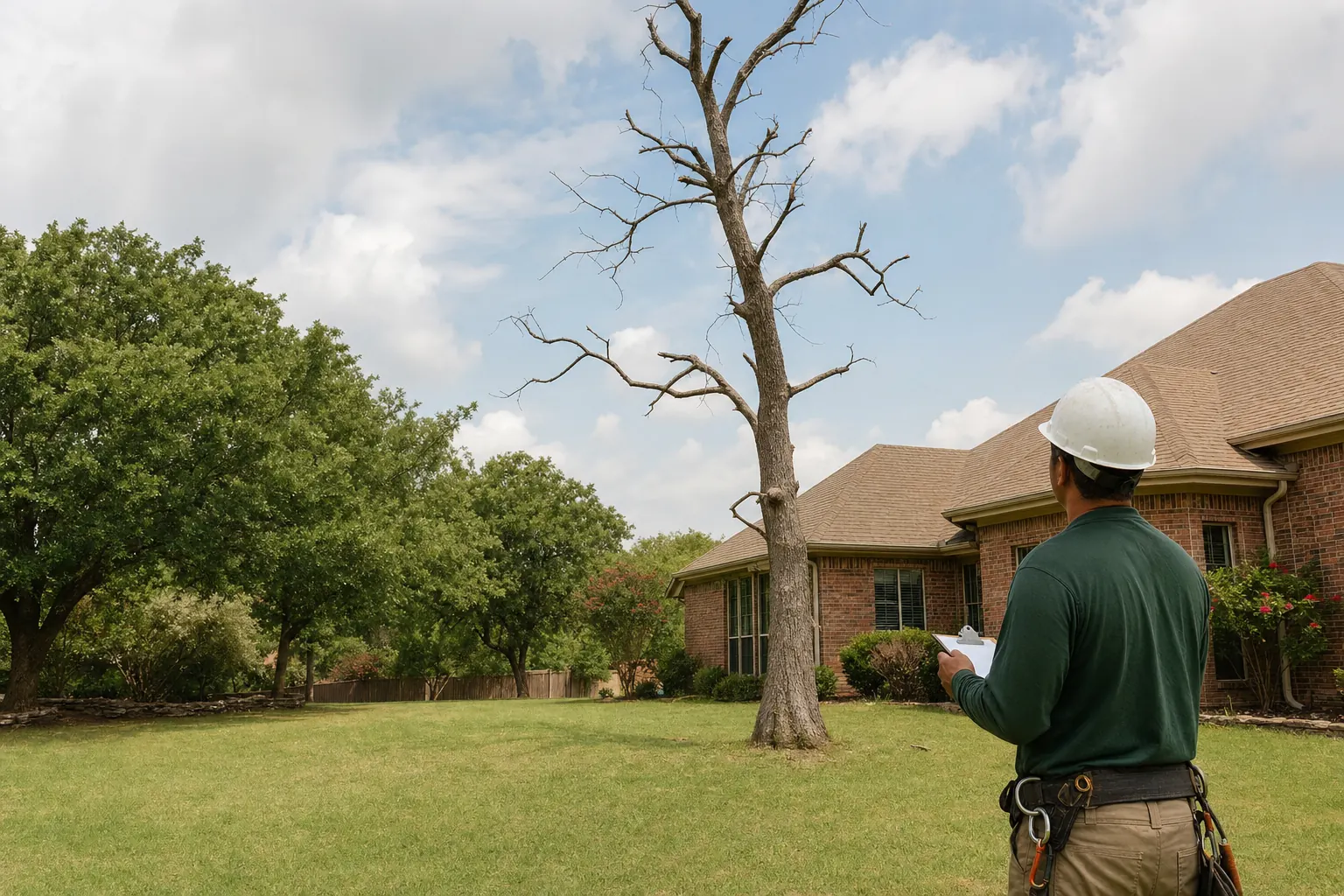
Dead Tree Removal in Plano, TX
A dead tree only gets weaker. We confirm it’s truly gone, then take it down carefully, because dead wood breaks in ways live wood doesn’t.
- ISA CertifiedArborist #TX-4334A (opens in a new tab)
- Fully InsuredProof on Request
- Written QuoteBefore Work Starts
- Cleaner ThanWe Found It
How to tell a tree is dead, not just dormant
In winter plenty of healthy trees look bare. A scratch test and a closer look tell the real story. Signs a tree is likely dead:
- No leaves in spring when neighbors’ trees leaf out
- Brown, dry wood under a thumbnail scratch
- Bark peeling or falling off in sheets
- Mushrooms or fungus at the base
- Brittle twigs that snap instead of bend

“From the time I originally contacted them for a quote to the job completion was super fast. Their work fabulous and I’m very happy with the outcome.”
Clifton G., Google review
Most dead trees are checked by Taylor Guynes, an independent ISA Certified Arborist #TX-4334A (opens in a new tab), before we quote removal. Meet Taylor.
The Eagle Tree Way
1
Confirm it’s dead
We check twigs, bark and the base, so a live tree isn’t lost.
2
Price in writing
One written quote that covers removal and cleanup.
3
Careful takedown
Brittle wood handled with extra rigging and caution.
4
Clear and clean
Wood and debris hauled, yard raked and blown.
Included in every dead tree removal
- Check that the tree is truly dead
- Written quote before work starts
- Extra care and rigging for brittle wood
- Wood and debris hauled away
- Final rake and blow

Why dead trees need a careful crew
North Texas has been hard on trees. Drought summers, hard freezes and our heavy clay soils can push a stressed tree past the point of recovery, and sometimes it happens in a single season. Once a tree is dead, the wood dries out and loses strength every month it stands.
That brittleness is why dead trees are tricky to remove. A limb that would bend on a live tree can snap without warning, and a climber can’t trust dead wood to hold a rope the same way. We plan around that, often using a lift or a nearby healthy tree for rigging, and we never rush it.
Before we quote, we make sure the tree is actually dead. Some trees drop leaves early in a drought or look rough after a freeze and come back. If there’s a real chance the tree will recover, we’ll tell you and suggest waiting or pruning out the dead parts instead.
A dead tree near the house, the drive or a play area is worth dealing with sooner rather than later. Call us and we’ll take a look, put the price in writing, and leave the yard cleaner than we found it. Every crew is insured, and the certificate is yours on request.
Why trees die in North Texas yards
Most dead trees we see around Plano and Collin County (opens in a new tab) didn’t die from one thing. It’s usually a stack of stresses: a hot, dry summer, dense clay soil that bakes hard and sheds water, a hard freeze, then a spring storm that tears roots or limbs. A tree can handle one of those. Three in a row can finish it.
Some trees show it more than others. Bradford pears are short-lived and tend to break apart as they age. Red oaks can go downhill fast from oak wilt (opens in a new tab), and live oaks get it too, sometimes several in a row along a fence line. If more than one oak near you died quickly, mention it when you call. Texas A&M Forest Service advises extra care with wood from oak wilt trees, so it changes how we handle the logs.
Dead trees also don’t stay standing as long as people expect. In our summer heat, dead wood dries and cracks quickly, and insects and decay fungi move in. A dead pecan or elm that looks solid this year can be dropping big limbs by next summer. If you’re in an HOA, check with your HOA about whether they expect a replacement tree.
Dead, dying or just stressed?
Not every bare tree is a lost cause. This is how we sort a tree that can still be helped from one that has to come out.
It may still recover
- Twigs are green and moist under a light scratch
- Buds are swelling, even if leaves are late
- Leaf drop followed a drought or freeze this season
- Only some limbs are dead and the rest leafed out
- The trunk and base feel solid, with no fungus
It’s time to remove it
- Twigs are brown and snap clean all through the crown
- Bark is falling off the trunk in large patches
- Mushrooms or conks are growing at the base or roots
- It didn’t leaf out after a full growing season
- Cracks, cavities or a lean have shown up since it died
What affects the price of dead tree removal
Dead trees are priced on site like any removal, but a few things weigh more heavily when the wood is dead.
- How long it’s been dead. A tree that died this season is still fairly sound. One that’s stood dead for years may be too brittle to climb, which changes the method.
- Climb or lift. If the wood can’t be trusted to hold a climber, we may use a lift or rig from a healthy tree nearby. That adds equipment and setup time.
- Size and location. A dead tree beside the house, fence or lines needs more controlled lowering than one in an open corner of the yard.
- Access for equipment. A lift needs a path to the tree. Gates, slopes and soft clay after rain all affect what we can bring in.
- Disease in the wood. If the tree died of something that spreads, like oak wilt, the wood may need to be hauled off rather than left as firewood.
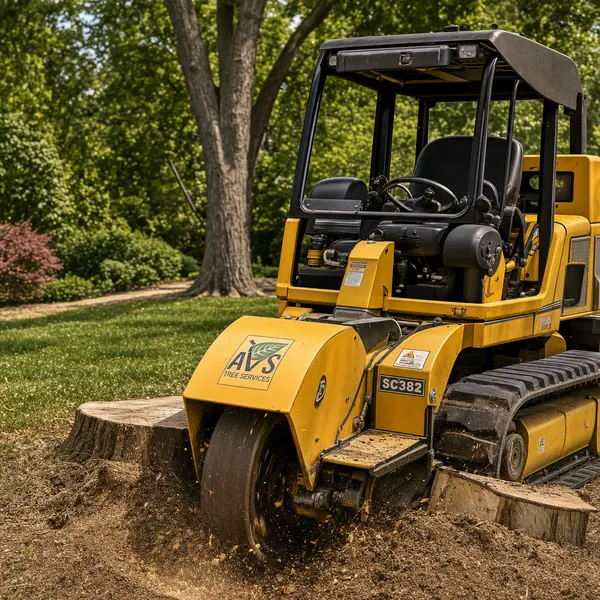
- Stump grinding. The stump is quoted separately, so you can grind it now or leave it for later.
Your written quote names the method we’ll use and why. If a lift or extra rigging is part of the price, you’ll see it on paper before you agree to anything.
What to expect when we take down a dead tree
- Recheck on the day. Dead wood can change in a few weeks, so we look the tree over again before we set the drop zone.
- Test the wood. Before anyone climbs, the crew sounds the trunk and checks the main limbs to decide whether to climb, use a lift or both.
- Smaller pieces. Dead limbs come off in smaller pieces than usual, because brittle wood can break past the cut.
- Trunk in sections. With the crown clear, the trunk is cut down in sections, or felled if there’s open room to do it safely.
- Cleanup and haul. Every limb, chip and loose piece of bark is cleared, and the yard is raked and blown.
How to get ready
- Keep kids and pets away from the tree until we arrive
- Don’t park under it, even for a day
- Move anything you value out from under the canopy
- Tell us if limbs have fallen lately, and where they landed
- Let us know if nearby oaks have died too
Dead tree removal questions
Is a dead tree dangerous?
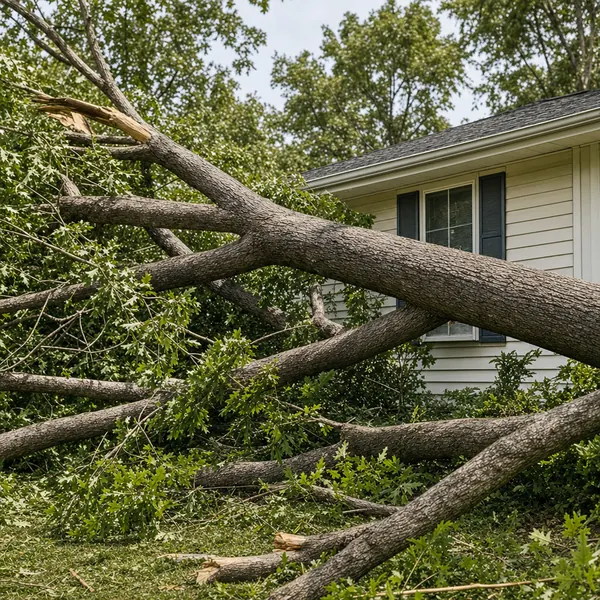
It can be. Dead wood gets weaker over time, and limbs or the whole tree can fail in wind or even on a calm day. The closer it is to your house or where people walk, the sooner it should be handled.
Can a tree that looks dead come back?
Sometimes. Drought or a freeze can make a tree drop leaves or look dead for a season. A scratch test and an arborist’s look at the buds and bark help tell the difference.
Why does a dead tree cost more to remove than I expected?
Dead wood is unpredictable, so it often needs extra rigging or equipment to take down safely. Your written quote spells out what’s involved.
My tree is half dead. Does the whole thing have to go?
Not always. If the dead part is limited, deadwood removal may be enough. If most of the crown is gone, removal is usually the safer call. We’ll explain which applies to your tree.
Why is a dead tree riskier to climb than a live one?
Live wood flexes and holds a rope the way you’d expect. Dead wood dries out, loses strength and can snap without bending first. That’s why we test the wood before climbing and often use a lift or rig from a healthy tree nearby.
How long can I wait to remove a dead tree?
It gets weaker every month, so sooner is better, especially near the house, the drive or anywhere people walk. A dead tree in an open corner gives you more time, but it won’t get safer or simpler to remove.
Can I keep the wood for firewood?
Often, yes. If the tree died of oak wilt, Texas A&M Forest Service (opens in a new tab) advises extra care with the wood, so we’ll talk it through before leaving any behind.
Should I plant a new tree in the same spot?
If you want the shade back, it’s worth it, but the spot and species matter. We can grind the stump so the spot is ready, and a local nursery or landscaper can help you pick and plant a tree that handles North Texas clay and heat.