

Tree Trimming in Allen, TX
Limbs off the roof, sidewalks clear for the HOA, and a tree that still looks like a tree when we’re done.
- ISA CertifiedArborist #TX-4334A (opens in a new tab)
- Fully InsuredProof on Request
- Written QuoteBefore Work Starts
- Cleaner ThanWe Found It
Signs your Allen trees are due for trimming
If any of these sound familiar, it’s probably time:
- Branches scraping the roof or filling gutters
- An HOA letter about sidewalk or street clearance
- Limbs blocking the view from the driveway
- Dead branches showing in the canopy
- A canopy so dense the grass won’t grow

“I’ve used Eagle Tree Experts for the last eight years and they have been fantastic!”
Mike S., Google review
Most Allen trimming jobs are planned by Taylor Guynes, an independent ISA Certified Arborist #TX-4334A (opens in a new tab). Meet Taylor.
The Eagle Tree Way
1
Agree on the goal
Roof clearance, HOA clearance, more light, or all three.
2
Written quote
The cuts and the price, in writing.
3
Trim it right
Proper cuts, never topped, never stripped.
4
Clean up
Limbs and leaves hauled off, yard blown clean.
Included in every Allen trimming
- Roof and gutter clearance
- Sidewalk and street clearance
- Deadwood removal while we’re up there
- Insured crew and written quote
- Haul-off and final cleanup

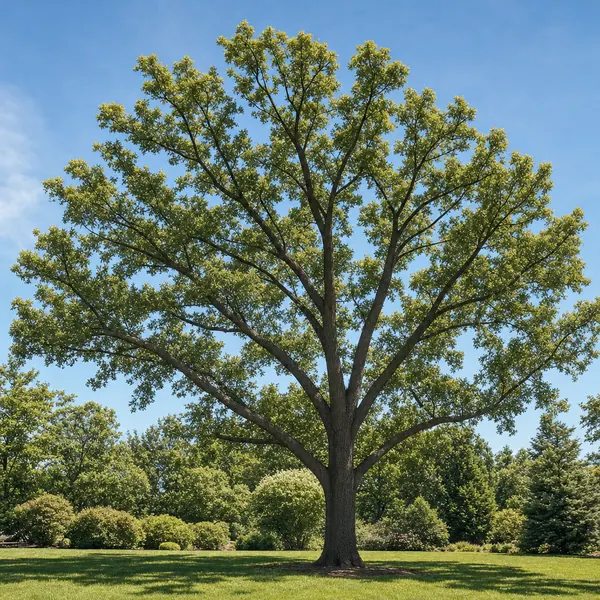

Tree trimming that keeps Allen yards in shape
The most common reason people call us in Allen is the roof. Limbs that rest on shingles wear them down, dump leaves into the gutters and give squirrels a bridge to the attic. We trim those branches back to a proper point, leaving enough clearance that they won’t be back on the roof next spring.
HOA letters are a close second. Many associations want walkways and streets clear under trees, and the letter usually comes with a deadline. We lift the canopy by removing lower limbs correctly, at the branch collar, so the cuts close well. If the letter is vague, send us a copy and we’ll quote what it asks for.
Thinning helps too, when it’s done with a light hand. Taking out crossing, crowded and dead branches lets light reach the lawn and wind move through the tree. We stay well short of over-thinning, which stresses the tree and invites sprouts. As a rule, we don’t remove more than the tree can handle in one visit. Our crew is based in Plano, so Allen is right in our regular area.
Trimming the trees that came with Allen homes
Allen is a Collin County (opens in a new tab) city just north of Plano, and much of it is HOA neighborhoods where trees went in the same year as the house. Most of those were planted with a sapling’s size in mind. Today a lot of them have grown wide enough to lean on the roof, crowd the back fence and drop leaves across the property line into a neighbor’s yard.
The trees we trim most here are live oaks, cedar elms, red oaks and pecans. Live oaks spread low and wide, so they tend to need lifting and clearance cuts. Cedar elms and pecans fill in fast and benefit from thinning so wind can pass through. Hot summers and heavy clay soil already put stress on yard trees, which is why we keep each visit to what the tree can handle.
Oaks need extra planning. Texas A&M Forest Service advises avoiding oak pruning from February through June, when the beetles that spread oak wilt (opens in a new tab) are most active, and sealing any fresh oak cuts. We book oak work outside that window when we can. Our Plano crew is close by, so scheduling an Allen trim is easy. If your HOA has rules about tree work, check with your city or HOA.
Light pruning or bigger work?
Most Allen trees only need a light touch. Some need more than a trim can give. Here’s how we tell the difference:
Light pruning is enough
- A few limbs brush the shingles or the gutter edge
- Low branches catch your head on the walkway
- Small dead twigs scattered through the canopy
- The tree is healthy, just a bit dense
- One side is reaching over the fence a few feet
Needs bigger work
- Large limbs grow straight over the roof and need reducing back
- The canopy is so thick that big inner limbs are rubbing each other
- Heavy deadwood above the driveway or patio
- A main limb has a long crack or a weak, narrow fork
- The tree has been topped before and is full of fast sprouts
What affects the price of tree trimming in Allen
Every trim is quoted on site because the work depends on the tree and the goal. These are the main things that shape the price:
- How many trees. Trimming several trees in one visit is more efficient than coming back for each one.
- Height and canopy width. A tall pecan or a wide live oak takes more climbing time than a young cedar elm.
- The goal of the trim. Roof clearance alone is a smaller job than full thinning plus deadwood removal.
- Access to the tree. A front yard tree with open space is quicker than one tucked behind a fence and a narrow gate.
- What sits underneath. Limbs over the roof, a pool or a glass patio cover have to be roped down piece by piece.
- Amount of brush. More cut material means more chipping and more loads to haul away.
You’ll get the price in writing before the crew starts, with each tree and each type of cut listed. The number on the quote is the number you pay. If you want to add a tree on the day, we’ll price it first and let you decide.
What happens on trimming day
- Confirm the cuts. The crew lead points out which limbs come off and how much clearance you’ll get, so nothing is a surprise.
- Climb and prune. A climber makes each cut at the branch collar and works from the inside of the canopy out.
- Lower what needs care. Limbs over the roof or fence are tied off and lowered on rope.
- Chip and haul. Branches are dragged to the chipper and leaves are raked from beds and grass.
- Look it over. We walk the yard with you, or send photos if you’re at work, before we leave.
How to get ready
- Pull cars out of the driveway if limbs hang over it
- Clear patio furniture and potted plants from under the canopy
- Unlock the back gate or share the code
- Tell us about any sprinkler lines or landscape lights near the trees
- Mention any limbs you want left alone for shade or privacy
Allen tree trimming questions
I got an HOA letter about my trees. Can you help?
Yes. Send us the letter or tell us what it says, and we’ll quote the clearance it asks for in writing. Most of these are straightforward canopy raising and roof clearance jobs.
How much of my tree will you cut?
Only what’s needed for the goal. Standard arborist guidance is to avoid removing more than about a quarter of a tree’s live canopy at once, and we usually take much less.
Can you trim branches that hang over from my neighbor’s yard?
Usually, but it’s best to talk with your neighbor first. Cutting heavily on one side can hurt the tree, and agreeing on the plan avoids trouble.
Is it OK to trim trees in an Allen summer?
For most trees, yes, with light pruning. Oaks are different. Texas A&M Forest Service (opens in a new tab) advises avoiding oak pruning from February through June because of oak wilt, so we plan oak work around that window.
How often should I have my trees trimmed?
For most mature shade trees in a yard, every few years is plenty. Younger trees benefit from a light structural trim more often, because small cuts now prevent big ones later. We’ll suggest a schedule based on how fast your trees are growing.
Will thinning make my tree look bare?
It shouldn’t. Good thinning takes out selected inner branches and leaves the outer shape alone. From the street, most people only notice that more light gets through and the tree looks tidier.
My limbs are over the fence and resting on it. Is that a problem?
It can be. A limb that rubs a fence wears down the bark and the boards, and wind makes it worse. We cut those limbs back to a healthy side branch so the fence has room and the tree keeps a natural shape.
Can you trim a tree without a bucket truck in the backyard?
Yes. Most backyard trimming in Allen is done by a climber in the tree, with branches lowered or carried out through the gate. No heavy equipment has to cross your lawn.