

Tree Trimming in The Colony, TX
Trim before the storms and clean up after them. Careful pruning for The Colony’s trees by an insured, arborist-led crew.
- ISA CertifiedArborist #TX-4334A (opens in a new tab)
- Fully InsuredProof on Request
- Written QuoteBefore Work Starts
- Cleaner ThanWe Found It
Signs your trees need trimming in The Colony
Storm season is when weak spots show up. These are the ones worth fixing first:
- Dead branches mixed in with live ones
- A canopy so thick you can’t see through it
- Long limbs stretching out over the roof
- Broken limbs still hanging from the last storm
- Torn stubs left from earlier storm breaks

“They get the job done quickly, clean up any mess and their pricing is fair.”
Christine B., Google review
Most trimming jobs in The Colony are planned by Taylor Guynes, an independent ISA Certified Arborist #TX-4334A (opens in a new tab). Meet Taylor.
The Eagle Tree Way
1
Find the weak spots
Deadwood, hangers and heavy limbs marked.
2
Price it in writing
The scope and the number up front.
3
Prune for wind
Thinned and cleaned, never topped.
4
Leave it clean
Brush hauled off, yard raked and blown.
Included in every trimming in The Colony
- Deadwood and broken limb removal
- Selective thinning of crowded canopies
- Clean cuts on old storm breaks
- Insured crew and written quote
- Haul-off and cleanup

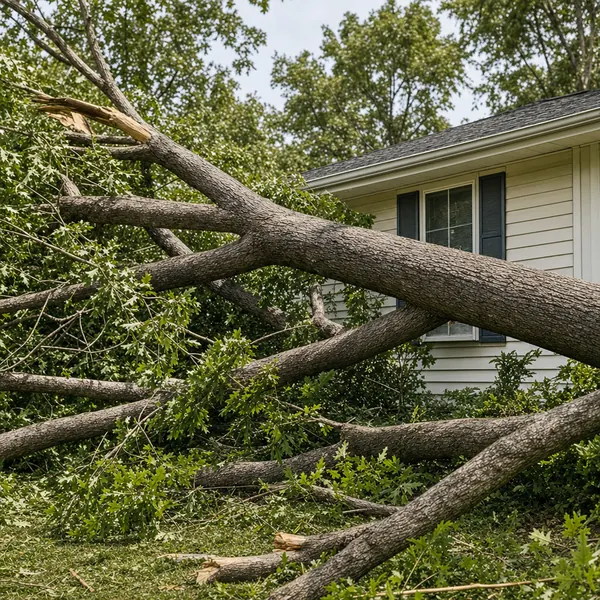

Getting trees in The Colony ready for storm season
Spring storms in North Texas bring wind, hail and heavy rain, and The Colony gets them like everyone else. The limbs that fail are usually the ones you could have predicted: dead branches, long heavy limbs and crowded tops that catch wind like a sail. Trimming in the off-season is the cheapest insurance a tree can get.
Thinning is part of it. We remove crossing, crowded and weak branches so wind passes through the canopy instead of pushing against it. We also take out deadwood, which is the most common thing to come down in a storm. The goal isn’t a bare tree. It’s a tree with good structure that keeps its full shape.
After a storm, trimming means repair. Broken limbs leave jagged stubs that heal poorly and invite decay. We cut those back to a clean point so the tree can seal the wound properly. Our crew is out of Plano, and storm damage gets priority scheduling, with a written quote every time.
Trimming for lakeside wind in The Colony
The Colony is a Denton County town on Lewisville Lake (opens in a new tab), and wind coming off the water hits trees from the same directions over and over. A dense canopy acts like a sail in those gusts. Thinning it out lets air move through, which takes strain off the trunk and the big unions where limbs meet it.
Spring is the rough season here, with thunderstorms, hail and sudden straight-line winds. Trees that get trimmed in late fall or winter go into that season with less dead and loose wood up top. That’s good timing for oaks too, since Texas A&M Forest Service advises against pruning them from February through June because of oak wilt (opens in a new tab).
You’ll see live oaks, cedar elms, red oaks and pecans in yards around town, along with plenty of Bradford pears (opens in a new tab) in newer areas. Each grows a little differently, and we trim each one to its own form. Our office in Plano is close by, so a visit for an estimate is no trouble.
Light pruning or bigger work?
Plenty of trees only need a tidy-up. Others have problems that a quick trim won’t fix. Here’s how we tell the two apart.
Light pruning is enough
- A few dead twigs and small branches in the canopy
- Low limbs brushing the sidewalk or mower
- A healthy tree that just looks shaggy
- Water sprouts along the trunk and main limbs
- A young tree that needs its shape guided early
Needs bigger work
- Heavy limbs reaching out over the roof or driveway
- A canopy so dense that wind can’t pass through
- Large dead limbs high in the crown
- Cracks at the base of a big fork
- Old storm breaks with stubs that are starting to decay
What affects the price of tree trimming in The Colony
Trimming is priced by the tree and the job, not by a flat rate. These are the main things we weigh.
- Height and spread. A tall pecan with a wide crown takes more climbing and more cuts than a small ornamental.
- How much work is up there. Light cleanup goes faster than a full thinning with deadwood removal and clearance cuts.
- Clearance over structures. Limbs over the roof have to be roped down so they don’t land on shingles or gutters.
- Number of trees. Doing several trees on one visit is usually more efficient than coming back for each one.
- Yard access. Gates, fences and slopes affect how easily brush can be carried out to the chipper.
- Timing around oak wilt. Oaks are best scheduled outside February through June, and planning ahead keeps that simple.
We put the scope and price in writing before the first cut. That way you know exactly which trees and which limbs are included, and nothing gets tacked on later.
What to expect on trimming day
- Quick check-in. The crew lead reviews the plan with you and confirms which trees and limbs are on the list.
- Climb and prune. Climbers make cuts at the right spots, just outside the branch collar, so the tree can seal over.
- Lower heavy pieces. Bigger limbs over the house or fence are tied off and lowered instead of dropped.
- Chip and haul. Brush goes through the chipper at the curb and leaves with the truck.
- Rake and blow. Leaves and small debris are cleared from the lawn, beds and driveway.
How to get ready
- Clear a path from the gate to the trees
- Move vehicles away from limbs that hang over the driveway
- Take down hanging feeders, lights or swings from the branches
- Keep kids and pets inside while the crew is working
- Tell us about any tree you’d like left alone
Tree trimming questions from The Colony
When is the best time to trim before storm season?
Late fall through winter works well for most trees, before spring storms arrive. For oaks, Texas A&M Forest Service (opens in a new tab) advises avoiding pruning from February through June because of oak wilt, so earlier is better for them.
Should I trim off a broken branch myself?
Small broken twigs within reach are fine. Anything large, overhead or hanging should be left to a crew. Broken limbs can be under tension and move when cut.
Will thinning make my tree look bare?
Not when it’s done right. We remove selected branches throughout the canopy and leave its natural shape. Most neighbors won’t notice anything except a healthier tree.
Does hail damage mean my tree needs trimming?
Often not. Torn leaves and nicked bark usually recover on their own. If hail or wind broke branches, those should be cut back cleanly. We can take a look and tell you.
How often should trees near the water be trimmed?
Many mature shade trees do well with a check every few years. Trees in an exposed spot that takes the full wind may need attention a little more often. We’ll suggest a schedule after we see them.
My limbs are touching the roof. How much should come off?
Usually enough to leave several feet of clear space, with cuts made back to a healthy branch so the limb doesn’t just grow right back. That keeps shingles and gutters from getting scraped in the wind.
Is topping a good way to make a tree safer?
No. Topping leaves big stubs that decay and pushes out a crowd of weak sprouts that break easily. Thinning and reduction cuts lower the risk without wrecking the tree.
Does my HOA have rules about trimming?
Some do. Check with your city (opens in a new tab) or HOA if you’re unsure, especially for trees near the street or a shared fence.