

Tree Removal in Allen, TX
Allen trees that outgrew their spot, taken out carefully around fences, pools and patios. One written price before we start.
- ISA CertifiedArborist #TX-4334A (opens in a new tab)
- Fully InsuredProof on Request
- Written QuoteBefore Work Starts
- Cleaner ThanWe Found It
When an Allen tree has to come down
We check first whether the tree can be saved. When it can’t, it’s usually for one of these reasons:
- The tree outgrew a small yard or side yard
- Roots are pushing on the fence, patio or pool deck
- It died back after drought, heat or a hard freeze
- A large crack or split in the trunk
- It leans hard toward the house

“They get the job done quickly, clean up any mess and their pricing is fair.”
Christine B., Google review
Most Allen removals are assessed by Taylor Guynes, an independent ISA Certified Arborist #TX-4334A (opens in a new tab). Meet Taylor.
The Eagle Tree Way
1
Look before we cut
Can it be saved? We’ll tell you straight.
2
Put it on paper
Removal, stump and haul-off priced clearly.
3
Lower, don’t drop
Sections roped down over fences and pools.
4
Clean finish
Backyard cleared, raked and blown.
Included in every Allen removal
- Honest check on whether removal is needed
- Written quote with no add-ons
- Rigging over fences, pools and patios
- Insured crew, certificate on request
- Wood and debris hauled off
Related services

Careful tree removal for Allen backyards
A lot of Allen removals happen in backyards with no easy way in. There’s a fence on three sides, a pool or patio in the middle and maybe a narrow gate. That’s not a problem, it just changes the method. Our climbers take the tree apart from the top down and lower each piece on ropes, so nothing crashes onto the fence, the decking or the water.
Sometimes the tree isn’t dangerous at all. It just got too big for the space. A tree that was a good size ten years ago can now shade the whole yard, drop debris into the pool and push roots under the patio. Before removing it, we’ll ask whether a crown reduction would solve the problem. If it won’t, removal is a reasonable choice, and we’ll explain why.
Hot summers and the occasional hard freeze in North Texas can kill trees outright. A dead tree dries out and gets brittle, which makes it harder and riskier to take down the longer it stands. If you’re seeing bare branches and peeling bark, have it looked at sooner rather than later. Our crew comes up from Plano, and every job ends with a clean yard.
Why so many Allen trees end up too close to the house
Allen sits in Collin County (opens in a new tab), just north of Plano, and most of it is established HOA neighborhoods. When those homes went up, builders and first owners planted trees a few feet off the foundation or right along the back fence. That spacing looked fine for a young tree. Twenty years on, the same tree can have limbs over the roof, a trunk inches from the fence line and a canopy that hangs well into the neighbor’s yard.
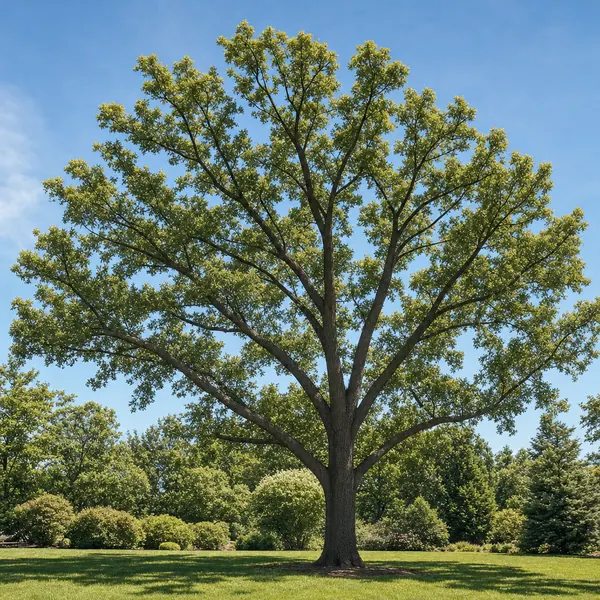
North Texas clay doesn’t help. It swells when it’s wet and shrinks and cracks in a long dry summer, and shallow roots near a slab or a pool deck take the brunt of that movement. Add spring storms with high wind and hail, and a tree that was already crowded can lose a big limb or split at a weak fork. We see a lot of red oaks and Bradford pears in Allen yards, and both have their own reasons for coming down, which we cover below.
Our office is in Plano, a short drive up the road, so Allen is part of our regular week. If your HOA has rules about removing or replacing trees, check with your city or HOA before the work is scheduled. We’re glad to help you figure out what to ask.
Save it or take it down?
Not every crowded or damaged tree needs to go. Here’s the honest split we use when we walk an Allen yard:
Worth saving
- The trunk and main fork are sound, only the canopy is in the way
- Storm damage is limited to a few limbs that can be cut back cleanly
- A healthy live oak or cedar elm with room to grow upward
- A reduction or clearance cut would fix the roof or fence problem
- Leaves look normal and there’s new growth each spring
Time to remove
- A Bradford pear with a split or a cracked main fork
- A red oak with dieback spreading through the crown over a season or two
- The trunk is so close to the slab or fence that any trimming won’t fix it
- A storm tore away a big share of the canopy or opened the trunk
- Fungus, hollow spots or loose bark around the base
What affects the price of tree removal in Allen
We don’t post prices because two trees of the same height can be very different jobs. These are the things that move a removal quote up or down:
- Size of the tree. Taller trees with wide canopies take more cuts, more rigging and more time on the rope.
- How close it is to the house. A tree leaning over shingles or gutters has to come apart in small, controlled pieces.
- Fences and neighbors. Limbs over a shared fence or a neighbor’s yard need lowering lines and extra care on both sides.
- Storm damage. Split or hanging limbs are under tension, so the crew slows down and works them off carefully.
- Condition of the wood. Dead or decayed trees can’t always be climbed, which changes the equipment and the plan.
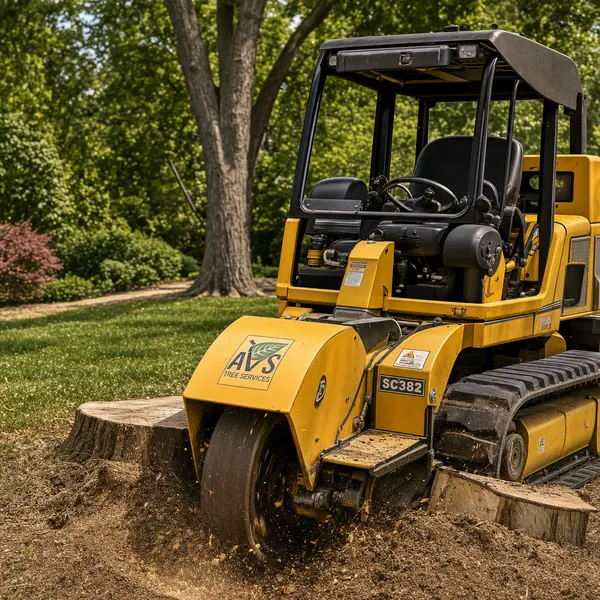
- Stump and haul-off. Grinding the stump and hauling every log are separate choices, and each shows up as its own line.
Your quote comes in writing before anyone starts cutting. It lists the tree, the method, the stump and the cleanup, so there are no surprise charges at the end. If we find something new once we’re up in the tree, we stop and talk with you first.
What to expect on removal day
- Walk the yard together. The crew lead confirms which tree is coming down, where the pieces will land and what we’re protecting.
- Set up and protect. We lay down mats where needed and set lowering lines away from the roof, fence and neighbor’s side.
- Take it down in sections. A climber works from the top down, and each piece is lowered on rope instead of dropped.
- Cut and carry out. Logs and brush go out through the gate to the chipper and truck, one load at a time.
- Final sweep. We rake, blow off hard surfaces and grind the stump if that was part of your quote.
How to get ready
- Let your next-door neighbors know the day and time
- Move grills, planters and patio chairs away from the tree
- Keep pets inside while the crew is working
- Leave the side gate unlocked or tell us the code
- Point out sprinkler heads and any buried lines you know about
Allen tree removal questions
Can you remove a tree right next to my pool?
Yes. We rope each section down so it never swings over or drops into the water. We’ll walk the yard with you first and explain exactly how we’ll protect the pool and deck.
How do I know if my tree is dead or just dormant?
In spring, a live tree should push leaves. If it doesn’t, scratch a small twig. Brown and dry underneath usually means that part is dead. We can check the whole tree and tell you for sure.
The tree is on my neighbor’s side. Can you still remove it?
The tree’s owner needs to agree to a removal. If you and your neighbor are both on board, we can quote it and plan access through whichever yard works best.
Will you remove the roots under my patio?
Stump grinding takes out the stump and the big roots just below it. Roots further out usually stay and break down over time. If a patio repair is planned, tell us and we’ll talk through what to expect.
Why do Bradford pears split so often?
Bradford pears (opens in a new tab) tend to grow several big limbs out of one point on the trunk, with weak joints between them. As the tree gets heavy, wind or ice can pull those limbs apart. Once a pear has split badly, removal is usually the safer choice.
My red oak is losing leaves in summer. Should it come down?
Not always. Heat and drought can cause some leaf drop. If whole sections of the crown are browning or bare, have it checked, because spreading dieback in a red oak can be a sign of a serious problem. We’ll look at it and tell you what we see.
A storm cracked a big limb over my roof. What should I do?
Stay out from under it and keep kids and pets away. Call us during office hours and tell us it’s storm damage. We offer priority scheduling after storms and will tell you whether the limb or the whole tree needs to go.
Do I need permission from my HOA to remove a tree?
It depends on your HOA and your city (opens in a new tab). Check with your city or HOA before the work date. If they ask for a written reason, we can put our assessment in writing for you.