
Best Trees to Plant in Plano
The right tree in the right spot can shade your house for generations. Here are native and adapted species widely recommended for North Texas, and how to give them a good start.
Key takeaways
- Native and well-adapted species handle North Texas heat, drought and clay best.
- Match the tree’s mature size to the space, away from the house and overhead lines.
- Mix species so one disease or pest can’t take out every tree on the lot.
- Fall and winter are good planting seasons in North Texas.
- Plant at the right depth, with the root flare at or slightly above the soil.
What makes a tree a good fit here
Plano and the rest of North Texas are hard on trees. Summers are long and hot, rainfall comes in bursts, and much of the soil is alkaline clay that can turn to concrete in August and mud in spring. Trees that come from this region, or similar conditions, tend to handle it better than species bred for cooler, wetter places.
It’s also worth thinking past the first few years. A tree that grows very fast often has weaker wood and a shorter life. A slower, sturdier tree may take longer to give real shade, but it’s more likely to still be standing, and still healthy, after decades of storms and summers.
The list below sticks to species commonly recommended by Texas A&M Forest Service and AgriLife for North Texas. Every site is different, though. Sun, drainage, space and what’s already growing nearby all matter, so treat this as a starting point.
Large shade trees
These need room. Plan for a wide canopy and roots that spread well beyond it.
- Shumard red oak. A large native oak with good red fall color in many years. It’s a red oak, so oak wilt is a consideration, and it’s best not to plant it right beside existing red oaks.
- Bur oak. A big, tough native with large leaves and large acorns. It’s a white oak, which tends to be more resistant to oak wilt.
- Chinquapin oak. A white oak that handles alkaline soil well and grows into a handsome medium to large shade tree.
- Live oak. Long-lived, wide and semi-evergreen. It needs plenty of space and the same oak wilt care as other oaks in Texas.
- Cedar elm. A tough native elm with small leaves, good drought tolerance and no oak wilt concerns.
- Lacebark elm. Not native, but well adapted to North Texas, with attractive mottled bark.
Medium and small trees
For smaller yards, under power lines or near the house, a smaller tree is usually the better choice.
- Texas red oak. A smaller red oak that grows well on alkaline soils, with fall color. As a red oak, it’s vulnerable to oak wilt.
- Mexican plum. A small native tree with white flowers in early spring and nice bark.
- Eve’s necklace. A small native tree with pink spring flowers and bead-like seed pods.
- Desert willow. A small, airy tree with orchid-like summer flowers. It wants full sun and good drainage.
- Possumhaw. A native deciduous holly. Female plants carry red berries through winter that birds love.
One tree we’d skip is the Bradford pear. It’s fast and pretty in spring, but it’s prone to splitting as it ages, and callery pears have become invasive in parts of Texas.
Right tree, right place
Most planting regrets come from putting a tree in the wrong spot, not choosing the wrong species. Before you dig, think about how big the tree will be at maturity, not how it looks in the pot.
- Keep large shade trees well away from the house, foundation and driveway.
- Don’t plant large trees under overhead power lines. Choose a small species there.
- Think about where the shade will fall in summer, especially on west-facing walls.
- Leave room between trees so canopies don’t crowd each other.
- Mix species. A street of only one kind of tree is exposed to whatever pest or disease comes for that kind.
Check with your HOA if you have one, since some have planting guidelines for front yards and parkways. Before you dig, call 811 to have underground utilities marked.
Planting it right
Fall and winter are good times to plant in North Texas. The air is cooler, but the soil is still warm enough for roots to grow, and the tree has a few months to settle in before summer heat.
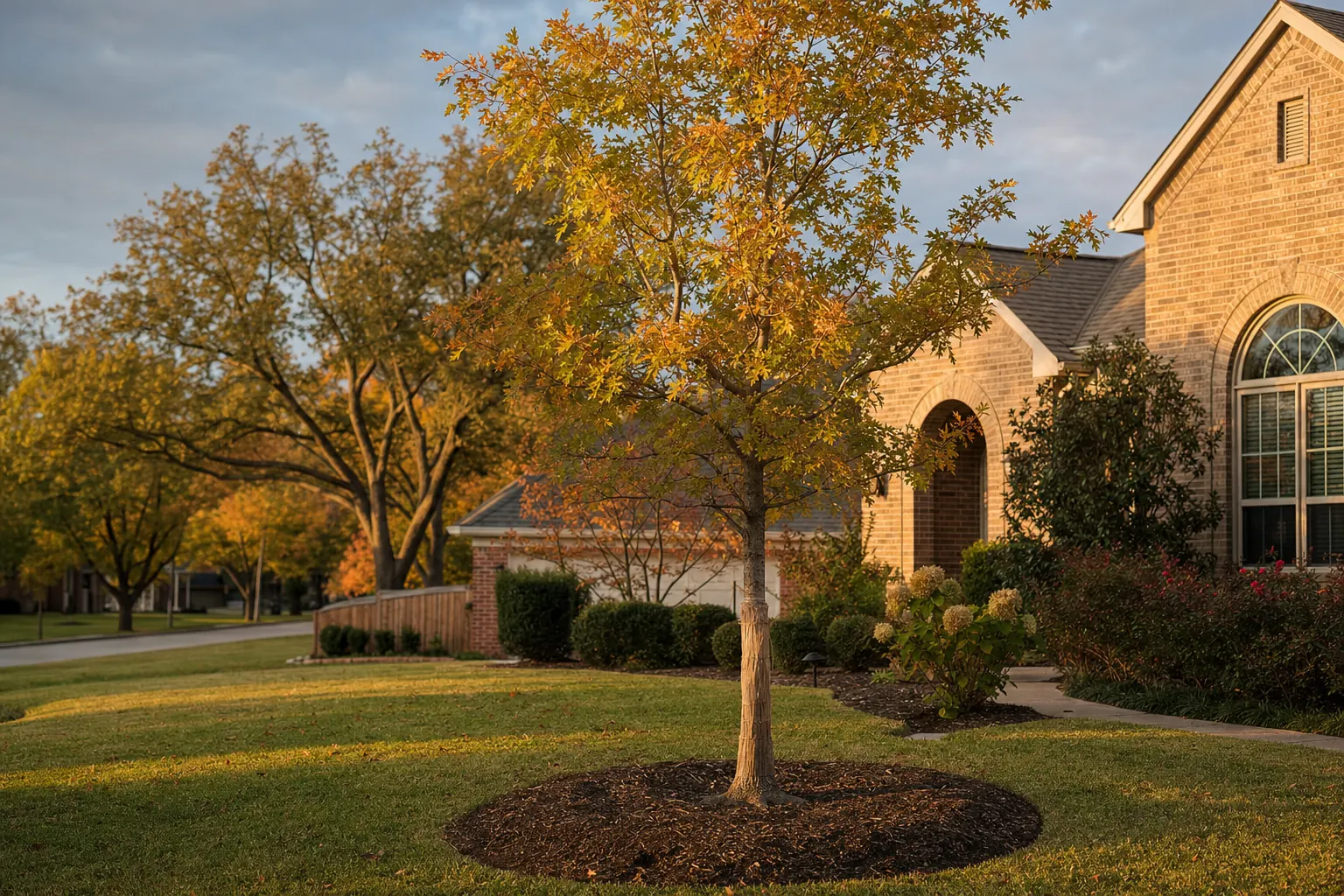
Dig the hole two or three times as wide as the root ball but no deeper. Set the tree so the root flare, where the trunk widens at the base, sits at or slightly above the surrounding soil. Planting too deep is one of the most common causes of young tree decline. Backfill with the native soil, water it in well and add a ring of mulch a few inches deep, pulled back from the trunk.
Then keep watering. A new tree’s roots are still small, so regular deep watering through the first couple of summers matters more than anything else you’ll do. Skip heavy pruning for the first year, apart from dead or broken branches, and let the tree get established.
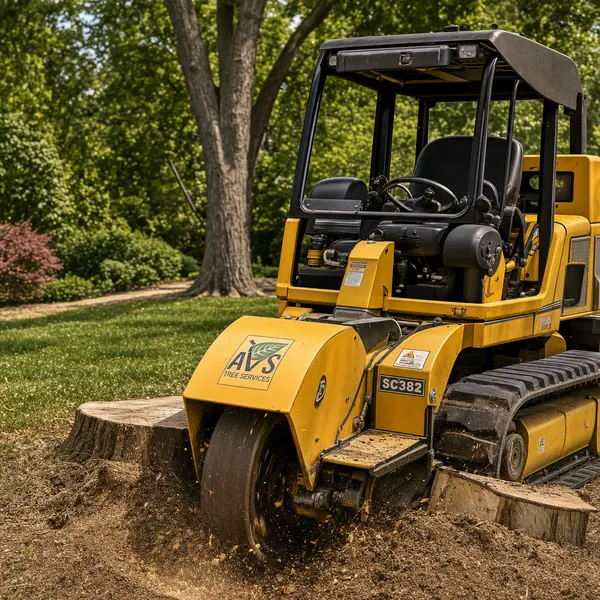
If you’re making room for a new tree, we can assess an existing tree, grind an old stump or clear a spot, with a written price before any work starts. A local nursery can help with buying and planting. Call (214) 620-8082 or request a free written quote below.


Tree planting questions
What is the fastest growing shade tree for Plano?
Fast growers often come with weaker wood. It’s usually better to choose a sturdy, well-adapted species like cedar elm, lacebark elm or a native oak and give it good care so it grows steadily.
When is the best time to plant a tree in North Texas?
Fall and winter are good times. Roots can grow while temperatures are mild, giving the tree a head start before summer heat.
Are oaks a good idea given oak wilt?
They can be, with good care and pruning timing. Mixing in other species, and choosing white oaks like bur or chinquapin, helps spread out the risk.
How far from my house should I plant a shade tree?
It depends on the species and its mature size. Large shade trees need much more room than small ornamentals. Ask an arborist when you’re picking the spot.