
Cedar Elm Care for North Texas Yards
Cedar elm is one of the toughest native shade trees in North Texas. It handles heat, drought and clay well, and with a little structural care it makes a long-lived, dependable tree.

Key takeaways
- Cedar elm is a native tree that handles North Texas heat, drought and clay soil well.
- It tends to grow crowded, drooping branches, so structural pruning pays off.
- Mistletoe is common on cedar elms and is best removed early.
- Leaf spotting and powdery mildew in late summer are usually cosmetic.
- Cedar elms aren’t affected by oak wilt, so pruning timing is flexible.
Why cedar elm works here
Cedar elm is native to Texas and widely recommended by Texas A&M Forest Service and AgriLife for North Texas landscapes. It tolerates the things that make life hard for trees here: alkaline clay, long dry summers, reflected heat from pavement and the occasional wet spell. It has small, rough leaves, a rounded to upright form and often a nice yellow color in fall.
It’s also a little unusual for an elm. It flowers in late summer or early fall rather than spring, and young twigs often have corky ridges or wings along them. If you’re not sure what you have, those two clues help.
Because it’s native and not an oak, cedar elm is also a good way to add variety to a yard or street full of live oaks and red oaks. A mix of species means one disease or pest can’t take out every tree on the block. The tradeoff is that it isn’t a fast grower, so patience and good early structure matter more than pushing it with fertilizer.
Pruning cedar elms
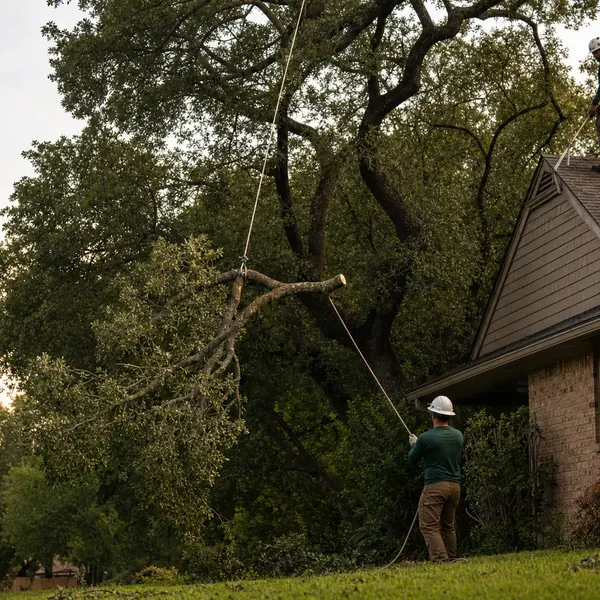
Cedar elms tend to grow lots of branches close together. Left alone, the canopy can get dense, with crossing limbs, drooping lower branches and several competing leaders. Good pruning is about structure: fewer, better-spaced branches that can carry their weight.
- On young trees, choose one strong central leader and remove competing stems while they’re small.
- Space out main limbs along the trunk instead of letting several grow from the same spot.
- Remove crossing, rubbing and dead branches.
- Raise drooping lower limbs gradually over a few years for clearance over sidewalks and the yard.
- Thin lightly. Don’t strip the inside of the canopy and leave tufts at the ends.
Since cedar elms aren’t oak wilt hosts, you don’t need to follow the oak calendar. The dormant season in winter is ideal because branch structure is easy to see, but light pruning is fine most of the year. Dead and broken limbs can come out any time.
Mistletoe on cedar elms
If you’ve noticed green clumps in your cedar elm in winter, when the leaves are off, that’s likely mistletoe. It’s a common sight on cedar elms in North Texas. Mistletoe is a parasitic plant that takes water and nutrients from the branch it’s growing on. A few clumps won’t usually hurt a healthy tree, but a heavy load can weaken branches and add stress, especially during drought.
The most effective control is pruning out infected branches, cutting a bit below the point where the mistletoe attaches. Just snapping off the green clump usually means it grows back, because the part inside the branch is still alive. Catching it early, while the clumps are few and on smaller branches, keeps the cuts small. If mistletoe is on the trunk or a major limb where removal isn’t practical, an arborist can talk through options.
Leaf problems and pests
Cedar elm leaves sometimes look rough by late summer. Most of the time, it’s cosmetic.
- Powdery mildew. A white, dusty coating on leaves in late summer or fall. Usually cosmetic and not worth treating on an established tree.
- Elm leaf beetles. They chew small holes or skeletonize leaves. Heavy feeding looks bad but rarely threatens a healthy tree.
- Early leaf drop. During hot, dry stretches, cedar elms may shed some leaves early to save water. Deep watering helps.
- Hypoxylon canker. On trees already badly stressed by drought or root damage, a gray to brown dusty crust on the bark can signal this fungal disease. It mostly attacks weakened trees, so keeping the tree healthy is the best defense.
Water, soil and roots
Established cedar elms are drought tolerant, but they still benefit from a deep soak every couple of weeks during long dry spells. Spread the water across the root zone, which reaches well past the canopy edge. Newly planted trees need regular watering through their first couple of summers.
Mulch helps too. A layer a few inches deep over the root area, kept off the trunk, holds moisture and keeps the soil cooler in summer. Avoid piling soil against the trunk, and keep heavy equipment and trenching away from the roots when you can. Like most trees, cedar elms often show root damage slowly, with thinning or dieback a year or more after construction nearby.
If you’re choosing a new shade tree, cedar elm is a solid pick for North Texas, especially where oak wilt or tough growing conditions are a concern. It does well with a bit of room and some early structural pruning.
If your cedar elm is crowded, drooping or full of mistletoe, we can help. We’ll walk you through what we’d remove and why, and give you the price in writing. Call (214) 620-8082 or request a free written quote below.


Cedar elm questions
When is the best time to prune a cedar elm?
Winter dormancy is ideal, since branch structure is easy to see. Light pruning is fine most of the year, and dead or broken limbs can come out any time.
Will mistletoe kill my cedar elm?
A few clumps usually won’t, but heavy infestations can weaken branches and add stress. Pruning out infected branches early is the most effective control.
Why are my cedar elm leaves white in late summer?
That’s likely powdery mildew. It’s common on cedar elms in late summer and fall and is usually cosmetic on an established tree.
Is cedar elm affected by oak wilt?
No. Oak wilt affects oaks. That’s one reason cedar elm is a popular choice for adding variety to North Texas yards.