
Live Oak Care in Plano
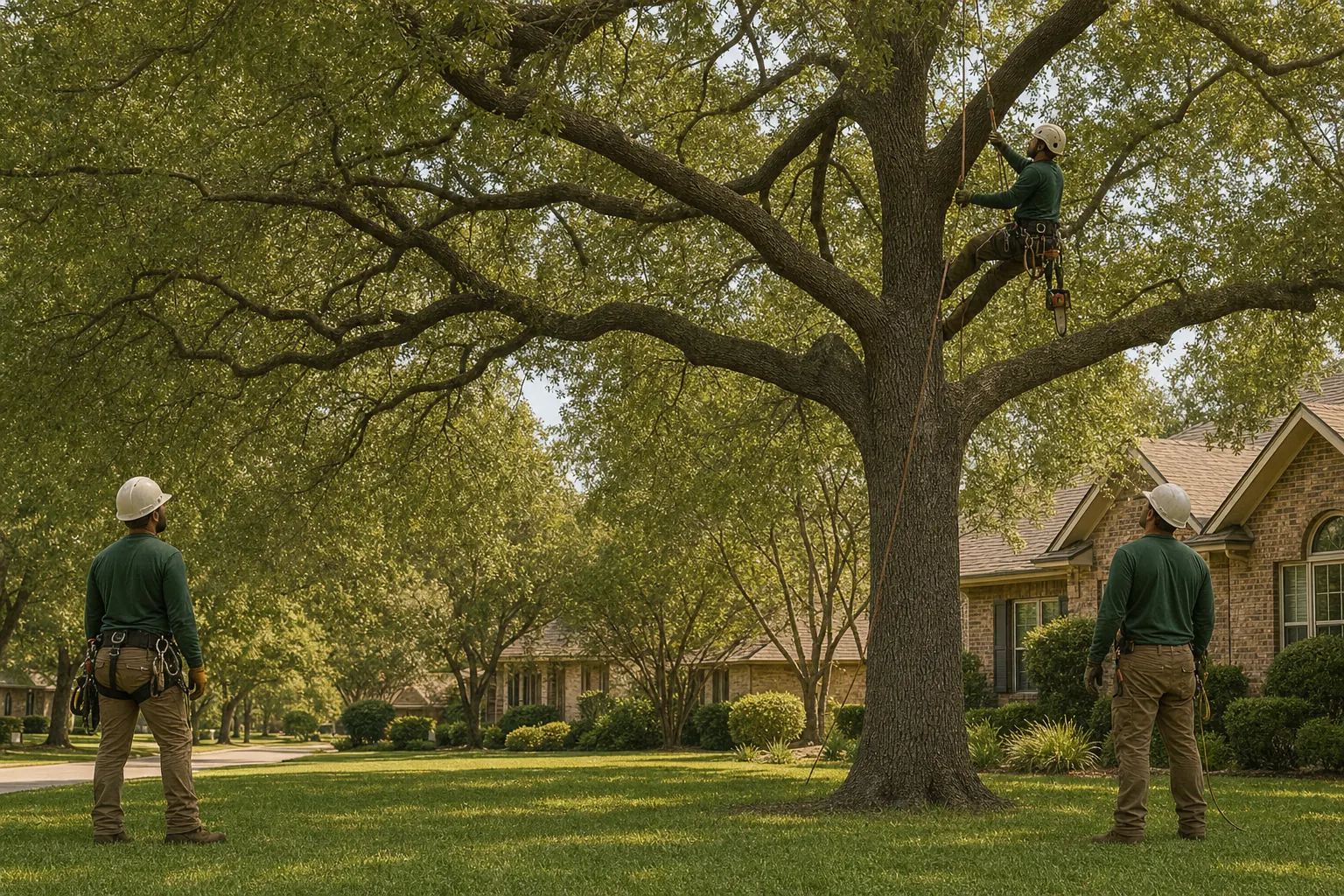
Live oaks are some of the best shade trees in North Texas, and they can live a very long time. A few good habits go a long way toward keeping yours healthy.
Key takeaways
- Prune live oaks July through January, never February through June, and paint every cut right away.
- Water deeply and less often during drought, spreading water across the root zone.
- Protect the roots from trenching, paving, soil fill and heavy equipment.
- A heavy leaf drop in spring is usually normal for live oaks.
- Live oaks often share connected roots, so oak wilt nearby is worth taking seriously.
Why live oaks need their own playbook
Live oaks are tough, slow to moderate growers with a wide, spreading form. They handle heat and North Texas clay better than many trees, and a healthy one can outlive the house it shades. That long life is exactly why it pays to get the basics right.
Two things set live oaks apart from your other trees. First, they’re very susceptible to oak wilt, and they often form root connections with nearby live oaks, which lets the disease move underground. Second, they’re semi-evergreen. They hold their leaves through winter and drop many of them in spring as the new leaves push out. Homeowners sometimes think the tree is dying when that spring drop hits. Usually it’s just the normal cycle.
Pruning live oaks the right way
Timing is the first rule. In Texas, avoid pruning oaks February through June, when the beetles that carry oak wilt are most active. Midwinter and the heat of midsummer are lower-risk windows. Paint every cut and every wound right away, no matter the season.
How you prune matters just as much. Good live oak pruning is light and selective.
- Remove dead, broken and crossing branches.
- Raise low limbs gradually for clearance over the roof, driveway and sidewalk, instead of stripping the lower trunk in one go.
- Reduce long, heavy limbs by cutting back to healthy side branches.
- Leave the inner branches and foliage in place. Stripping the interior and leaving tufts at the ends, often called lion-tailing, puts more weight at the tips and weakens the tree.
- Never top a live oak.
Young live oaks benefit a lot from early structural pruning. Picking a strong main structure while the branches are small saves big cuts later.
Watering through a North Texas summer
Established live oaks are drought tolerant, but long dry stretches still add up. During drought, a slow, deep soak every week or two does more good than a daily sprinkle. Spread the water across a wide area under and beyond the canopy, since most feeder roots are in the top layer of soil and reach well past the trunk.
Avoid spraying water against the trunk itself, and watch out for the opposite problem too. Lawn sprinklers that keep the base of the trunk soggy all summer aren’t good for it. Newly planted live oaks need regular water for the first couple of summers while roots get established.
Protecting the root zone
Many serious live oak problems start below ground. The roots that matter most are shallow and wide, and they’re easy to damage without realizing it.
- Keep trenching, paving and new construction as far from the trunk as you can.
- Don’t pile soil over the roots, even a few inches. Fill can suffocate roots over time.
- Keep heavy vehicles and equipment off the root zone, especially when soil is wet.
- Use a ring of mulch a few inches deep over the root area, pulled back from the trunk so it doesn’t touch the bark.
- Skip planting beds that require tilling right under the canopy.
If you’re planning a pool, addition or new driveway, talk to an arborist before the plans are final. It’s far easier to protect roots on paper than to repair them later.
Watching for oak wilt and other trouble
The classic oak wilt sign in live oaks is leaves with yellow or brown veins while the rest of the leaf is still green. Thinning and dieback in sections of the canopy, and nearby live oaks declining one after another, are other warning signs. Only a lab test confirms it, so get a trained eye on the tree early.
Other things to keep an eye on include dead branches high in the canopy, mushrooms at the base, cracks in major limbs and soil that suddenly heaves on one side. None of these mean the tree is lost, but all of them are worth a look.
Planting a new live oak
If you’re adding a live oak, give it room. These trees spread wide, so plant well away from the house, the driveway and overhead lines, and think about how big the canopy will be in thirty years, not three. Fall and winter are good planting seasons in North Texas because roots can settle in before summer heat.
Dig the hole wide but no deeper than the root ball, and set the tree so the flare at the base of the trunk sits at or slightly above the soil. Water regularly through the first couple of summers. And if your street already has a lot of live oaks, consider mixing in a different species nearby. A variety of trees is less exposed to any one disease.
If your live oak is due for pruning or something looks off, we’ll take a look, explain what we see and put any work in writing. We’ll schedule oak pruning in the safer months. Call (214) 620-8082 or request a free written quote below.


Live oak questions
Why is my live oak dropping so many leaves in spring?
Live oaks hold their leaves through winter and shed many of them in spring as new leaves come in. A heavy spring drop is usually normal. Leaves with yellow or brown veins at other times of year are a different matter.
When is the best time to prune a live oak in Plano?
The lower-risk windows are midwinter and the heat of midsummer. Avoid February through June, and paint every cut right away.
Should I fertilize my live oak?
Most established live oaks don’t need regular fertilizer. Mulch, proper watering and protecting the roots usually help more. If you suspect a nutrient problem, a soil test is the place to start.
How close can I build to my live oak?
It depends on the tree’s size and the project. Roots spread well beyond the trunk, so talk to an arborist before plans are final.