
Pecan Tree Care in North Texas
Pecans are the Texas state tree and a fixture in older North Texas yards. They’re big, generous trees that need room, water and a watchful eye on their limbs.
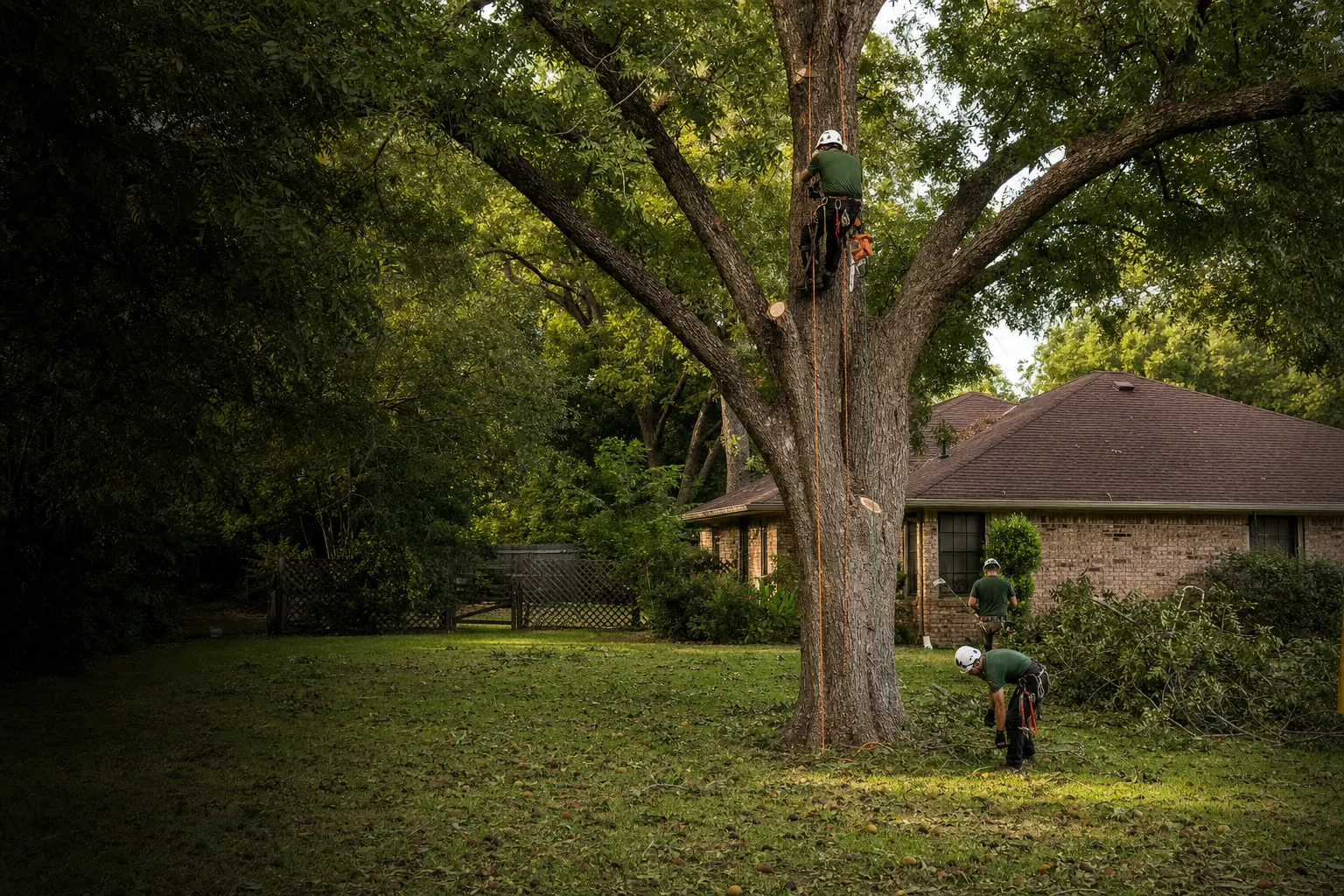
Key takeaways
- Pecans grow into very large trees, so plan for their size and keep an eye on big limbs.
- Dead wood is common on pecans and should be removed before it falls.
- Deep watering in summer helps tree health and nut fill.
- Fall webworms and twig girdlers are common, mostly cosmetic pests.
- Pecans aren’t affected by oak wilt, so pruning timing is more flexible than for oaks.
What makes pecans different
Pecans are native to Texas river bottoms, where they grow tall with deep, rich soil and steady water. In a North Texas yard, they’re often working with heavy clay, hot summers and lawn competition. They can still do well, but they show stress in their own ways.
They’re also big trees. A mature pecan can tower over a two-story house and spread across a good part of a backyard. That size is a big reason people love them, and a big reason they need regular attention. Long, heavy limbs over the roof, deck or driveway deserve a closer look than they’d get on a smaller tree.
One thing that surprises new owners: pecans are among the later trees to leaf out in spring. If your pecan still looks bare while everything else on the street is green, give it some time before worrying. Scratch a twig and look for green tissue under the bark if you want reassurance.
Pruning and dead wood
Dead branches are common on pecans, especially in the upper and inner canopy, and the wood can drop without much warning once it dries out. Removing dead wood is one of the most useful things you can do for a mature pecan, both for the tree and for whoever parks or plays under it.
Since pecans aren’t affected by oak wilt, you have more flexibility on timing than you do with oaks. Late winter, when the tree is dormant and bare, is a good time for structural work because you can see every branch. Dead or broken limbs can come out any time.
- Remove dead, broken and hanging limbs.
- Shorten long, heavy limbs over the house or driveway by cutting back to healthy side branches.
- Thin crossing or rubbing branches lightly rather than stripping the interior.
- On young pecans, help one strong central leader develop and space out the main limbs.
- Avoid topping. It leads to weak regrowth that’s especially risky on a tree this size.
Water and soil
Pecans like steady moisture. Long dry stretches in summer stress the tree and can affect the nut crop. Texas A&M AgriLife guidance points to late summer as an important time, since that’s when nuts are filling. A slow, deep soak across the root zone every week or two during dry weather does more good than frequent light watering.
The roots spread wide, often well beyond the canopy, and most are in the top layer of soil. Keep heavy equipment, trenching and new paving away from them as much as possible. A ring of mulch, pulled back from the trunk, helps keep the soil cooler and holds moisture.
In alkaline North Texas soils, pecans can sometimes show signs of zinc deficiency, like small, crinkled leaves bunched at the tips of shoots. If you see that, a soil test is a sensible first step before adding anything.
Common pests and problems
Most pecan pests in home yards are more of a nuisance than a threat to the tree. Here are the ones North Texas homeowners notice most:
- Fall webworms. Silky tents of webbing at the ends of branches in summer and fall. They look bad but rarely harm an established tree. Small nests on reachable branches can be pruned out.
- Twig girdlers. A beetle that chews a neat ring around small twigs in late summer and fall, causing them to drop. Picking up and disposing of fallen twigs helps reduce them the next year.
- Pecan weevils and nut casebearers. These affect the nut crop more than the tree itself. They matter mainly if you care about harvesting.
- Hollow or soft spots in the trunk or large limbs, which can mean decay and deserve a closer look.
When a pecan needs a closer look
Pecans can live a long time, and many of the big ones in North Texas yards are decades old. With age come a few warning signs worth calling someone about: large dead limbs over the house, cracks where major limbs join the trunk, mushrooms or conks at the base, a canopy that’s thinning year after year, or a split between two big stems.
Pecans also react badly to changes in their root zone. A new patio, a pool, a sprinkler trench or extra soil spread over the roots can show up as decline a year or two later. If you’re planning work near an old pecan, it’s worth getting advice first.
Sometimes the answer is pruning to reduce weight on a heavy limb. Sometimes cabling can help support a weak union. And sometimes an old pecan has more decay than it’s worth keeping. An arborist can help you sort out which one you’re looking at.
If your pecan has dead wood or heavy limbs over the house, we’ll take a look and give you a written quote. If it can be kept, we’ll tell you how. Call (214) 620-8082 or request a free written quote below.


Pecan tree questions
When is the best time to prune a pecan tree?
Late winter, while the tree is dormant, is a good time for structural pruning. Dead and broken limbs can be removed any time of year.
Why does my pecan drop so many small branches?
Twig girdlers are a common cause in late summer and fall. Look for neatly ringed twig ends on the ground. Picking up and disposing of them helps reduce next year’s numbers.
Are webworms killing my pecan?
Usually not. Fall webworms look bad but rarely harm an established tree. Small nests within reach can be pruned out.
Do pecans need to be painted after pruning like oaks?
No. Wound paint is recommended for oaks in Texas because of oak wilt. Pecans seal cuts on their own when the cut is made in the right place.