
Stump Grinding vs Stump Removal
Once a tree is down, the stump is the last decision. Grinding and full removal both get rid of it, but they leave your yard in very different shape.
Key takeaways
- Grinding chews the stump down below the soil surface and leaves the roots to break down.
- Full removal pulls out the stump and much of the root mass, leaving a large hole.
- Grinding is the usual choice for lawns and beds. Removal is for when you need the ground clear.
- Have underground utilities marked before any grinding or digging.
- Some species send up sprouts from roots after the tree is cut.
Why deal with the stump at all
Some people leave stumps in place, and that’s a choice you can make. But stumps tend to cause small, steady annoyances. They’re hard to mow around, they can be a tripping hazard, and some species keep sending up sprouts from the stump or roots for years. As a stump slowly rots, it can also attract insects and fungi, and it takes up space you might want for grass, a bed or a new tree.
There’s also a time factor. A stump left alone can take many years to rot away on its own, and during that time it’s still in the way. Homeowners sometimes hear about home remedies to speed that up, but they’re slow, uneven and still leave you with a soft, crumbling stump to deal with.
If you decide to get rid of it, you have two main options. They sound similar, but the work and the results are quite different.
How stump grinding works
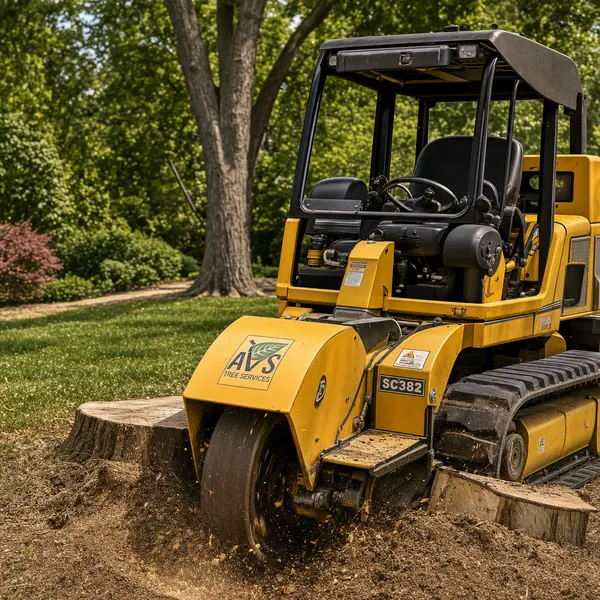
A stump grinder is a machine with a spinning cutting wheel that chews the stump into chips, a little at a time, working down below the soil surface. The visible stump disappears, along with the top part of the larger roots near it. The rest of the root system stays underground and breaks down slowly over time.
- Less disruption to the yard, since nothing big is being pulled out.
- Works well in tight spaces, with smaller grinders able to fit through many gates.
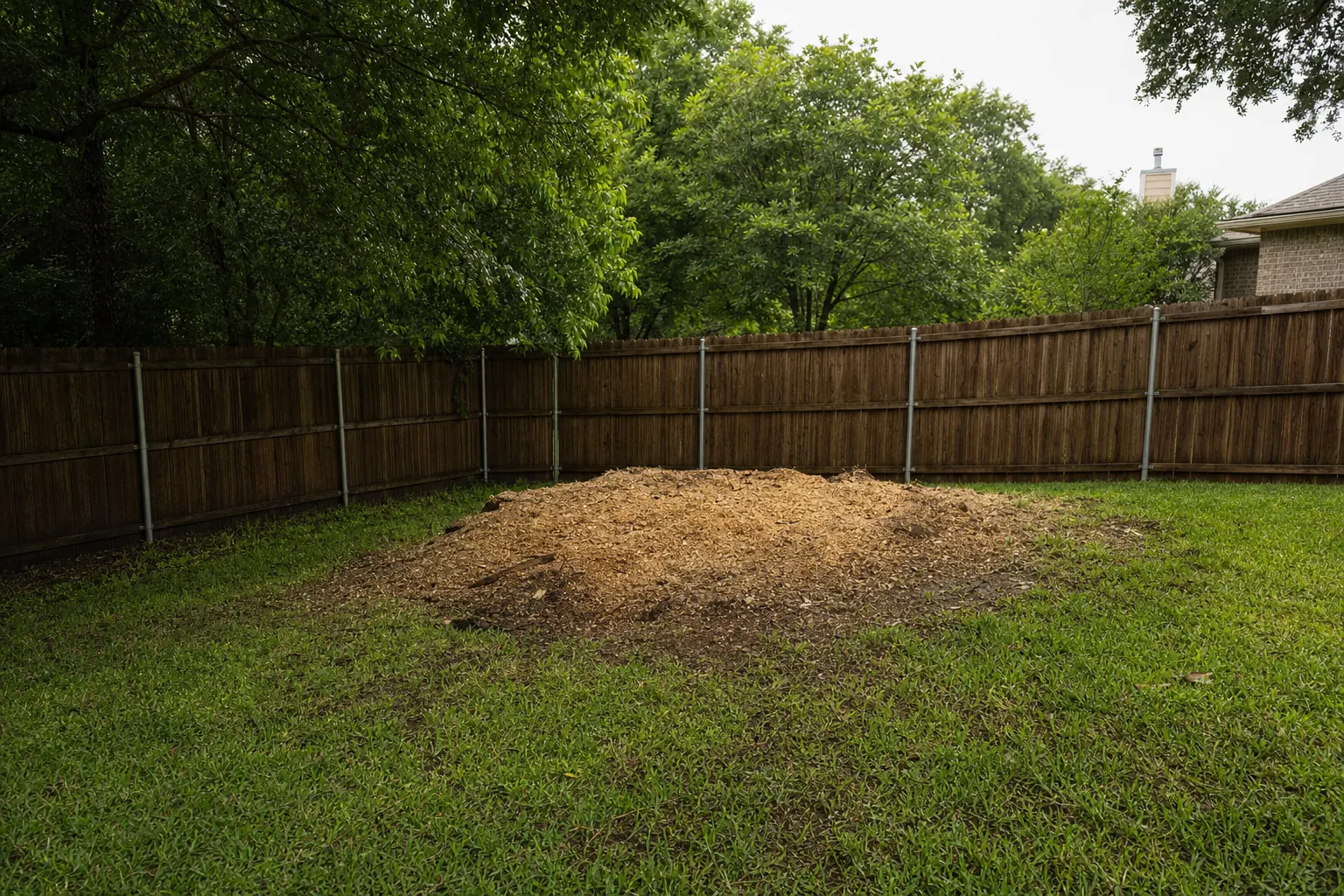
- Leaves a pile of wood chips mixed with soil, which can be used as mulch or hauled away.
- The ground can settle a bit as roots decay, so the spot may need topping off with soil later.
For most yards, grinding is the practical choice. Once the chips are cleared and the spot is filled with soil, you can plant grass or ground cover over it.
What full stump removal involves
Full stump removal means digging out the stump along with a large share of the root mass, usually with heavy equipment. It leaves a big hole that has to be filled and compacted.
It’s more disruptive. Equipment needs access, and the digging can disturb a wide area of lawn, beds, irrigation lines and nearby roots of other trees. But it gets the ground much closer to clear.
Large root systems can also be bigger than people expect. A mature tree’s roots spread wide, so pulling out the stump and the main roots near it can still leave smaller roots behind in the surrounding soil. Full removal gets you much closer to clean ground, but rarely all the way.
Full removal tends to make sense when you need to build, pour concrete, lay a foundation or install something that needs stable, root-free soil in that exact spot. For everyday lawn and garden use, it’s usually more than you need.
How to decide
A few questions usually sort it out:
- What will go in that spot next? Grass or a bed points to grinding. A patio, addition or slab may call for removal.
- How much disturbance can the yard handle? Grinding is gentler on lawns, irrigation and nearby trees.
- How close is it to other trees? Digging out roots can damage the roots of trees you want to keep.
- Is access limited? Narrow gates and tight side yards favor grinding.
- Are you planting a new tree? It’s usually best to plant a little to the side of the old stump, not directly in the ground spot, since decaying roots and wood chips aren’t ideal for a young tree’s roots.
Before and after the work
Before any grinding or digging, underground utility lines should be marked. Texas has a call-before-you-dig system, 811, for exactly this. Sprinkler lines and low-voltage lighting aren’t marked that way, so point them out to the crew.
After grinding, expect a mound of chips and soil. Decide ahead of time whether you want the chips left as mulch, spread around, or hauled off. If the tree was a species that tends to sprout from its roots, you may see some shoots pop up in the following months. Mowing or clipping them as they appear usually wears them out.
Give the spot a season to settle. As leftover roots break down, the soil may sink a little, especially in North Texas clay after heavy rain. Adding a bit of topsoil and reseeding or laying sod once it settles usually takes care of it.
If the tree came down because of disease, ask whether the chips should stay on site. For most cases it’s not a concern, but it’s a fair question to ask.
We grind stumps on their own or on the same visit as a removal, quoted separately so you can choose. If you think you need more than grinding, ask us and we’ll talk it through. Call (214) 620-8082 or request a free written quote below.
Related services


Stump questions
How deep does stump grinding go?
It goes below the soil surface so the area can be covered with soil and grass. The right depth depends on what you plan to do with the spot, so mention it when you ask for a quote.
Will the roots keep growing after the stump is ground?
Usually not. Most species don’t regrow once the stump is ground. Some can send up shoots from remaining roots for a while, and those can be mowed or clipped.
Can I plant a new tree where the old stump was?
It’s usually better to plant a little to one side. Decaying roots and wood chips aren’t the best soil for a young tree.
What happens to the wood chips?
You can keep them as mulch or have them hauled away. Let us know your preference when you get your quote.