
What Happens After Stump Grinding? Chips, the Hole, Grass and Sprouts
Grinding takes the stump away in an afternoon. The spot it leaves behind takes a little longer. Here’s what to expect over the next few months and how to get that patch of yard back.
Key takeaways
- Grinding leaves a mound of chips mixed with soil. Most of it should come out of the hole before you add topsoil and grass.
- Fresh wood chips tie up nitrogen as they break down, which is why grass struggles when it’s sown straight into them.
- The spot will likely sink as buried wood decays. Topping it off with soil later is normal.
- Roots stay in the ground and rot slowly. Some trees push up sprouts from them for a season or two.
- We grind stumps but don’t plant. For a new tree, talk with a local nursery or landscaper about the best spot.
What the spot looks like right after
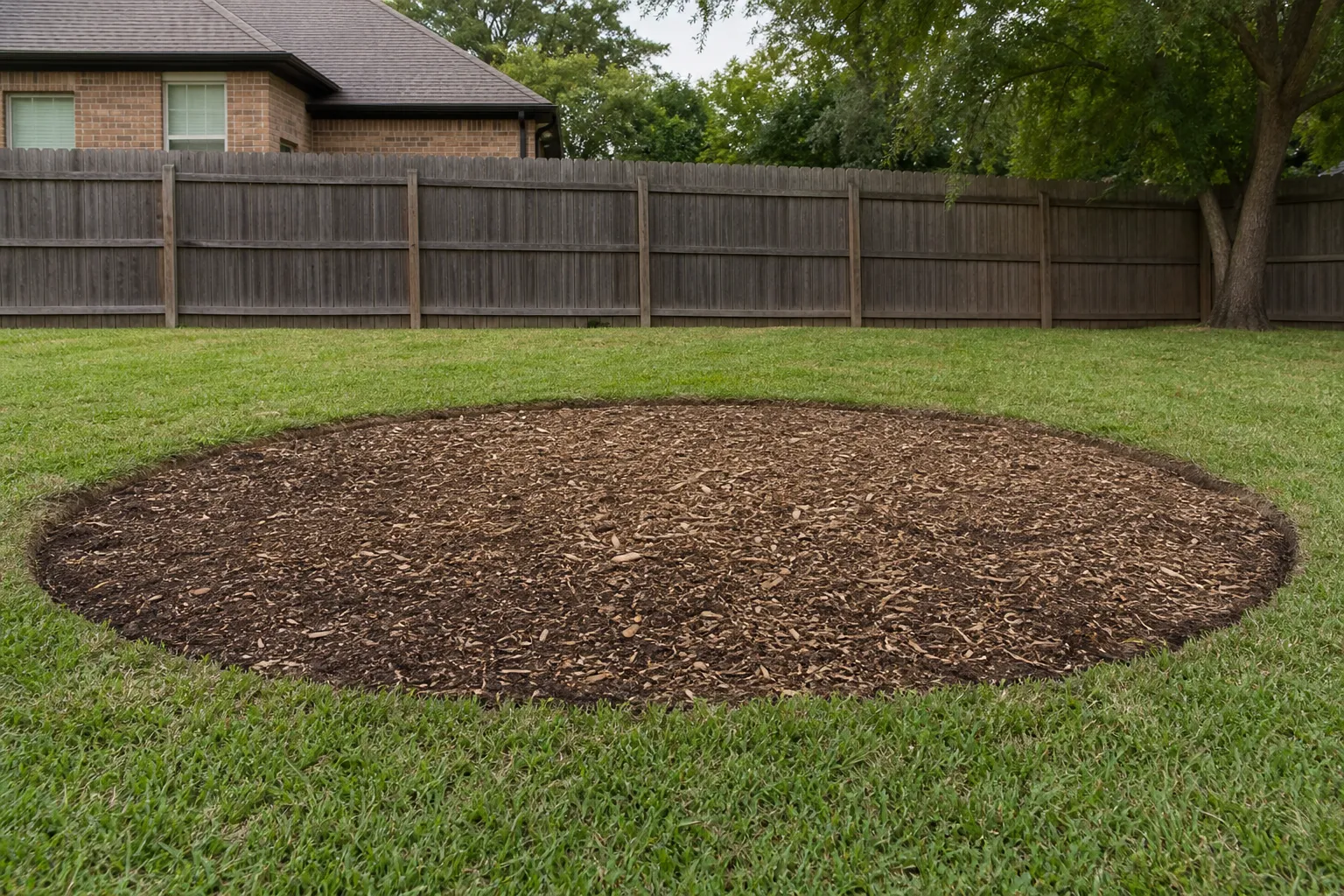
When the grinder pulls away, you’ll usually see a low mound or a shallow bowl of wood chips, sawdust and soil where the stump was. It can look like more material than the stump itself. That’s because grinding fluffs the wood up into loose chips, and it mixes in a good amount of dirt from around the root flare.
The ground underneath is a different story. Below the grind depth there is still wood, and around it the main roots still run out into the yard. None of that is a problem, but it explains most of what happens over the next year: the settling, the slow return of grass and the odd sprout.
If you haven’t had the work done yet, it helps to decide before the crew arrives what you want done with the grindings. Some people want them left in place, some want them spread as mulch, and some want them raked out and hauled away. Ask about that when you get your stump grinding quote so it’s written down.
What to do with the grindings
Stump grindings are mostly wood, with soil mixed in. They make decent mulch once they’ve had time to age, though they’re coarser and dirtier than bagged mulch.
- Spread them in beds or around shrubs. Keep them a few inches away from trunks and the house foundation, the same as any mulch.
- Use them on paths or in a back corner where looks matter less.
- Add some to a compost pile, mixed with green material like grass clippings.
- Get rid of the rest through your city’s yard waste program, if it accepts this kind of material. Rules vary, so check with your city first.
If the tree came down because of disease, ask whether the chips should stay on your property or near other trees of the same kind. For most stumps it isn’t a concern, but it’s a fair question to raise.
Filling the hole and dealing with settling
If you want lawn back over the spot, rake out most of the chips first. Leaving a thick layer of fresh wood in the hole causes two problems. It sinks as it rots, and it robs the soil of nitrogen while it breaks down.
Fill the hole with topsoil, tamp it down lightly, and leave it a little higher than the lawn around it. It will sink some as it settles and as the buried wood decays. In North Texas clay, that settling often shows up after the first few heavy rains.
Plan on topping it off again. A low spot a few months later doesn’t mean anything went wrong. It means the wood below is doing what wood does. Add a bit more soil, level it and reseed or patch the grass as needed. A spot that keeps sinking for a long time usually just has a lot of buried root mass.
When grass will grow back
Grass can grow over a ground-out stump, but it rarely grows well in the grindings alone. The fresh chips draw nitrogen out of the soil as soil microbes break them down, and they dry out fast in a Texas summer. New seed or sod sitting on that is starved and thirsty.
Give it the best start with real topsoil on top, a few inches deep, over the leveled hole. In most North Texas lawns that means St. Augustine or Bermuda, which spread on their own. Patching with sod or plugs from the edge of the lawn often fills in faster than seed. Timing matters too. Warm-season grasses establish best when it’s warm and they can be watered, so a stump ground in late fall may not green up fully until spring.
Water the patch a little more than the rest of the lawn while it settles in. New sod over a former stump spot tends to dry out first.
Leftover roots and sprouts
Grinding removes the stump, not the root system. The roots that stay in the ground slowly decay, usually without causing any trouble. Large surface roots running across the lawn can be ground separately if they’re in the way of mowing.
Some kinds of trees try to grow back from their roots after the top is gone. You may see shoots, often called suckers, pop up near the old stump or even several feet away along a root. The tree is using the energy stored in those roots to try again.
The fix is simple and takes some patience. Cut or mow the sprouts every time they appear. Each time they push out new leaves and get cut back, the roots burn more of their stored energy. In most cases the sprouting slows and then stops within a season or two. If a lot of sprouts keep coming up, or they come up along a line toward the house, let us know so we can take a look.
Planting in the same spot
It’s tempting to put a new tree right where the old one stood. In most cases, it’s better to plant a few feet to the side. The old spot is full of decaying wood and roots, it will keep settling, and it can be hard for a young tree’s roots to get going there.
Eagle Tree Experts doesn’t plant trees, so for choosing and placing a replacement, a local nursery or landscaper is the right call. They can match the tree to the space and the soil. Our guide to the best trees to plant in Plano is a good place to start thinking about options. Before anyone digs, Texas 811 should be called to have buried utility lines marked.
If you have a stump that needs to go, we’ll quote it in writing first. Tell us what you have planned for the spot, and we’ll talk through the grindings before the work starts. Call (214) 620-8082 or request a free written quote below.
Related services


Questions about the spot after stump grinding
Will grass grow on tree stump grindings?
Usually not well. Fresh grindings pull nitrogen from the soil as they break down and dry out quickly. For a good lawn, rake most of the chips out, fill with topsoil, and then seed, sod or plug the spot.
What should you do with the wood chips after stump grinding?
Use them as mulch in beds or on paths, keeping them away from trunks and the foundation, add some to compost, or have them hauled off. Most of the chips should come out of the hole if you want grass there.
Can you plant a tree where a stump was removed?
You can, but it’s usually better to plant a few feet away. The old spot has decaying wood and roots and will keep settling. A local nursery or landscaper can help you pick and place a new tree.
What are common mistakes after stump removal?
Sowing grass straight into the grindings, filling the hole level with no room for settling, ignoring sprouts until they become small trees, and planting a new tree right on top of the old roots. All of these are easy to avoid.