
Stump Keeps Sprouting? How to Stop Those Troublemakers for Good
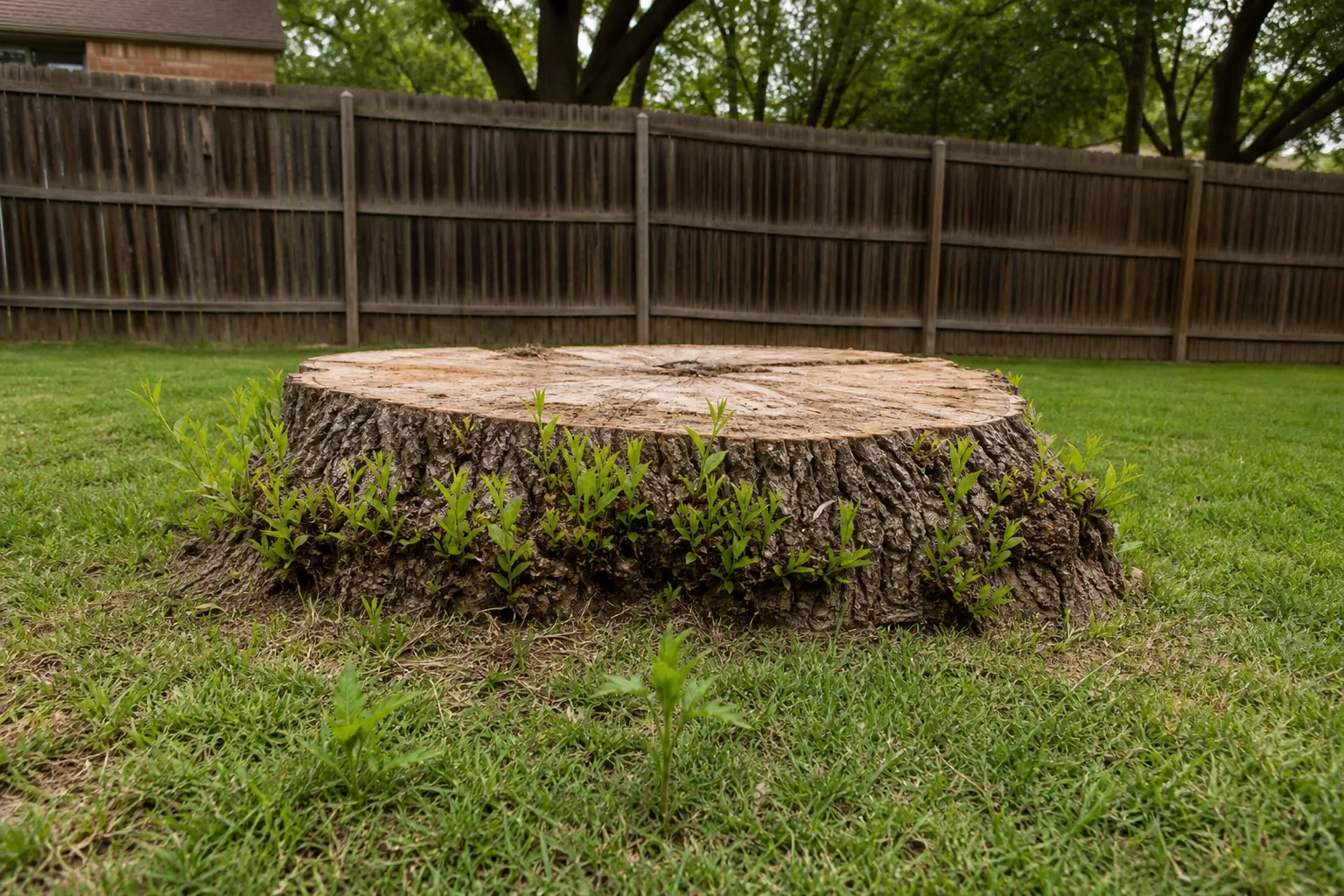
The tree is down, but the stump didn’t get the message. Here’s why it keeps pushing up shoots, what works, what mostly doesn’t, and how to get your yard back.
Key takeaways
- A sprouting stump means the roots are still alive and using stored energy to try to regrow the tree.
- Cutting the shoots back at the stump usually triggers more of them, not fewer.
- Salt, bleach, Epsom salt and vinegar are slow and uneven, and some can hurt the grass, plants and soil around the stump.
- Grinding the stump below grade removes the part most likely to resprout.
- Sprouts out in the lawn may keep showing up for a while. Mow or pull them and the roots run out of steam.
Why a cut stump keeps sending up shoots
When a tree comes down, the roots don’t know it yet. They’re still alive, still full of the sugars and starches the tree stored up over years, and still wired to do one job: keep the tree going. With the top gone, the quickest way to do that is to push out new shoots from the stump and from the roots themselves.
Those shoots usually come from buds hidden under the bark near the cut edge. On some trees they also come up from roots running out under the lawn, sometimes several feet from the stump. People call them suckers or sprouts. Either way, they come from a root system that hasn’t given up.
Some trees are much more stubborn about this than others. In North Texas yards, the ones we hear about most often include:
- Hackberry, which seeds itself everywhere and resprouts readily after it’s cut.
- Bradford and Callery pear, which can throw up a thicket of shoots from the stump and roots.
- Elms, including cedar elm and Siberian elm.
- Mesquite, which is known for coming back from the base again and again.
- Others such as some poplars, willows, sumac and chinaberry.
If you’re still deciding about a hackberry that hasn’t come down yet, our piece on whether to keep or remove a hackberry covers that side of it.
Why cutting the shoots back rarely works
The natural move is to grab the loppers and clip everything flush. It looks tidy for a week or two. Then the stump comes back with more shoots than before.
Each sprout has buds at its base, and cutting it wakes them up. One shoot can turn into three. The roots are still holding plenty of stored energy, so they can keep this up for a long time, especially on a big stump from a mature tree.
Cutting does use up some energy, and the roots would tire out eventually. But that can mean several seasons of chasing shoots, and most people give up before the stump does.
Home remedies people try, and what they really do
We get asked about home fixes a lot, so here’s the plain version.
- Epsom salt. Drilled into the stump and kept damp, it’s meant to dry the wood out. Results are slow and uneven, and many stumps keep sprouting right through it.
- Rock salt. It can kill the stump in time, but salt doesn’t stay put. Rain carries it into the soil, where it can damage the lawn, shrubs and other trees and make that patch of ground hard to grow in later.
- Bleach. It may burn the shoots it touches, but it doesn’t reliably kill a living root system, and it’s hard on soil and the plants around it.
- Vinegar. It can brown off the leaves on young shoots. The roots usually shrug it off and send up more.
- A tarp or black plastic. Covering the stump to block light can weaken it over time, but shoots often come up past the edges, and it can take a long time to make a difference.
We don’t recommend pouring chemicals on stumps. It’s slow, it’s hit or miss, and the damage to the soil and nearby plants can outlast the stump. If you do want to use an herbicide, read and follow the product label exactly, and ask a local nursery or your county extension office which kind fits your situation and the plants around it. Or skip the chemicals and have us grind it.
How grinding ends it
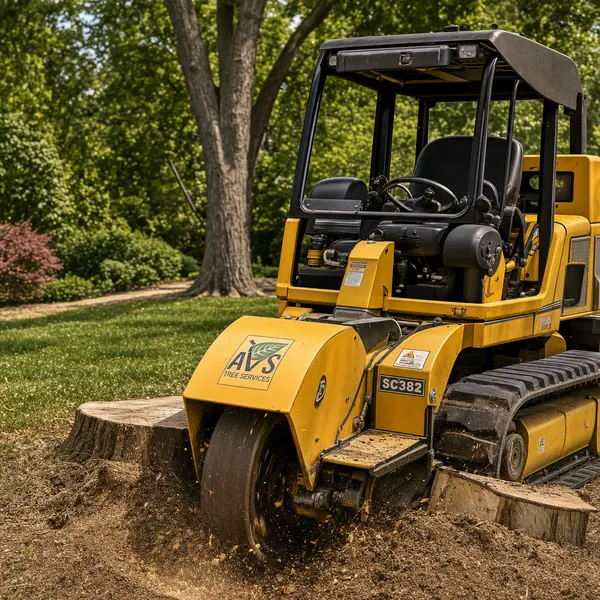
The part of the tree most likely to resprout is the stump itself and the root flare just below it. That’s where most of the dormant buds sit. Stump grinding chews that wood down into chips, below the level of the surrounding soil, so the buds that were sending up shoots are gone.
You’re not trying to outlast the tree. You’re removing the part doing most of the work, and on most stumps that stops the ring of shoots for good.
Before any grinding starts, buried utility lines around the stump are located or marked. Grinder teeth go below the surface, and lines can run closer to an old tree than you’d think. You can read more about how marking works at Texas 811 (opens in a new tab).
What about sprouts out in the lawn?
Grinding removes the stump, not every root. On trees that sprout from their roots, you may see shoots pop up in the grass for a while after the stump is gone. That’s normal, and it doesn’t mean the grinding didn’t work.
Those leftover roots have a limited supply of stored energy and no stump to draw from anymore. Every time a sprout puts out leaves and gets cut, the root spends more of what it has left. Mow over them with the lawn, or pull them when the ground is soft after rain. In most cases they slow down and then stop as the roots run out of energy.
If shoots keep coming up in one spot long after the grinding, or the roots are big enough to catch the mower, a surface root can sometimes be ground out too. For more on the chips, the hole and getting grass back, see what happens after stump grinding.
Planting something new in that spot
Once the sprouting stops, a lot of people want a new tree in roughly the same place. It’s usually better to plant a few feet to the side, away from the old roots and the settling ground where the stump was.
Eagle Tree Experts doesn’t plant trees. For picking a replacement and the right spot for it, talk with a local nursery or landscaper.
If a stump in your yard keeps fighting back, we can grind it out and quote it in writing before the work starts. Tell us what kind of tree it was and how long it’s been sprouting. Call (214) 620-8082 or request a free written quote below.
Related services


Questions about sprouting stumps
Why shouldn’t you leave a tree stump in the ground?
On many trees, the stump keeps sprouting because the roots are still alive. A stump also gets in the way of mowing, can be a trip hazard and rots slowly in place. Grinding solves all of that, and our written quote is free. Before renting a grinder, read can you grind a stump yourself first.
What can kill tree stumps?
Grinding is the most direct way, because it removes the wood that sends up shoots. Time and repeated cutting of sprouts will wear the roots down too, but slowly. Some people use an herbicide made for stumps. If you go that route, follow the label and ask a local nursery or extension office for advice. Or have us grind it, so there’s nothing left to sprout.
What do you paint on tree stumps to stop them from growing?
People who treat stumps usually apply a stump-treatment herbicide to a freshly cut surface, exactly as the product label directs. Timing and the type of tree matter, so ask a local nursery or extension office first. Or have us grind the stump so there’s nothing left to sprout.
How long does it take for a tree stump to rot with Epsom salt?
Honestly, a long time, and results vary a lot. It often takes many months to years, and many stumps keep sprouting during that time. If you want the stump gone soon, grinding is far quicker.
Will a ground stump grow back?
The stump itself won’t, because the wood that held its buds has been ground away. On trees that sprout from their roots, you may see some shoots in the lawn for a while. Mow or pull them, and they usually stop as the roots run out of energy.