
Crown Reduction vs. Crown Thinning: Which Does Your Tree Need?
Both are pruning jobs on the top of the tree, and people mix them up all the time. One makes the crown smaller. The other makes it lighter and more open. Here’s how to tell which one your tree needs.
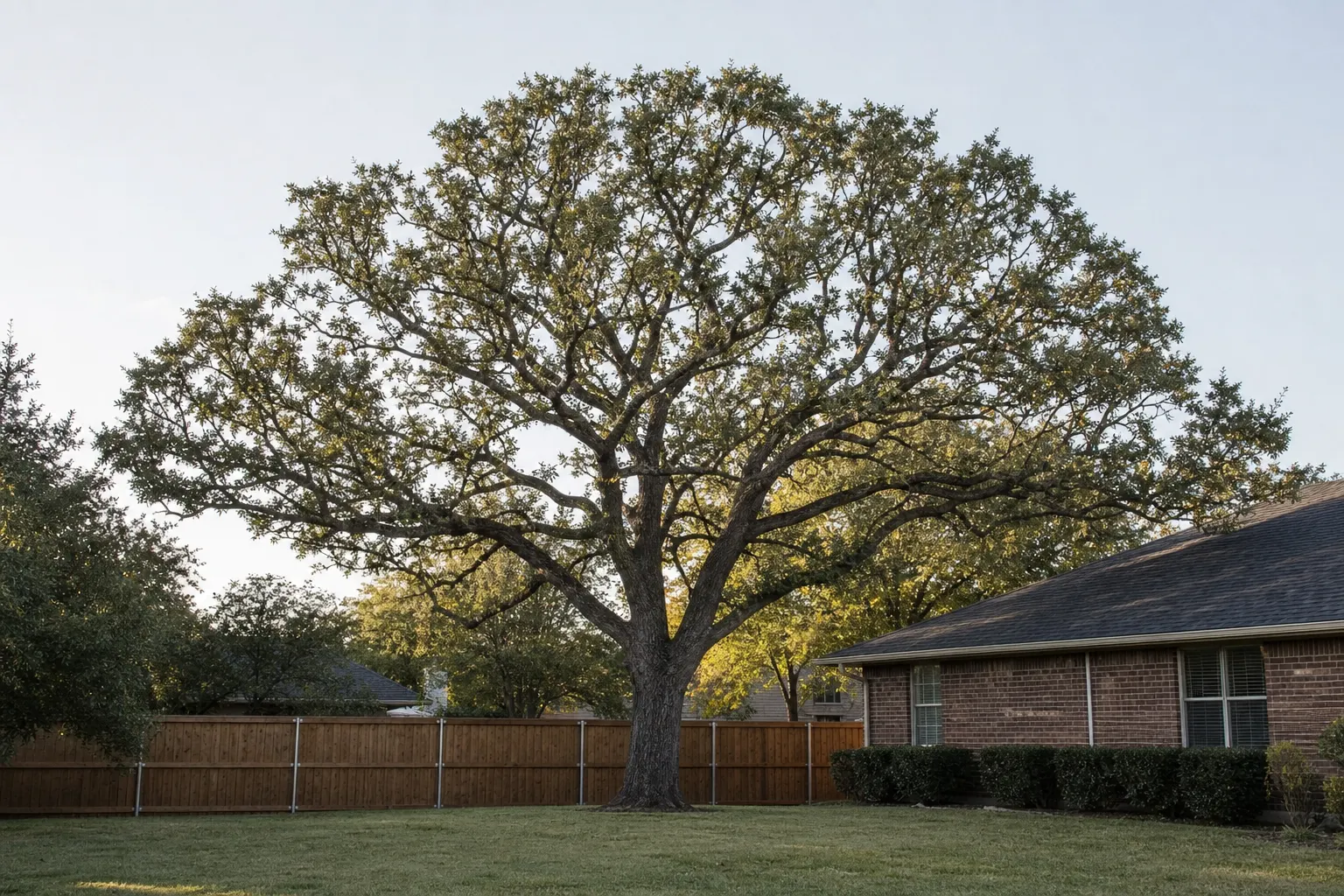
Key takeaways
- Crown reduction makes the tree smaller by cutting branches back to a side branch big enough to take over.
- Crown thinning keeps the size but removes select branches at their origin so light and wind pass through.
- Topping is neither. It cuts branches back to stubs and usually does more harm than good.
- A common rule of thumb is to remove no more than about a quarter of a tree’s live foliage in a season, and often much less.
- The right choice depends on the problem: too big for the space, or too dense and heavy.
What the crown does for a tree
The crown is everything above the trunk: the main limbs, the smaller branches and the leaves. It’s the part of the tree that makes food. Leaves turn sunlight into the sugars the tree lives on, and that energy feeds the roots, the trunk and next year’s growth.
The crown also shades the tree’s own trunk and bark, catches wind and rain, and sets the tree’s shape and balance. When you prune the crown, you’re taking away part of the tree’s food supply. That’s the reason good pruning is careful and limited.
What crown reduction means
Crown reduction makes a tree smaller in height, spread or both, while keeping its natural shape. Instead of cutting a branch off in the middle, the cut goes back to a side branch, called a lateral, that is large enough to take over as the new end of that limb.
That detail is what makes it work. A lateral branch already has leaves and a growing tip, so it keeps feeding that part of the limb and carries growth outward in a normal way. Many arborists use a guideline that the remaining branch should be at least about a third the diameter of the piece being removed.
- A limb is growing over the roof or rubbing the house.
- The tree has outgrown its space near a driveway, fence or neighbor’s yard.
- A long, heavy limb needs less weight on its end to lower the chance of failure.
- The tree has some decay or a weak spot, and a smaller crown puts less strain on it.
Crown reduction is skilled work. It takes judgment to pick the right laterals. You can read more about our crown reduction service and how we approach it.
How crown thinning works
Crown thinning doesn’t change the tree’s overall size much. It removes select branches all the way back to where they start, either at the trunk or at a larger limb. The goal is a crown that is less dense, so light and wind can move through it.
So how do you thin a tree canopy the right way? It starts with picking the right branches, not just the easy ones.
- Take out dead, broken and diseased branches first.
- Remove branches that cross and rub against each other.
- Thin crowded spots so the remaining branches are spaced out through the crown.
- Cut at the branch’s origin, just outside the branch collar, so the tree can seal the wound.
- Work evenly through the crown instead of stripping the inside bare.
That last point matters. A common mistake is clearing out all the small inside branches and leaving foliage only at the tips. That pushes weight out to the ends of the limbs, which is the opposite of what you want.
Thinning helps when a crown is so dense that wind catches it like a sail, when grass or plants below get no light. Texas A&M Forest Service has a clear overview of proper pruning cuts (opens in a new tab) if you want to see where each cut should go.
Which one does your tree need?
Start with the problem you’re trying to solve.
- Too big for the space: crown reduction. The tree is over the roof, into the neighbor’s yard or too close to the house.
- Too dense or heavy: crown thinning. The tree is full and dark, catches a lot of wind or has crowded, rubbing branches.
- Both: a light reduction with some thinning. Common on big shade trees that have gone years without care.
- Neither: just a cleanup. Sometimes the tree only needs dead and broken branches taken out.
Species and timing matter too. In North Texas, the beetles that spread oak wilt are most active February through June, so oak cuts made in those months get sealed right away. Most jobs are assessed by Taylor Guynes, an independent ISA Certified Arborist #TX-4334A (opens in a new tab), who can look at the tree’s health and structure and tell you which approach fits.
How much should a reduction or thinning take off?
There’s no single number that’s safe for every tree. As a general guideline, remove as little live canopy as possible to reach the goal. Many arborists use a rule of thumb of not removing more than about a quarter of a tree’s live foliage in one season, and for many trees the right amount is far less. We cover this in more depth in how much of a tree you can trim at once.
Older trees, stressed trees and trees with root damage usually handle heavy pruning worse than young, vigorous ones. When a tree needs a lot of work, it’s often better to spread it over a few seasons so the tree can recover between rounds.
Why so careful? Cutting off too much leafy canopy cuts the tree’s food supply. The tree may respond with a flush of fast, weak sprouts, and the large wounds give decay a way in.
How both differ from topping
Topping is cutting branches or the main trunk back to stubs, with no regard for where side branches are. Reduction cuts back to a healthy lateral. Topping cuts wherever the saw lands.
Topped trees usually grow back fast, with a crowd of thin sprouts that attach weakly near the cut. Those sprouts can break in storms, and the stubs often decay. The tree ends up taller and more dangerous within a few years, not smaller and safer. We explain more in our guide on why tree topping hurts trees.
If someone offers to cut your tree down to a set height across the top, that’s topping. Ask how they plan to make each cut and what branch they’re cutting back to. A good answer names the lateral. A vague answer is a warning sign.
If your tree is too big for its spot or too dense to let light through, we’ll look at it and tell you plainly whether reduction, thinning or a simple cleanup makes sense, with the price in writing first. Call (214) 620-8082 or request a free written quote below.


Crown reduction and thinning questions
What does crown reduction mean in tree pruning?
It means making the crown smaller in height or spread by cutting branches back to a side branch large enough to take over as the new tip. The tree ends up smaller but keeps its natural shape.
How do you thin a tree canopy?
Remove select branches at their origin, starting with dead, broken and crossing ones, then thin crowded spots evenly through the crown. Keep leaves spread along each limb instead of only at the tips, and make each cut just outside the branch collar.
What is the purpose of the crown of a tree?
The crown is where the tree makes its food. Leaves turn sunlight into energy that feeds the roots, trunk and new growth. The crown also shades the trunk and sets the tree’s shape and balance.
How much should crown reduction or thinning remove?
As a general guideline, remove as little live canopy as you can. Many arborists use a rule of thumb of no more than about a quarter of live foliage in a season, and often much less for older or stressed trees.
Is crown reduction the same as topping?
No. Crown reduction cuts back to a healthy side branch. Topping cuts branches to stubs at a set height, which usually leads to weak regrowth, decay and a more hazardous tree.