
Your Neighbor’s Tree Hangs Over the Fence: What Texas Homeowners Can Do
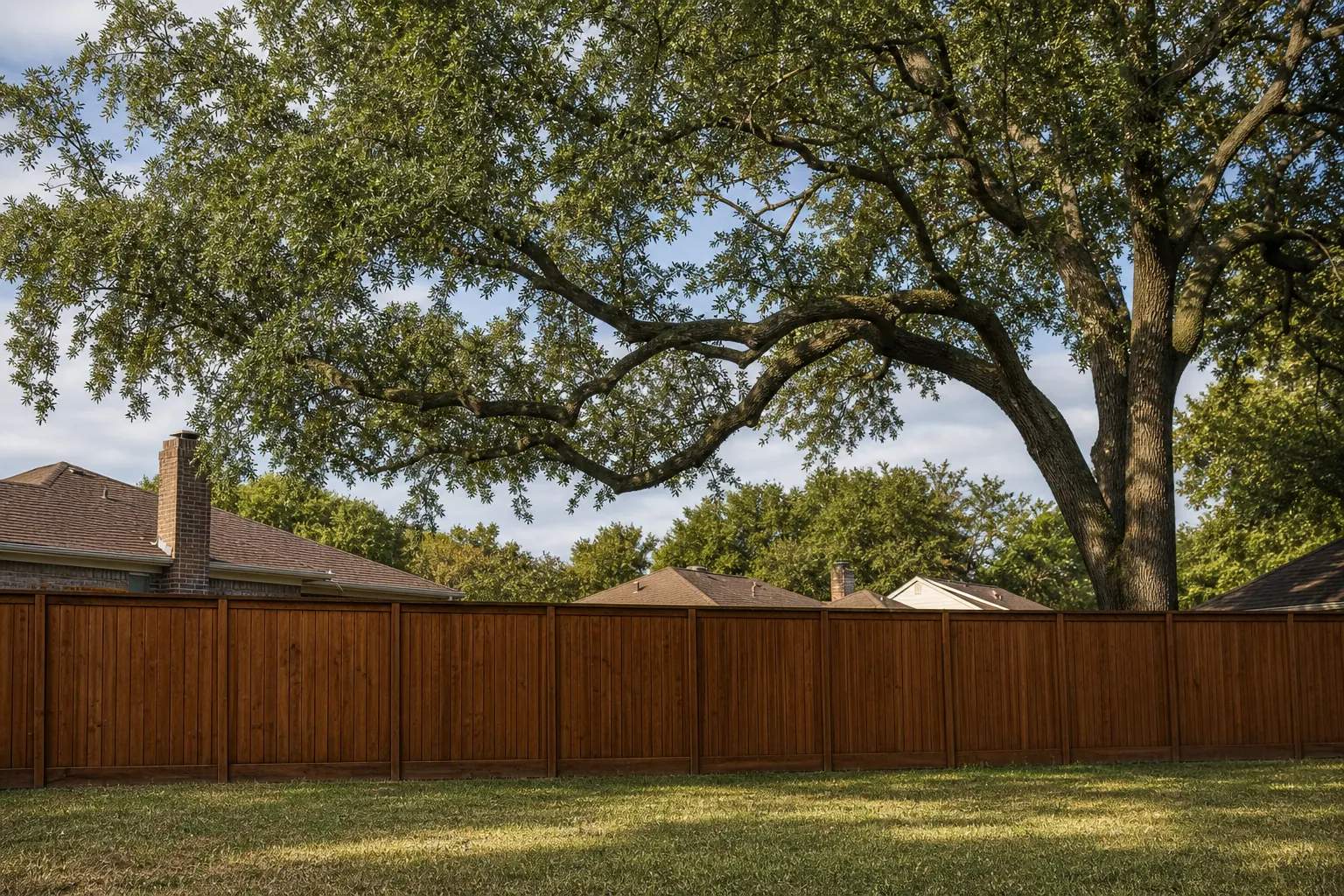
A big limb from next door is shading your garden, dropping leaves in your pool or rubbing your roof. Here’s what Texas homeowners can generally do about it, and how to do it without starting a feud or hurting the tree.
Key takeaways
- In most cases you may trim branches that cross onto your side, up to the property line, at your own cost.
- You generally can’t go onto the neighbor’s land, cut past the line or harm the tree’s health while you do it.
- Talk to your neighbor first. Most of these problems end with a friendly conversation and a shared plan.
- Don’t toss the cut branches back over the fence. If you trimmed them, plan on hauling them away.
- Branches near power lines are a job for the utility company, not you and not a regular tree crew.
Can you cut a neighbor’s overhanging branches in Texas?
In most cases, yes. The general rule people in Texas rely on is that you can trim branches that hang over onto your property, up to the property line. Small cuts from the ground are manageable, but big limbs over a fence are easy to get wrong, and a crew can take them off without damaging the tree or the fence. You don’t usually need the neighbor’s permission to trim what’s on your side.
That right comes with limits. Generally you can’t cross the line to cut, you can’t climb into or lean a ladder against the tree on their side without permission, and you can’t trim in a way that kills or seriously damages the tree. A tree that dies because of how it was cut can turn a small annoyance into a real dispute about who owes whom.
This is general information, not legal advice. If the situation is tense, the tree is very valuable, or you’re not sure where the line is, talk to an attorney before anyone picks up a saw.
Start with a conversation, not a chainsaw
Even when you’re within your rights, a knock on the door goes a long way. Your neighbor may not know the limb is scraping your roof. They may want to share the job, pick the timing or have their own tree company do the whole tree so it stays balanced.
A few things make that talk easier:
- Point to the specific problem. “This limb drops on the pool” is easier to agree on than “your tree is a mess.”
- Say what you plan to cut and that you’ll stay on your side of the line.
- Offer a time that works for them, so nobody is surprised by a crew in the yard.
- Put the plan in a short text or note afterward so you both remember the same thing.
If you live in an HOA, check your rules too. Some HOAs have guidelines about trees near fences, sidewalks and shared spaces, and a call to the management company can settle a lot of questions.
Who pays to cut overhanging branches?
Generally, the person who wants the branches cut pays for the cutting on their side. Trimming over your fence is your choice, so in most cases it’s your bill. Plenty of neighbors split the cost anyway, especially when both yards benefit.
Things can change when a tree is dead, dying or clearly hazardous and the owner knows it. If a sound limb from a healthy tree falls in a storm, that’s usually treated as an act of nature. If the owner was warned about a dead limb and did nothing, they may carry more responsibility if it comes down. That’s one reason to share your concern in writing when a limb looks bad, and to keep a photo of it.
For anything involving damage or insurance, read your policy and call your agent. The Texas Department of Insurance also has plain guidance on fallen trees and branches and how insurance treats them (opens in a new tab).
Can you throw the branches back into their yard?
It’s tempting, but don’t. Once you choose to trim, the cuttings are generally yours to deal with. Tossing them over the fence is a quick way to sour a relationship, and it can create its own problems if it damages their plants, fence or anything else on the other side.
The simple plan is to have the debris hauled off as part of the job. When we trim over a fence line, cleanup and haul-away are part of the written quote, so nothing ends up in either yard.
How to cut to the line without hurting the tree
Here’s where most DIY fence-line trimming goes wrong. A cut made straight down the property line often lands in the middle of a limb, leaving a long stub. Stubs don’t seal well. They rot, invite insects and disease, and push out weak sprouts that grow back thicker and messier than before.
A good cut goes back to a natural point, like a side branch or the branch collar, so the tree can close the wound. Sometimes that point is on your side of the line. Sometimes it isn’t, and the right move is to talk with the neighbor about a cut they agree to. Proper pruning is also why we don’t top trees. Topping does lasting harm, and so does hacking a tree flat along a fence.
- Take only what you need. Removing a big share of one side can throw a tree out of balance.
- Seal oak cuts. In Texas, oak cuts made February through June can let in oak wilt unless they’re painted right away.
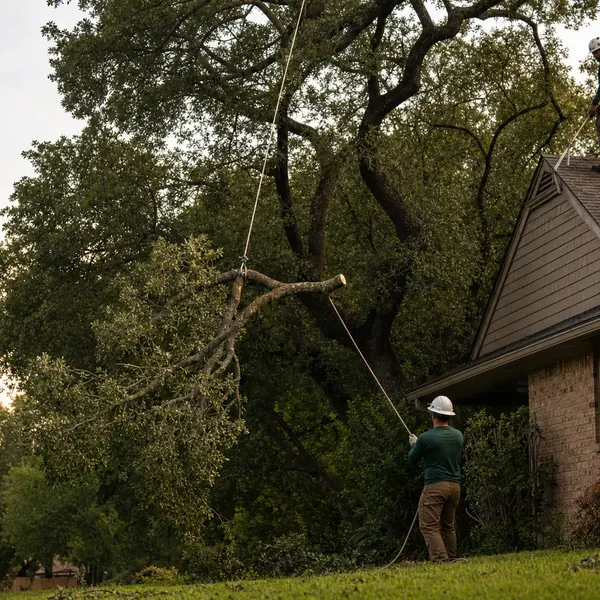
- Leave large limbs to a crew with the gear to lower them. A heavy limb dropped on a fence costs more than the trim.
- Don’t cut roots along the fence without advice. Root damage can hurt a tree just as much as a bad cut up top.
If you’d rather not guess, our tree trimming service handles fence-line work all the time. Most jobs are assessed by Taylor Guynes, an independent ISA Certified Arborist #TX-4334A (opens in a new tab), who can tell you where a clean cut belongs before any work starts.
When the branches touch power lines
Stop there. Branches in or near overhead power lines are a job for the utility company. Contact them and let them handle it, or let them tell you the safe next step. Electricity can jump from a line to a branch, and from the branch to whoever is holding the saw or pole.
We involve the utility company for power-line work too. If you want to understand why trees and lines clash and how to plan around them, the International Society of Arboriculture has a short guide on avoiding tree and utility conflicts (opens in a new tab).
If a neighbor’s limb is over your fence, we can come take a look, show you where a clean cut belongs and put the price in writing before a saw starts. We’ll haul away what we cut, too. Call (214) 620-8082 or request a free written quote below.

Neighbor tree questions
Can I cut my neighbor’s tree branches in Texas?
In most cases you can trim branches that hang onto your property, up to the property line, without the neighbor’s permission. You generally can’t go onto their land or cut in a way that kills or badly damages the tree. This is general information, not legal advice.
Who pays to cut overhanging tree branches?
Usually the person who wants the trimming pays for the work on their side. That can shift if the tree is dead or hazardous and the owner was told. Many neighbors simply agree to split it.
Can I throw my neighbor’s tree branches back in their yard?
It’s best not to. If you chose to trim, the cuttings are generally yours to dispose of, and dumping them over the fence can damage their property and your relationship. Have them hauled away instead.
Do I need my HOA’s approval to trim a neighbor’s tree?
It depends on your HOA. Some have rules about trees on fence lines and common areas. Check your rules or ask the management company before work starts.
What if the branches are touching power lines?
Don’t trim them yourself. Contact the utility company, which handles work around its lines. It’s the safe route for you and anyone working on the tree.