
Tree Too Big for Your Yard? How to Make It Smaller Without Killing It
The little tree someone planted twenty years ago is now crowding the house, shading out the lawn and reaching over the neighbor’s fence. You like the tree. You just want less of it. Here’s what’s realistic.
Key takeaways
- Crown reduction can often make a tree somewhat smaller and keep its shape, but it can’t turn a big tree into a small one.
- It works by cutting branches back to healthy side branches, which keep growing and feeding the tree.
- Topping is not a shortcut. It weakens the tree and usually makes the problem come back worse.
- Bigger changes are spread over several years, with time between rounds for the tree to recover.
- If the tree would need to lose most of its canopy to fit, removal is often the more honest answer.
How trees outgrow their space
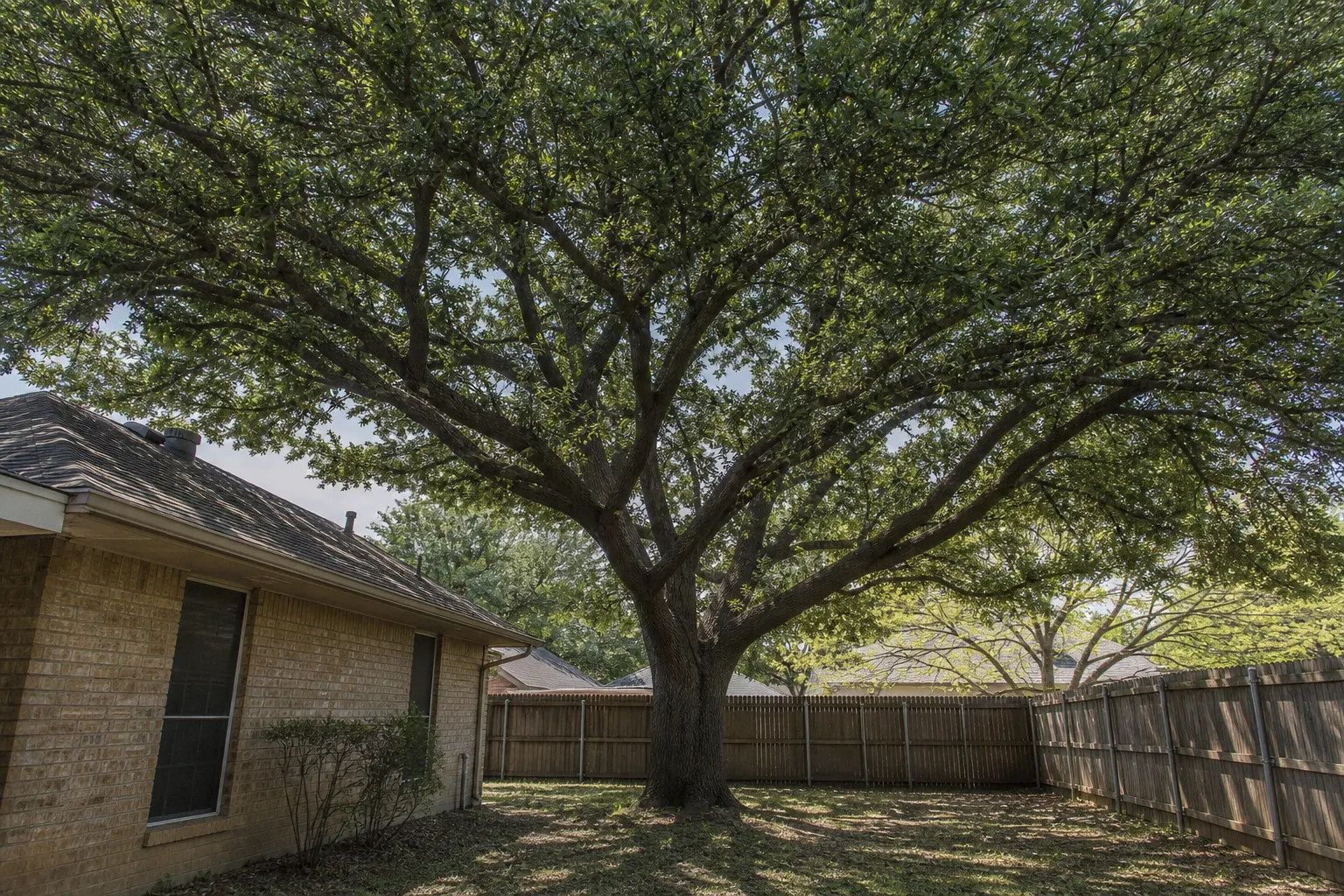
Most of the time, nobody did anything wrong. A sapling was planted a few feet from the house or the property line because it looked small. Trees don’t stay small. A red oak, pecan or cedar elm that started as a whip can end up with a canopy wider than the yard it lives in.
The signs are usually easy to spot. Limbs rub the roof or gutters. The lawn underneath has thinned to dirt. The tree throws shade over the neighbor’s garden and drops leaves in their pool. Branches have grown into the space where the driveway, patio or second story should be.
The question most homeowners ask is simple: can it be made smaller without killing it? Often the answer is yes, within limits. Knowing those limits up front saves a lot of disappointment.
What crown reduction can do
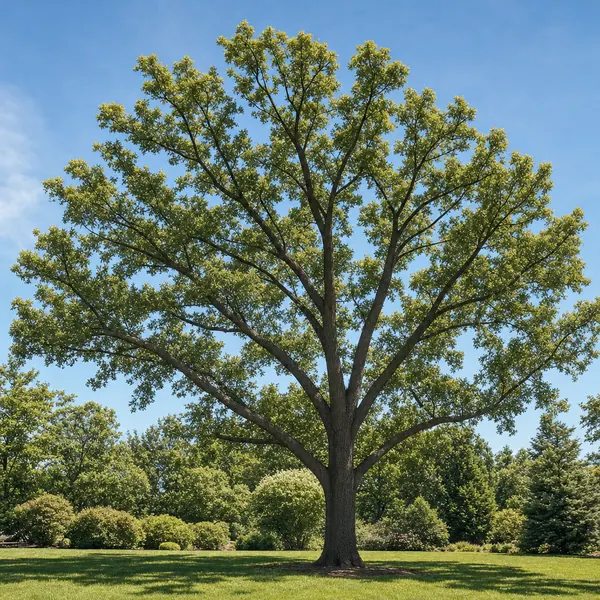
Crown reduction shortens the height or spread of a tree by cutting branches back to a side branch that’s big enough to take over. A common guideline is that the remaining branch should be at least about a third of the diameter of the limb being cut. That side branch keeps growing in the same direction, so the tree keeps its natural shape and still has leaves along the limb to feed itself.
Done well, reduction can:
- Pull the canopy back from the roof, walls and gutters.
- Shorten limbs that reach over the fence into the neighbor’s yard.
- Take some weight off long, heavy limbs so they’re less likely to fail in wind.
- Let a little more light reach the lawn or garden underneath.
- Make a tree look like it belongs in the yard again, rather than swallowing it.
If you’re unsure whether you need a smaller tree or just a more open one, our article on crown reduction vs. crown thinning explains the difference. Thinning lets light and wind through. Reduction changes the size.
What crown reduction can’t do
It helps to be honest about this part, because it’s where expectations go wrong.
- It can’t make a big tree small. Reduction trims the outer edge of the canopy. A sixty-foot oak isn’t going to become a twenty-foot one.
- It isn’t permanent. The side branches keep growing. A reduced tree usually needs follow-up work every few years to hold its size.
- It can’t fix a tree that is in the wrong spot underground. If roots are lifting the drive or the trunk is right against the foundation, trimming the top doesn’t change that.
- It doesn’t suit every tree. Trees in decline, trees with a lot of decay and some species that react badly to large cuts may not handle it well.
There is also a limit on how much can come off at once. Our article on how much of a tree you can trim goes through why. In short, leaves are the tree’s food supply, and taking too many in one visit sets it back for years.
Why topping isn’t the answer
The fastest way to make a tree shorter is to cut the top off, and some crews will offer to do just that. It looks like a solution for about one season.
Topping cuts big limbs back to stubs with no side branch to take over. The stubs are slow to seal and often decay. The tree answers with a dense crop of fast, thin sprouts from around each cut. Those sprouts are weakly attached, they grow quickly, and within a few years the tree can be about as tall as before, only now with a weaker structure that’s more likely to drop limbs. Our guide on why tree topping hurts trees covers this in detail.
If anyone quotes you on shrinking a tree by topping it, that’s a good reason to get another opinion.
Why it’s done gradually
A tree that needs a lot of reduction is usually reduced in stages. The first visit takes care of what matters most, such as limbs on the roof or over the neighbor’s yard. The next round, often a few years later, takes it back a bit further once the tree has recovered and the side branches have filled in.
Spreading the work out keeps more leaves on the tree at any one time, keeps cuts smaller, and gives the tree time to seal each wound. Older and stressed trees need this most. Timing matters too. In North Texas, oak cuts made February through June get sealed right away because of oak wilt, and in the hottest, driest stretch of summer we keep the work light and plan heavier cuts for a cooler stretch. The Texas A&M Forest Service has a good overview of proper pruning cuts and timing (opens in a new tab).
When removal is the honest answer
Sometimes reduction would mean cutting so much that what’s left wouldn’t be healthy, safe or worth keeping. We’d rather tell you that than sell you a pruning job that won’t work. Removal is often the better choice when:
- The tree would need to lose most of its canopy to fit the space.
- The trunk or root flare is right against the house or foundation.
- The tree is already in decline, or has serious decay or cracks.
- You’d be paying for repeated reductions forever just to keep it from touching the house.
If you go that route, a smaller tree planted farther from the house can give you shade without the same problem in twenty years. We don’t plant trees, but our guide to the best trees to plant in Plano is a good starting point to take to a local nursery or landscaper.
If a tree has outgrown its spot, we’ll look at it with you, tell you plainly whether reduction will work and put the plan and price in writing. Most jobs are assessed by Taylor Guynes, an independent ISA Certified Arborist #TX-4334A (opens in a new tab). Call (214) 620-8082 or request a free written quote below.


Questions about trees that are too big
Can you make a tree smaller without killing it?
Often, yes. Crown reduction cuts branches back to healthy side branches so the tree keeps leaves along each limb and its natural shape. The amount it can shrink is limited, and large changes are spread over several years.
How close is too close for a tree next to a house?
It depends on the tree’s mature size. A big shade tree planted a few feet from the walls will crowd the roof and gutters as it grows. As a rough idea, large trees do better well out in the yard, with smaller trees closer in. A nursery can tell you a species’ expected spread.
Will a tree grow back after crown reduction?
Yes. The side branches left after a reduction keep growing, which is what keeps the tree healthy. Most reduced trees need follow-up work every few years to hold their size.
How much can you reduce a tree’s height?
Less than most people hope. Each cut goes back to a side branch big enough to take over, and only a limited share of the live canopy should come off in one season. On a mature tree that usually means a modest reduction at a time, repeated over several years if more is needed.